
REVIEW · GOBUSTAN AND ABSHERON TOURS
Gobustan Magic of Mud Volcanoes and Ancient Petroglyphs
Ancient art meets bubbling earth here. This five-hour private trip from Baku brings you to Gobustan’s remarkable petroglyphs, then out to the region’s strange mud volcanoes, with two short but worthwhile stops tied to Azerbaijan’s religious and oil history. I like the way the tour connects distant eras in one morning: prehistoric hunters, Roman soldiers, Islamic worship, and the oil boom all appear in the same story.
I also like that you travel in an air-conditioned vehicle with bottled water and a guide who adapts the outing to your interests and age. Jabrail, also spelled Jabrial in some tour details, receives especially warm praise for his friendly manner, careful organization, clear communication, and personal pride in Azerbaijan. The main drawback is that the mud volcanoes can require rough off-road travel, and the five-hour schedule may feel quick if you want a long, unhurried visit at every stop.
In This Review
- Key points to know before booking
- Why this half-day route works from Baku
- Reading thousands of years at Gobustan
- Chasing bubbling clay at the mud volcanoes
- Bibi-Heybat Mosque and the story of oil
- What the private vehicle and guide add
- Who will get the most from this tour
- Booking, timing, and cancellation details
- FAQ
- How long does the Gobustan tour last?
- Where does the tour start and finish?
- Is this a private tour?
- Are Gobustan museum tickets included?
- Is the mud volcano vehicle included?
- Is cancellation free?
- Should you book it?
Key points to know before booking
- Gobustan’s petroglyphs are the main event: You see carvings made across thousands of years, including scenes of hunting, fishing, ritual dances, and daily life.
- The Roman inscription is unusually far east: At Boyuk-Dash, a Roman centurion left an inscription described as the easternmost Roman writing of its kind.
- Mud volcanoes add a strange natural contrast: Small cones may appear along the road, with smoke or bubbling clay sometimes visible from a distance.
- The private format keeps the morning flexible: Only your group takes part, and the guide can shape the commentary around your interests.
- Baku’s oil and Islamic heritage round out the route: Bibi-Heybat Mosque and the site of the 1846 oil well add useful context beyond Gobustan.
- The $65.55 price covers more than transport: Gobustan Museum tickets, bottled water, air conditioning, and the off-road vehicle payment for the volcanoes are included.
Why this half-day route works from Baku
Gobustan is far enough outside Baku to feel like a proper outing, but this tour keeps the commitment to about five hours. With a 9:00 am start and return to the meeting point at Nizami Garden in Sabayil, you still have much of the day left for Baku’s museums, old town, or a long lunch.
I think the route works best because it does not treat Gobustan as an isolated archaeological stop. You begin with prehistoric rock art, shift to an unusual geological setting, then return to Baku’s religious and industrial past. The subjects are different, but together they explain why Azerbaijan has drawn people, empires, pilgrims, and oil workers for so long.
This is a private activity, so you are not folded into a large coach group. That matters at a site where good explanations make a difference. Petroglyphs can look like scattered scratches when you do not know what to look for. A guide who can point out figures, hunting scenes, ritual activity, and later inscriptions gives the rocks a human scale.
The tour is advertised at $65.55 per person. That is a fair value if your group wants private transport, a guide, museum admission, water, and the special vehicle needed for the volcano road. It is less attractive if you only want a quick ride to Gobustan and do not care about guided interpretation or the extra Baku stops.
More Gobustan and Absheron trips:
- Baku: Gobustan, Mud Volcano, Fire Mount, Temple Lunch Entry
★ 4.9 · 3,246 reviews - BEST Gobustan, Volcanoes & Absheron Fire Tour (Group or Private)
★ 5.0 · 1,254 reviews - Gobustan and Absheron tour (All inclusive)
★ 5.0 · 1,014 reviews
Reading thousands of years at Gobustan
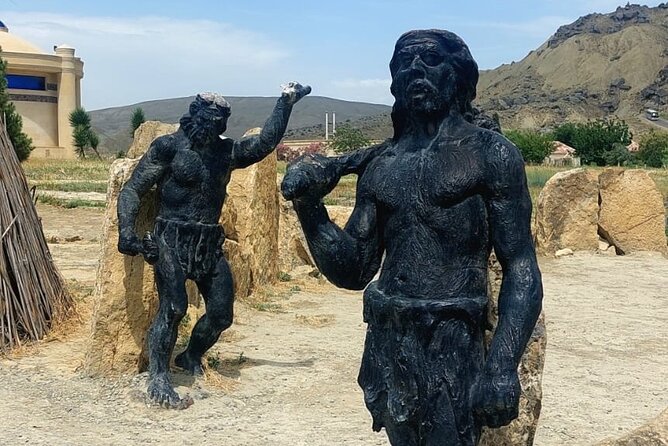
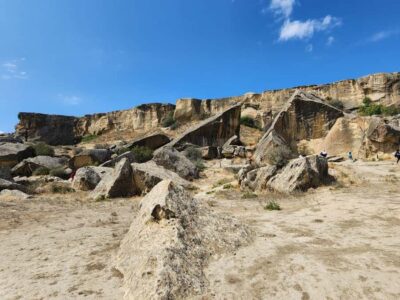
Allow about two hours for Gobustan Rock Art Reserve. This is the longest stop and rightly so. The reserve contains one of the region’s largest collections of petroglyphs, with images made over a very long span of human settlement.
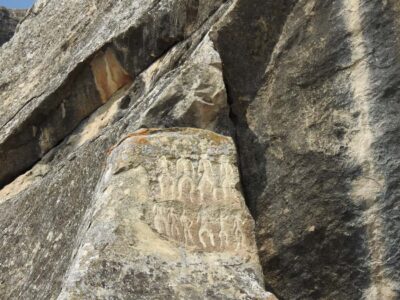
The carvings record more than grand events. You may see scenes connected with hunting, fishing, ceremonies, dancing, and family or tribal life. One detail in the tour description refers to bride kidnapping, which gives a glimpse of how varied the subjects are. The rock faces are not simply decorated with repeated symbols. They preserve hints of social customs and group behavior.
I find this kind of site most rewarding when I stop trying to inspect every mark. Instead, look for the broad scenes and let the guide explain how the images fit together. The value is not just in seeing old carvings. It is in understanding that people here used the rock as a record of work, belief, movement, and celebration.
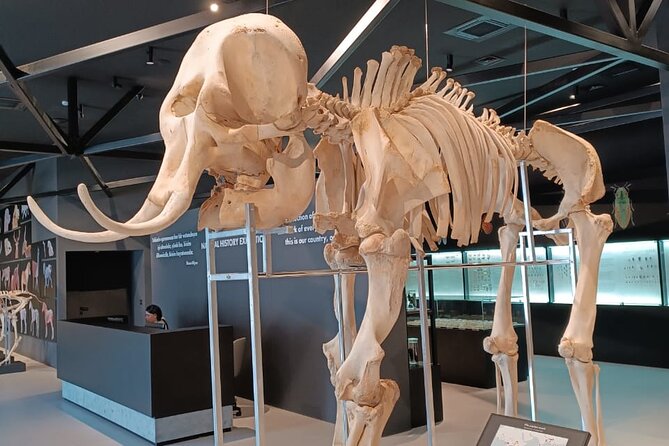
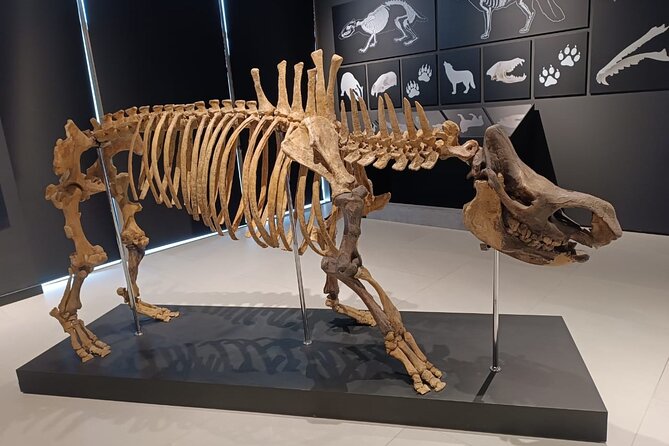
The tour also includes admission to the Gobustan Museum. That is useful because the museum can give you a clearer introduction before or alongside the outdoor visit. Objects, displays, and explanations can help place the carvings in time and make the rock panels easier to understand.
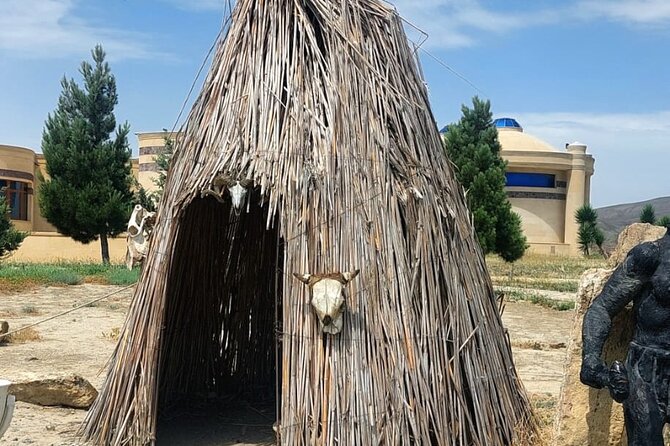
The Roman detail is a highlight. At the foot of Boyuk-Dash, Livus Maximus, a centurion of the XII Legion, left an inscription in the first century AD. It is described as the easternmost Roman inscription of its kind. That small written trace adds a surprising imperial footnote to a site much older than Rome’s arrival in the region.
You may also encounter short Arabic sayings, including one translated as came, prayed, left, as well as figures wearing turbans. These later marks show that Gobustan was not frozen in prehistory. People continued to pass through, pray, record their presence, and leave their own signs.
The main practical caution is time. Two hours sounds generous, but Gobustan covers open ground and has plenty to absorb. If you are fascinated by archaeology, you may want more time than the scheduled visit allows. If you prefer a clear overview rather than close study of every panel, the timing should be comfortable.
Chasing bubbling clay at the mud volcanoes
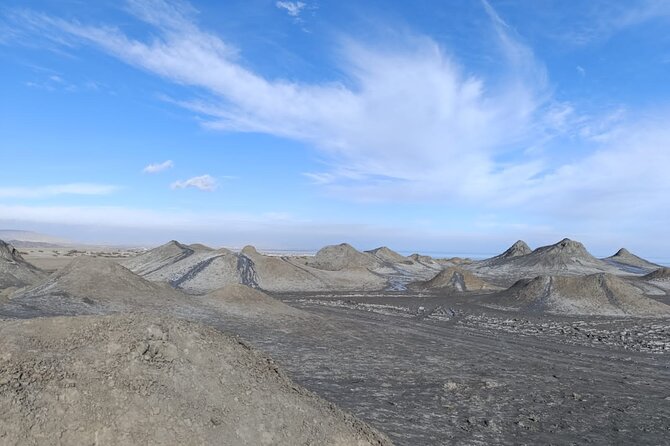
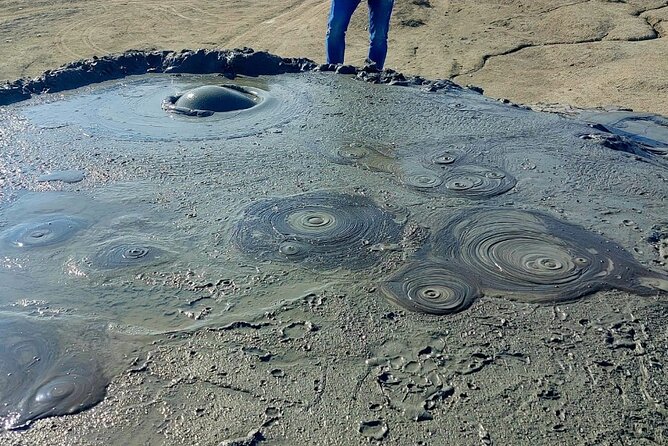
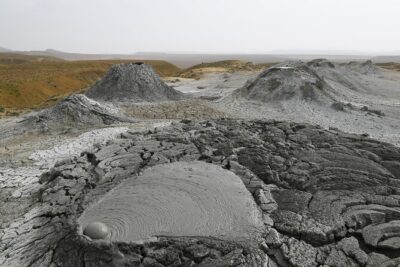
The mud volcano stop lasts about an hour. This is not a conventional volcano visit with flowing lava or dramatic mountain peaks. Azerbaijan is known for its mud volcanoes, where gases and muddy clay push upward through low cones.
The oddness is the attraction. Along the road, you may notice small volcanic cones. At times, smoke or bubbling clay can be visible from a distance. The activity varies, so you should not expect every cone to be erupting on cue. The experience is best understood as a short encounter with an unusual natural feature, not a guaranteed spectacle.
Access requires an off-road vehicle payment, and that cost is included according to the tour details. The rough route is part of the outing, but it also means you should be ready for a less polished section of the ride. Wear sensible shoes and avoid bringing anything you need to keep perfectly steady or spotless.
There is a small inconsistency worth checking before you pay. The tour information says the off-road car payment is included, while the mud volcano stop also says admission is not included and the general exclusions list all fees and taxes. Ask the provider exactly what, if anything, you would pay locally. That simple question prevents a needless surprise.
I like the contrast between the rock art and the volcanoes. At Gobustan, you are looking at marks made by people. At the volcanoes, the ground itself seems to be making the marks. One stop is about human memory, the other about restless geology.
Bibi-Heybat Mosque and the story of oil
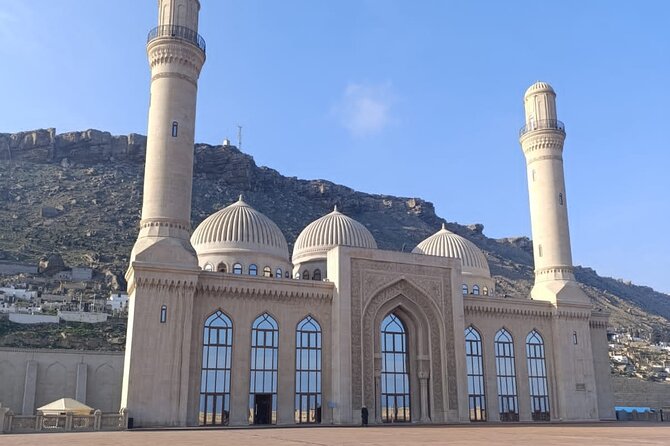
The final two stops are brief, but they help connect the outer districts to Baku’s identity. At Bibi-Heybat Mosque, you have about 20 minutes to see an important religious building described as a pearl of Islamic architecture.
That is not enough time for a long architectural study, but it is enough for a short introduction and a look at the mosque. The stop is free, so you do not need to set aside an extra admission fee. Because it is a place of worship, dress and behavior should be respectful, even though the supplied tour details do not specify a formal dress code.
The oil well stop also lasts around 20 minutes. In 1846, the first oil well in the world was drilled in the Bibi-Heybat area, at one of Baku’s oldest oil fields. You will see oil pumps that point to the city’s industrial past.
This is a useful stop because Baku’s oil story is not just a museum subject. Oil changed the city’s wealth, appearance, and place in world affairs. The tour presents that story alongside ancient carvings and a historic mosque, showing how quickly the region moved from old traditions into industrial modernity.
Do not expect a large oil museum or a long technical presentation here. Think of it as a concise roadside history lesson. If you want an in-depth study of oil production, you will need more time elsewhere in Baku. For this route, 20 minutes is enough to give the subject a clear place in the morning.
More walks around the Old City:
- Baku Oil Heritage & Old Town Walking Tour
★ 5.0 · 232 reviews - Guba Khinalug & Candy Cane Mountains tour (by Old City Tours)
★ 4.5 · 208 reviews - Gabala + Shamakhi tour (by Old City Tours)
★ 4.5 · 198 reviews - Baku Walking Tour (Old City)
★ 5.0 · 127 reviews
What the private vehicle and guide add
Pickup is offered, though the stated meeting point is Nizami Garden in Sabayil, Baku 1005. The activity returns to that same meeting point. Confirm the exact pickup arrangement after booking, especially if you are staying outside the central area.
The air-conditioned vehicle is a practical advantage. The route includes an excursion outside the city and a rough off-road section, so private transport saves you from working out separate connections. Bottled water is included, but lunch is not. Since the outing lasts about five hours and starts in the morning, eat beforehand or plan your meal after returning to Baku.
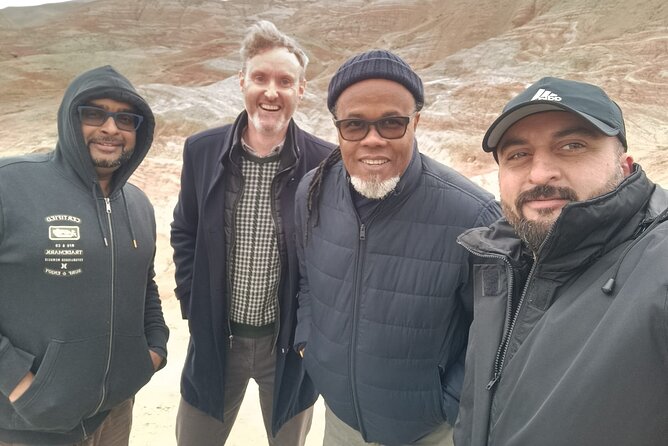
The strongest human element is the guide. Jabrail is praised for warmth, care, professionalism, and the effort he puts into making the day memorable. The feedback also points to smooth communication and good organization. Those details matter on a tour that moves between archaeology, geology, religion, and oil. You need someone who can explain without turning the morning into a lecture.
The guide’s stated approach is personal. The tour can be adjusted to your interests, age, and preferences, and the aim is to use stories rather than dry facts. That makes this a good choice if you want to ask questions or focus more heavily on one subject. A group that loves ancient history may want extra attention at Gobustan. Another group may care more about the oil story or local customs.
Because only your group participates, you can also ask for clarification when a carving or inscription is hard to see. That is one of the clearest benefits of paying for a private outing rather than choosing the cheapest shared transfer.
Who will get the most from this tour
I would recommend this experience to first-time visitors who want a quick but meaningful introduction to the area beyond central Baku. It suits couples, families, and small groups who value a private vehicle and personal guiding.
It is also a strong match for anyone who likes variety. In one morning, you see prehistoric art, a museum, mud volcanoes, a mosque, and oil equipment. The range keeps the trip lively, though it also means no single subject receives a full day.
You should think twice if you dislike rough roads, short stops, or outdoor archaeological sites. Gobustan is not a polished indoor attraction, and the volcano visit depends partly on natural conditions. The schedule is efficient, but not leisurely.
The tour may also be less suitable if you want a meal included or a full architectural visit at Bibi-Heybat Mosque. Those stops are short, supporting parts of the route rather than major visits on their own.
Booking, timing, and cancellation details
The start time is 9:00 am, and the activity lasts approximately five hours. It is often booked far ahead, with an average booking time of 203 days, so reserving early is sensible if your Azerbaijan dates are fixed.
Confirmation is provided when you book. The activity is near public transportation, although the private pickup makes public transit less important for the main route. Most people can participate, according to the supplied information.
Cancellation is free up to 24 hours before the local start time. Cancel at least 24 hours ahead for a full refund. Cancellations or changes made within 24 hours are not accepted for a refund.
FAQ
How long does the Gobustan tour last?
The tour lasts approximately five hours, beginning at 9:00 am and returning to the meeting point in Baku.
Where does the tour start and finish?
It starts at Nizami Garden in Sabayil, Baku 1005, Azerbaijan, and ends back at the same meeting point.
Is this a private tour?
Yes. Only your group participates in the activity.
Are Gobustan museum tickets included?
Yes. Tickets to the Gobustan Museum are included.
Is the mud volcano vehicle included?
The off-road car payment for the Mud Volcanoes stop is included. However, the stop also says admission is not included, and all fees and taxes are listed as excluded, so you should confirm the exact local charges before departure.
Is cancellation free?
Yes, if you cancel at least 24 hours before the experience start time. Cancellations within 24 hours are not refundable.
Should you book it?
Book this tour if you want a private, well-rounded morning that explains more than one side of Azerbaijan. Gobustan’s petroglyphs are the reason to go, while the mud volcanoes provide the unusual visual extra. Bibi-Heybat Mosque and the 1846 oil-well site then give you a compact explanation of Baku’s religious and industrial past.
At $65.55 per person, the value is strongest for a small group that wants transport, guiding, museum admission, water, and the off-road vehicle arranged in one booking. Confirm the mud volcano fee details, bring suitable shoes, and do not expect lunch or a slow, all-day archaeological study. If that trade-off suits you, this is a practical way to get beyond Baku and see the marks, mud, faith, and oil that shaped the region.
Just added in Baku
- Wine Tour Baku★ 5.0 · 4 reviews
- Wine Tour Qabala with Local Lunch★ 5.0 · 10 reviews
- Traditional Azerbaijani Cuisine Workshop★ 5.0 · 5 reviews
- Wine Crawl Baku★ 5.0 · 2 reviews
- Baku City Guided Wine Tour (snacks included)★ 5.0 · 15 reviews
- Full Day KHINALUG and the Candy Mountains Tour★ 5.0 · 15 reviews
- Tour to the North part of Azerbaijan Forests and Mountatin Quba★ 5.0 · 10 reviews
- The Magnificent Baku Night Tour★ 5.0 · 3 reviews
Gobustan and Absheron Tours, compared.
Gobustan, Mud Volcano, Fire Mount, Temple Lunch Entry
Read our review →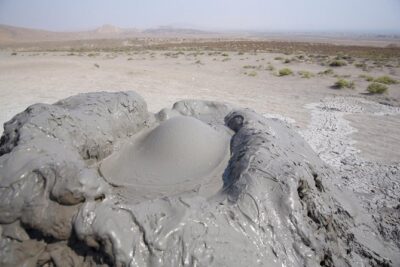
BEST Gobustan, Volcanoes & Absheron Fire Tour (Group or Private)
Read our review →
Gobustan, Volcanoes, Fire Temple and Yanardag Day Trip
Read our review →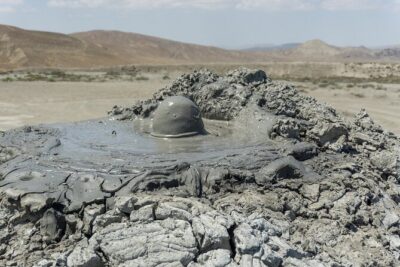
Gobustan & Mud, Fire Temple, Burning Mountain (Group & Private)
Read our review →
Mud Volcan-Fire Temple and Mountain Tour/Entrance inc
Read our review →
Gobustan Mud Volcanoes Temple & Entry tickets included
Read our review →Other Azerbaijan lists this tour is on