
REVIEW · OLD CITY WALKS
Baku Oil Heritage & Old Town Walking Tour
Baku’s oil story is written in stone. This 2.5-hour walk links the walled Old City with grand oil-boom buildings, Soviet-era context, and everyday Azerbaijani life. I especially like the use of historic photos and diagrams, which help you picture streets before modern Baku took shape. I also like the guide’s personal attention, with Gani praised for humor, clear English, and strong storytelling. The main drawback is that the tour explains the Maiden Tower and Shirvanshahs Palace from outside, so you will need separate admission and time if you want to go inside.
I would book this early in a Baku stay, since it gives you a useful map of the center and ideas for what to eat and see next. The pace is designed for a walking introduction, not a museum visit, and some of the stops are brief. Also, confirm the group arrangement when booking: the experience is presented as private, yet the stated maximum is 30 people.
In This Review
- Five things to know before you go
- Why Baku’s oil story makes this walk worthwhile
- Starting at Fountain Square on Nizami Street
- Inside Icherisheher, Baku’s walled Old City
- Istiglaliyyat Street and the city beyond the walls
- Philharmonic Fountain and the Ali and Nino connection
- Baku City Hall and the architecture of oil wealth
- Saadet Sarayi and a marriage story in stone
- The former Taghiyev School for Girls
- Ismailiyya Palace and a son remembered in stone
- How the guides shape the experience
- Is the $70 price good value?
- Pace, comfort, and practical planning
- Who should book this Baku walk?
- Should you book the Oil Heritage and Old Town Walking Tour?
- FAQ
- How long is the Baku Oil Heritage and Old Town Walking Tour?
- How much does the tour cost?
- Where does the tour begin?
- Where does the tour end?
- Are admission tickets included?
- What is included in the tour price?
- Is transportation included?
- Can I cancel for a full refund?
- What happens if the weather is poor or the minimum number of participants is not reached?
Five things to know before you go
- Oil money shaped the route: You will see how Baku’s first oil boom changed its streets, buildings, schools, gardens, and social life.
- Old City sights are explained from outside: Maiden Tower and Shirvanshahs Palace are covered with commentary and historic images, but entry is not included.
- Gani receives especially warm praise: His humor, prepared visuals, patience, and ability to answer questions are major strengths when he leads the walk.
- The tour stays in central Baku: Fountain Square, Icherisheher, Istiglaliyyat Street, and nearby monuments form one compact sightseeing route.
- It is a walking tour with modest extras: Bottled water is included, while lunch, transport, and admission fees are not.
Why Baku’s oil story makes this walk worthwhile
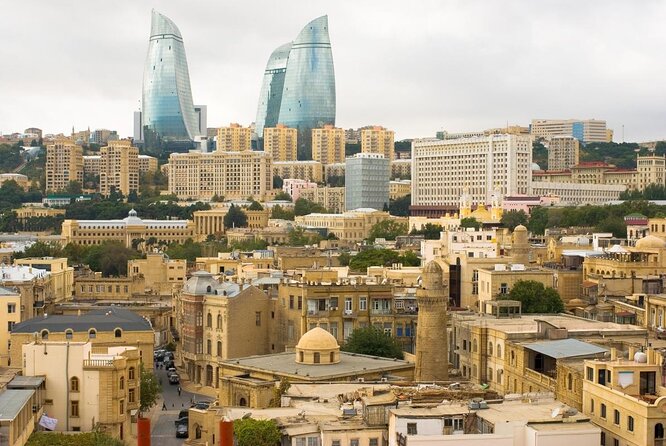
Baku can look like several cities stitched together. Behind the medieval walls, you find narrow lanes and old stone architecture. Outside them, ornate European-style buildings recall the late 19th and early 20th centuries, when oil wealth transformed the city.
That contrast gives this walk its purpose. You are not simply checking off Baku landmarks. You are following the money, ambition, faith, politics, and social change that shaped them.
I like tours that explain why a building exists, rather than just giving its name. Here, an oil baron’s grief helps explain Ismailiyya Palace. A love story gives Saadet Sarayi a human angle. A school for Muslim girls opens a discussion about education, modernization, and Azerbaijan’s first independence.
The tour also connects architecture with daily life. You hear about oil barons and their public ambitions, but also about the cultural and political forces that affected ordinary people. Soviet influence is part of the broader story, which helps you place modern Baku in context.
The guides use historic photographs and prepared diagrams. That matters in a city where buildings have changed purpose and streets have changed names. Old images let you compare the oil-boom city with what you see now.
More walks around the Old City:
- Guba Khinalug & Candy Cane Mountains tour (by Old City Tours)
★ 4.5 · 208 reviews - Gabala + Shamakhi tour (by Old City Tours)
★ 4.5 · 198 reviews - Baku Walking Tour (Old City)
★ 5.0 · 127 reviews
Starting at Fountain Square on Nizami Street
The meeting point is near KFC9RCP+28F on Nizami Street, and the walk begins at Fountain Square. The square is now a central place for leisure and entertainment, but its earlier role was tied to commerce during Baku’s first oil boom.
That is a smart opening. Before you enter the Old City, you get a quick explanation of how this area grew as Baku expanded and trade increased. It also gives you an easy central reference point for the rest of your stay.
The opening stop lasts about 10 minutes, and the tour ends here as well. Since there is no admission charge for the square, the time is spent on orientation and explanation rather than waiting in line.
I would arrive ready to walk, with your phone charged for photographs and notes. The meeting details name a specific point on Nizami Street, so check the confirmation carefully before setting out.
Inside Icherisheher, Baku’s walled Old City
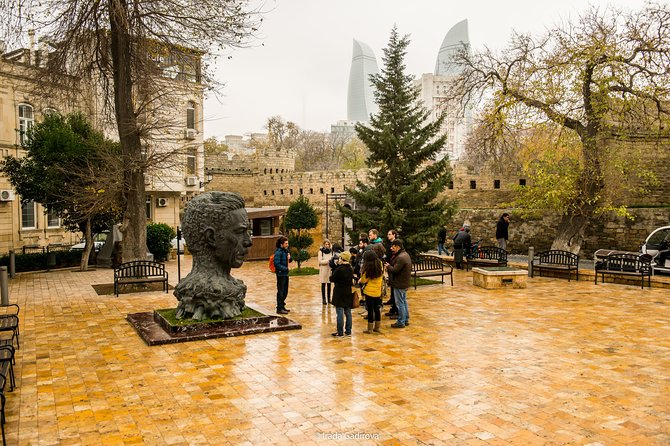
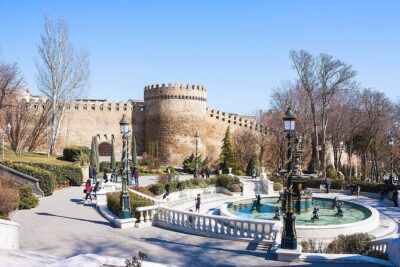
The tour then heads into Icherisheher, the Old City. This is the heart of medieval Baku, with defensive walls, narrow streets, mosques, palaces, and small passages that reward a slower pace.
The route covers the Gosha Gala gate, the main entrance, followed by the 12th-century citadel walls. The guide explains the setting and uses historic photos to show how the fortified center fit into Baku’s earlier life.
The Maiden Tower is one of the key stops. You receive an explanation at the entrance, but there is no interior visit. That distinction is important. If you want the tower’s exhibits or upper views, you will have to return independently and pay the admission fee yourself.
The Muhammad Mosque is also covered. It is identified as an 11th-century UNESCO site, and the guide explains it from the route rather than treating the walk as a formal religious-site visit.
You then stroll through the Old City’s narrow streets toward Shirvanshahs Palace. The palace dates from the 15th century and is another major landmark, but again, the tour stops outside. You receive the story and setting, not a full palace visit.
The route also includes the Museum of Miniature Books. The supplied details do not say that you enter the museum, so you should treat it as a stop on the walking route unless your guide confirms otherwise.
This section takes about an hour, making it the longest part of the experience. That gives you time to ask questions and notice details, though it is still an overview. If you want a close look at every museum room, inscription, or architectural feature, plan a separate visit.
I find the outside explanations useful for a first introduction. You learn what each place means before deciding where to spend extra time. The tradeoff is simple: the tour saves you from standing in line, but it does not replace admission-based sightseeing.
Istiglaliyyat Street and the city beyond the walls
After the Old City, the walk turns toward Istiglaliyyat Street. The street was formerly known as Nikolayevskaya and Kommunisticheskaya, names that reflect Baku’s Imperial Russian and Soviet periods.
This is where the oil heritage theme becomes especially clear. The guide connects urban expansion beyond the fortress walls with the ambitions of wealthy oil barons. These men did not simply build homes. They commissioned grand public and private structures to signal status, influence, education, faith, and family pride.
The buildings along this section include Governor’s Garden, Baku Town Hall, Philharmonic Hall, Palace of Happiness, the Institute of Manuscripts, Ismailiyya Palace, the Literature Museum, and the statue of Nizami.
You will not spend equal time at each one. Several stops last about 10 minutes, so expect a carefully selected explanation rather than a full architectural lecture at every building.
That format works well if you want a clear story in a short time. It works less well if you prefer to linger, sketch, read plaques, or photograph every facade without feeling hurried.
A completely different kind of day out:
- Baku: Gobustan, Mud Volcano, Fire Mount, Temple Lunch Entry
★ 4.9 · 3,246 reviews - Baku: Guba, Shahdag, Laza & Lunch w/ Free City & Night Tour
★ 4.8 · 1,455 reviews - BEST Gobustan, Volcanoes & Absheron Fire Tour (Group or Private)
★ 5.0 · 1,254 reviews - Gobustan and Absheron tour (All inclusive)
★ 5.0 · 1,014 reviews
Philharmonic Fountain and the Ali and Nino connection
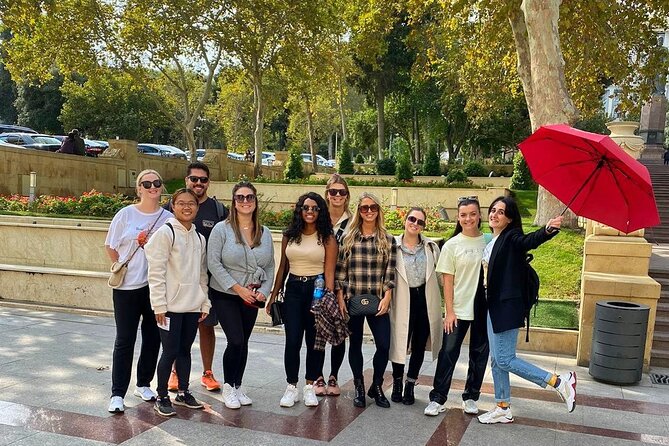
The Philharmonic Fountain marks one of the areas created as Baku expanded beyond its fortress walls. The guide links the garden to Ali and Nino, a well-known work associated with Baku and the region.
The reference gives the city a literary angle. Instead of seeing the garden as a pleasant patch of green alone, you consider how Baku has been represented through fiction, romance, identity, and cultural change.
This stop lasts about 10 minutes and is free. It is also a useful pause in the route, especially since the tour moves between dense streets and open civic spaces.
The information provided does not promise a reading from the book or a specific literary site visit. Expect context and discussion connected to the garden, not a dedicated literature tour.
Baku City Hall and the architecture of oil wealth
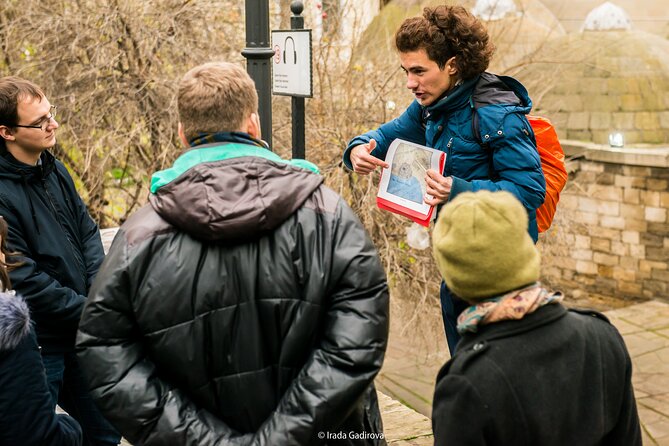
Baku City Hall, also called Baku Town Hall, is one of the most imposing buildings from the oil-boom period. Its architecture shows European influence and reflects the many communities involved in Baku’s growth.
This is one of the best places to understand that oil wealth did more than increase private fortunes. It changed the public face of the city. Civic buildings became statements about modernity, ambition, and Baku’s place in the wider world.
The guide also discusses how cosmopolitan and diverse groups shaped the city. That wider social frame keeps the tour from becoming a simple tale of oil barons and mansions.
You spend about 10 minutes here. The stop is free, but the value comes from the explanation. Without context, ornate architecture can blur into a parade of handsome facades. With context, you begin to see why those facades look the way they do.
Saadet Sarayi and a marriage story in stone
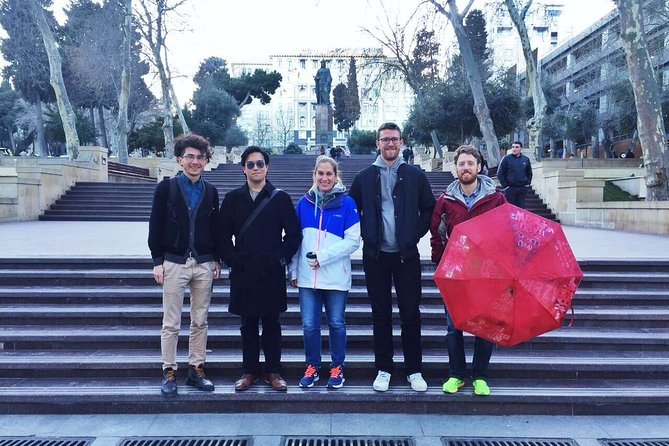
Saadet Sarayi, known as the Palace of Happiness, offers one of the tour’s more personal stories. It concerns an oil baron and his wife, and the building later became a marriage registry.
That change of use gives the building an appealing human connection. A private expression of love became a place associated with new marriages. The story also shows how Baku’s grand residences can carry several layers of meaning over time.
The stop lasts about 10 minutes and remains an exterior explanation. You should not expect a palace interior tour or a detailed account of every room.
I like this kind of stop because it breaks up the economic and political material. After hearing about oil, trade, and civic power, you get a story built around family and affection.
The former Taghiyev School for Girls
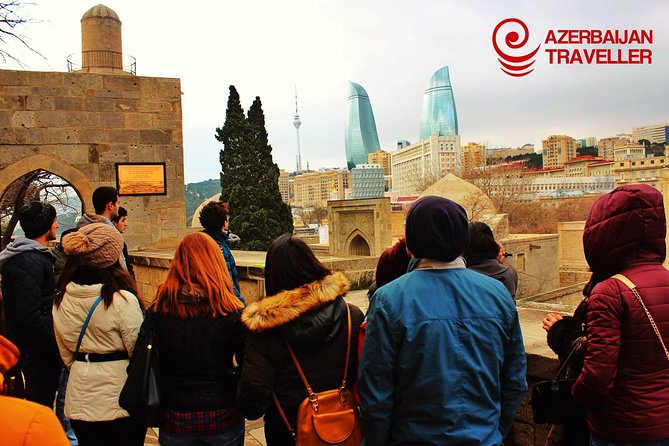
The former Taghiyev School for Girls, now the Institute of Manuscripts of Azerbaijan, opens a different chapter. The guide explains the first secular school for Muslim women and places it within the modernization of Baku and Azerbaijan.
This may be one of the most valuable stops for visitors who want more than architecture. A school building lets you consider who gained access to education, how social attitudes changed, and how modernization affected national identity.
The story also connects to Azerbaijan’s first independence. That gives the building political weight without separating it from social life. Education, reform, public institutions, and national feeling all meet here.
You spend about 10 minutes at the stop. The tour explains the building’s past and present role, but the information provided does not include an interior visit.
Ismailiyya Palace and a son remembered in stone
Ismailiyya Palace was commissioned by an oil baron in memory of his son. The building is noted for its Venetian Gothic design and became an important architectural landmark.
This is a strong example of the tour’s main idea: Baku’s oil wealth was expressed through personal stories and grand public architecture. The palace is not presented as an anonymous monument. Its design and purpose are tied to grief, family memory, and public ambition.
The Venetian Gothic style also shows how far Baku’s builders looked for inspiration. The city’s architecture reflects outside influences, but the guide places those influences within Baku’s own social and economic story.
The tour covers the palace from outside and gives you time for photographs. If architecture is your main interest, this stop alone may justify carrying a camera or keeping your phone ready.
How the guides shape the experience
The strongest praise centers on the guides, especially Gani. He is described as funny, articulate, patient, and able to hold the attention of a mixed group. His use of prepared photographs and diagrams helps make vanished streets and earlier versions of buildings easier to understand.
That matters because Baku’s story includes several periods: medieval rule, the oil boom, Imperial Russian administration, Soviet influence, and independence. A guide who can connect those periods without losing the thread makes a short walk far more useful.
Gani also gives practical suggestions after the walk, including food ideas, Azerbaijani phrases, and places to see next. Lina is also praised for offering a warm introduction to the Old City, along with baklava and vegetarian food suggestions.
Families can fit this tour well. One account specifically notes that children aged 10 and 12 enjoyed the experience, while another describes the guide as patient with questions. Still, the walk is built around listening and city streets, so very young children may find the history-heavy format less engaging.
The guide’s style can shape your experience. If you enjoy questions, humor, and stories, you will likely get more from the walk. If you prefer silent sightseeing or long independent stops, the fixed route may feel structured.
Is the $70 price good value?
At $70 per person, this is not the cheapest way to see central Baku. The price is easier to justify if you value a dedicated guide, historical explanation, and a route that combines the Old City with oil-boom architecture.
You are paying for interpretation, not entry tickets or transport. Bottled water is included, while lunch, private transportation, and admission fees are not. Since the major sights are covered on foot, you do not need to pay for a vehicle to connect them.
The private-tour wording deserves a check before you pay. The description promises undivided attention and says you will not wait for other people, but the stated maximum is 30 participants. Ask the provider, Azerbaijan Traveller, whether your booking is fully private or part of a small group.
Group discounts may improve the value if you are traveling with family or friends. For a first day in Baku, I think the fee can make sense because it saves research time and gives you a better basis for planning the rest of your visit.
Pace, comfort, and practical planning
The total duration is about 2 hours and 30 minutes. You should expect continuous walking through streets, squares, gardens, and the Old City, with several short stops of about 10 minutes and a longer Old City section of about one hour.
Wear comfortable shoes. The tour includes narrow Old City streets and outdoor stops, and the experience depends on good weather. If poor weather causes cancellation, you are offered another date or a full refund.
Most people can participate, and service animals are allowed. The meeting point is near public transportation, but private transport is not included. The activity ends back at the meeting point in Fountain Square.
Free cancellation is available up to 24 hours before the start time. Cancel inside that window and you do not receive a refund. The same 24-hour cut-off applies to changes, based on local Baku time.
Who should book this Baku walk?
I would choose this tour if you are visiting Baku for the first time, want a quick orientation, or care about the link between oil, architecture, education, and national identity.
It also suits you if you like stories more than isolated facts. The tale behind Saadet Sarayi, the memory behind Ismailiyya Palace, and the school’s role in social change give the route a human scale.
You may want something else if entering museums and monuments is your priority. The Maiden Tower and Shirvanshahs Palace are explained from outside, so you will need separate time and admission fees for their interiors.
Should you book the Oil Heritage and Old Town Walking Tour?
I would book it early in your Baku visit, especially if Gani is available. His humor, visual aids, and practical recommendations appear to be central strengths, and Lina also brings a friendly, useful approach.
The tour is best understood as a guided introduction, not a complete visit to every attraction. For $70, the value comes from connecting Baku’s medieval core to its oil-boom avenues and modern national story.
Book it if you want the city to make sense quickly. Skip it if you prefer exploring alone, entering every paid sight, or setting your own pace. Before confirming, clarify the private versus shared format and budget separately for the Maiden Tower, Shirvanshahs Palace, and any other admission-based sights.
FAQ
How long is the Baku Oil Heritage and Old Town Walking Tour?
The tour lasts approximately 2 hours and 30 minutes.
How much does the tour cost?
The listed price is $70 per person. Group discounts are available.
Where does the tour begin?
The meeting point is KFC9RCP+28F on Nizami Street in Baku, near Fountain Square.
Where does the tour end?
The tour ends back at the meeting point in Fountain Square.
Are admission tickets included?
No. Admission fees are not included. The Maiden Tower and Shirvanshahs Palace are explained from outside, with no entry included.
What is included in the tour price?
Bottled water is included.
Is transportation included?
No. Private transportation is not included. The tour is a walking experience, and the meeting point is near public transportation.
Can I cancel for a full refund?
Yes. You can cancel at least 24 hours before the experience start time for a full refund. Cancellations made less than 24 hours in advance are not refunded.
What happens if the weather is poor or the minimum number of participants is not reached?
If poor weather or an insufficient number of participants causes cancellation, you are offered a different date or experience, or a full refund.
More Walking Tours in Baku
- Baku Old Town Walking Tour with a Local
★ 5.0 · 64 reviews - Baku Downtown Original Walking Tour
★ 5.0 · 36 reviews - Baku Old City Wonders: A Walking Tour Through Time
★ 5.0 · 36 reviews - Baku: Old City Walking Tour
★ 3.9 · 21 reviews
More History Tours in Baku
- Baku: Stunning Walking Tour of Historical and Modern City
★ 4.9 · 270 reviews - Best of Baku: 4-Hour City Tour Historic and Modern Landmarks
★ 4.7 · 63 reviews - Baku: Historic and Modern Baku Tour ( Day & NIght Tour)
★ 4.5 · 60 reviews - Baku City Tour with Heritage Tours / All Entrance Fees Inc
★ 4.5 · 52 reviews
Just added in Baku
- Wine Tour Baku★ 5.0 · 4 reviews
- Wine Tour Qabala with Local Lunch★ 5.0 · 10 reviews
- Traditional Azerbaijani Cuisine Workshop★ 5.0 · 5 reviews
- Wine Crawl Baku★ 5.0 · 2 reviews
- Baku City Guided Wine Tour (snacks included)★ 5.0 · 15 reviews
- Full Day KHINALUG and the Candy Mountains Tour★ 5.0 · 15 reviews
- Tour to the North part of Azerbaijan Forests and Mountatin Quba★ 5.0 · 10 reviews
- Baku Sightseing Tour★ 5.0 · 12 reviews
Old City Walks, compared.

Guba Khinalug & Candy Cane Mountains tour (by Old City Tours)
Read our review →
Baku Old City Tour (officially by Old City Tours)
Read our review →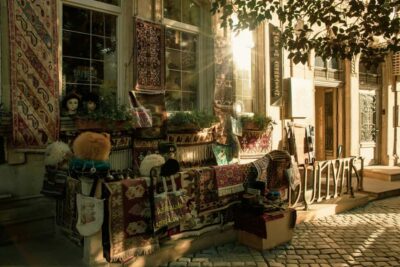
Baku Old City Wonders: A Walking Tour Through Time
Read our review →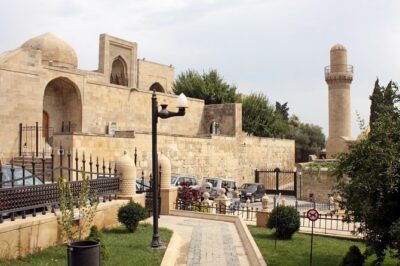
Other Azerbaijan lists this tour is on