
REVIEW · GOBUSTAN AND ABSHERON TOURS
Qobustan rock arts, Mud Volcanoes, Fire temple Ateshgah, Yanardag
Fire still burns from the ground around Baku. This private nine-hour excursion links Azerbaijan’s ancient rock art, strange mud volcanoes, Zoroastrian fire sites, and the country’s long connection with oil and natural gas. I like the wide range of sights and the private air-conditioned transport, especially if you have only a few days in Baku. The main drawback is the long day, with several stops receiving only a short visit.
You pay $250 per group of up to seven, not per person. That can be very good value for a full car, guide, and transport, but less attractive for one or two people. Museum tickets cost extra, with the total listed at $15 per person. The guide is described as kind and clear in explanation, which matters here because the sites are more interesting when someone connects the rocks, flames, faith, and geology.
In This Review
- Key points before you book
- Why this tour makes sense on a short Baku visit
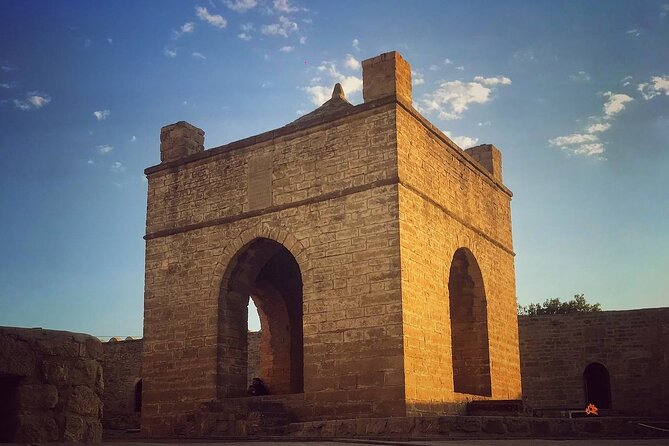
- Ateshgah Fire Temple and the old sacred flames
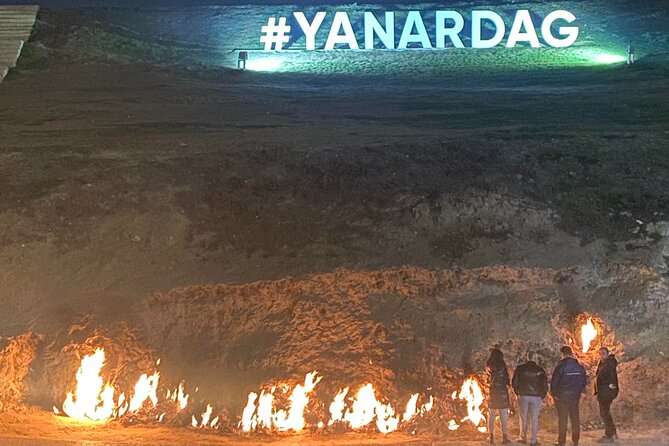
- Yanar Dag, the mountainside that keeps burning
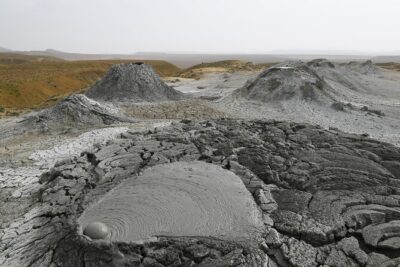
- Mud volcanoes in a country built on underground pressure
- Gobustan’s rock art and the oldest part of the day
- The value of a $250 private group tour
- Timing, comfort, and what to prepare
- Who will enjoy this day most
- Should you book this Baku excursion?
- FAQ
- How long does the tour last?
- How much does the private tour cost?
- Are museum tickets included?
- Is lunch included?
- What transportation is provided?
- Is this a private tour?
- What happens if the weather is poor?
Key points before you book
- Baku’s four very different sights fit into one nine-hour private outing, useful when your schedule is tight.
- Gobustan is a UNESCO-listed open-air museum with more than 6,000 rock drawings spread across 1,000 rocks.
- Azerbaijan has about 350 of the world’s 800 mud volcanoes, making the volcano stop more than a quick photo break.
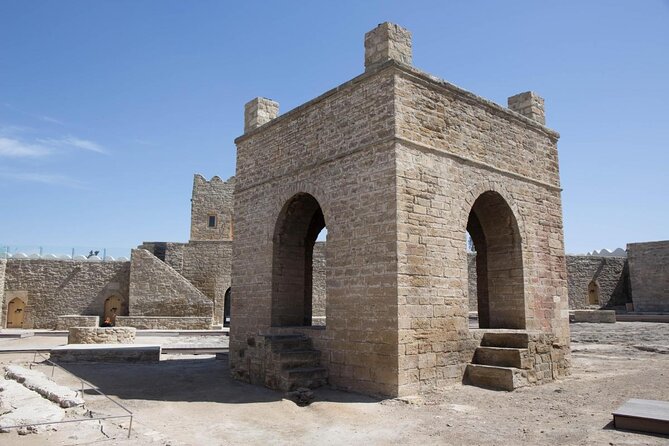
- Ateshgah explains the religious side of Azerbaijan’s fires, with a temple built in its current form by a Baku-based Hindu community linked to Sikhs.
- Yanar Dag is a natural gas flame on a mountainside, but the visit lasts only about 15 minutes.
- The group price works best when shared, since the same $250 covers as many as seven people.
Why this tour makes sense on a short Baku visit
Baku itself can fill several days, but Azerbaijan’s most unusual sights sit outside the city. Seeing Gobustan, the mud volcanoes, Ateshgah, and Yanar Dag separately takes more planning and transport. This tour puts them into one organized day with a local, multilingual guide.
I like the way the route covers several layers of the country. At Gobustan, you look far back to prehistoric people and their carved images. At the mud volcanoes, you see an active geological oddity linked to Azerbaijan’s oil and gas fields. Ateshgah and Yanar Dag then explain why the country became known as the land of fire.
The private format is helpful. Only your group takes part, and the vehicle is air-conditioned. You also get private transportation and WiFi on board. Pickup is offered, though you should confirm the exact meeting arrangement when booking because the supplied details do not give a specific pickup address.
The day lasts about nine hours. That includes the driving between Baku and the outlying sites, so the listed time at each stop is not the whole story. You should expect a full day rather than a relaxed half-day outing.
More Gobustan and Absheron trips:
- Baku: Gobustan, Mud Volcano, Fire Mount, Temple Lunch Entry
★ 4.9 · 3,246 reviews - BEST Gobustan, Volcanoes & Absheron Fire Tour (Group or Private)
★ 5.0 · 1,254 reviews - Gobustan and Absheron tour (All inclusive)
★ 5.0 · 1,014 reviews
Ateshgah Fire Temple and the old sacred flames
Ateshgah is a good first stop because it gives meaning to the fire theme that runs through the rest of the day. The site is known as the Temple of Eternal Fire, where natural gas once reached the surface and ignited when it met oxygen.
The temple you see today was built in the 17th and 18th centuries. It was constructed by a Hindu community based in Baku and connected with Sikhs, but the sacred use of the area reaches further back. Zoroastrians, followers of an ancient fire-centered faith, treated the burning gas as a sign of divine power.
That mix of traditions is what makes Ateshgah more than a simple flame stop. You are not looking at one isolated religious story. The site reflects changing communities and the way natural gas shaped worship in this part of Azerbaijan.
The planned visit lasts about 30 minutes. That is enough for a guided explanation and a look around, but not enough for a slow, detailed study of every part of the complex. I would pay close attention to the guide here, since the historical setting is the main reason to visit.
Admission is not included in the tour price. The supplied information gives a combined museum-ticket cost of $15 per person, so set that money aside in addition to the group fee. The tour description marks the stop as admission ticket free, but the separate inclusion section says museum tickets are extra. To avoid confusion, confirm the current ticket arrangement before departure.
Yanar Dag, the mountainside that keeps burning
Yanar Dag is the quickest stop, with about 15 minutes set aside. Its name means Burning Mountain, and the attraction is a natural gas fire burning from the side of a hill.
The flame is the simplest expression of Azerbaijan’s fire identity. Long before modern tourism, people connected such fires with the power of the gods. Zoroastrian worshippers built altars and temples near natural flames, and the presence of fire became a defining part of the country’s old religious story.
You will not need a long visit to understand the sight. Yanar Dag is visual and direct: gas emerges from the ground, and fire burns at the slope. The short stop works well as part of a larger route, though you should not expect a full site visit or a long walk.
I see this as a strong photo and explanation stop rather than the day’s main attraction. A guide can explain why the flame burns and connect it with Ateshgah, making the two places more useful together than they would be on separate trips.
Mud volcanoes in a country built on underground pressure
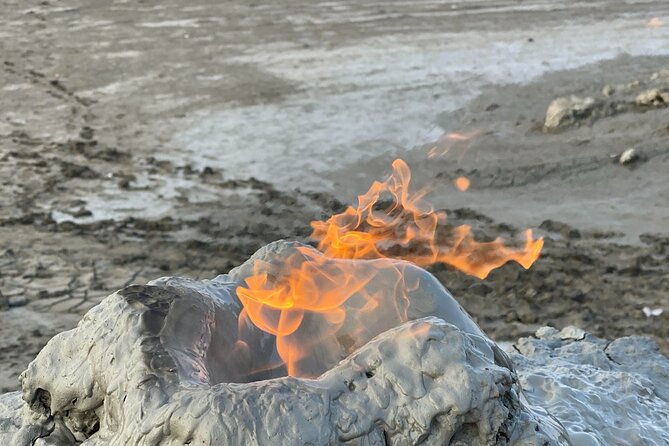
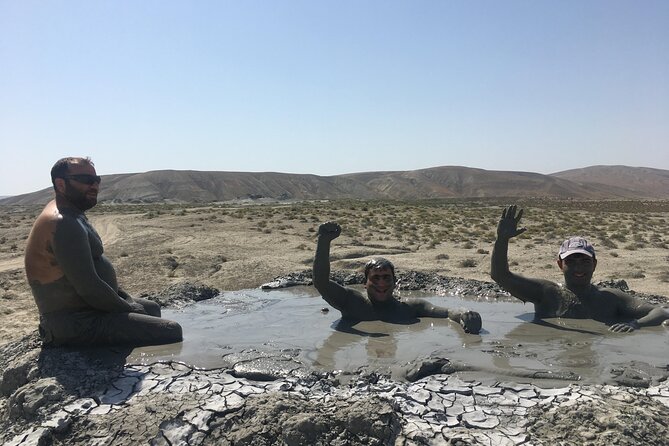
The mud volcanoes are the most unusual stop of the day. Azerbaijan has about 350 of the world’s roughly 800 mud volcanoes, spread across the country. Their activity in Azerbaijani territory is said to reach back about 25 million years.
These are not the tall, lava-filled volcanoes you might picture. Mud volcanoes push up mud, gas, and liquid from below. The connection with oil and gas fields is important: deposits are found around areas such as Lokbatan, Garadgh, Neft Dashlari, and Mishovdagh.
The stop lasts about one hour, giving you more time than at Yanar Dag. You can watch the strange formations and hear how the mud, lava, and liquid have uses in chemical and construction industries and in pharmacology. The site also has a link to Mars research, since NASA geologists have studied Azerbaijani mud volcanoes while considering similar formations on Mars.
That comparison gives the stop extra interest, but keep your expectations practical. The attraction is about geology and unusual terrain, not a polished theme park. Conditions may be basic, and the experience depends on the weather. Wear shoes suitable for uneven ground and avoid assuming that the area will have the same facilities as a formal museum.
The tour description says the mud volcano visit is free of admission. That keeps the cost simple, although the separate museum-ticket charge still applies to the ticketed sites.
A completely different kind of day out:
- Baku: Guba, Shahdag, Laza & Lunch w/ Free City & Night Tour
★ 4.8 · 1,455 reviews - Shamakhi And Gabala Tour (All inclusive)
★ 5.0 · 815 reviews - From Baku: Gabala and Shamakhi Tour (Free Baku City Tour)
★ 4.8 · 695 reviews - Baku: Candy Cane, Guba, Khinaliq village with Homemade Lunch
★ 4.9 · 519 reviews
Gobustan’s rock art and the oldest part of the day
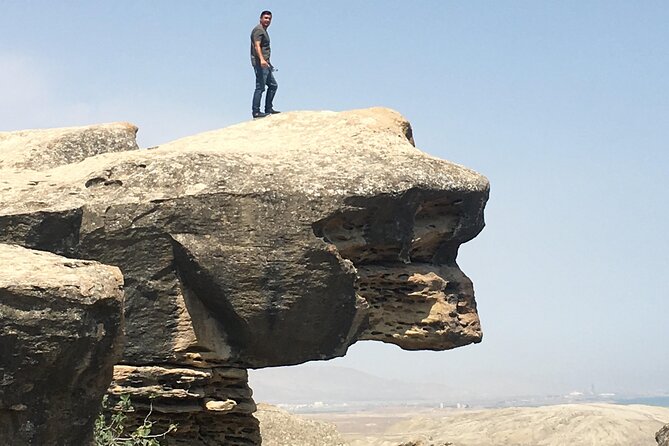
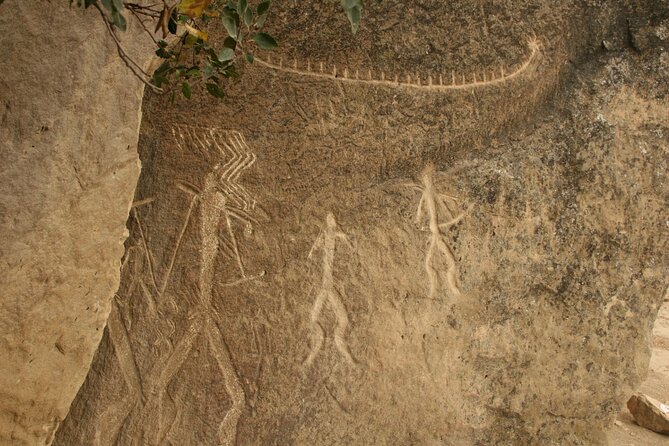
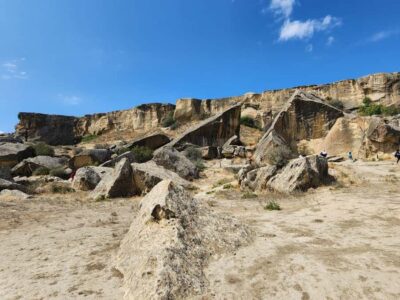
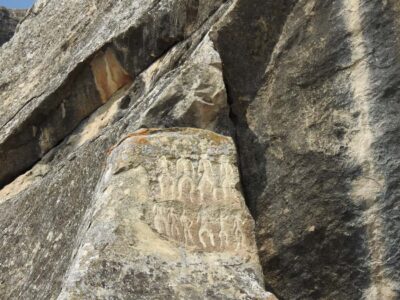
Gobustan National Historical-Artistic Preserve is the cultural centerpiece. Located about 60 kilometers from Baku, it works as an open-air museum, with rocky hills covered in drawings made by ancient people.
The figures include human forms, animals, boats, hunting scenes, and other images associated with early life in the area. The reserve contains more than 6,000 drawings on about 1,000 rocks, along with more than 100,000 artifacts. Those numbers explain why a guide adds real value. Without context, you may see a few scratched figures on stone. With an explanation, the site becomes evidence of how people lived, traveled, hunted, and represented their world.
Gobustan is listed as a UNESCO World Heritage Site for the quality and density of its rock engravings. That status is not just a label for your photo album. It means this is a place of international importance, and it deserves more attention than a quick stop at a scenic viewpoint.
The visit is planned for about one hour. That gives you time for the museum and a portion of the outdoor rock-art area, but not an exhaustive look at every drawing. If prehistoric art is a main interest, you may wish the schedule allowed longer. For a first visit to Azerbaijan, though, one focused hour is a useful introduction.
Gobustan also balances the fire stops nicely. Ateshgah and Yanar Dag tell you how people interpreted natural flames. Gobustan shows you something earlier: how people recorded their daily life before written history. Together, the sites create a clearer picture of Azerbaijan than any single attraction could provide.
The value of a $250 private group tour
The price is $250 per group for up to seven people. If seven people share the cost, the tour comes to about $36 per person before museum tickets. For four people, it is $62.50 each. For two people, it is $125 each, which is a much bigger commitment.
That price includes an air-conditioned vehicle, private transportation, a professional multilingual guide, and WiFi on board. It does not include lunch or museum tickets. Since the day lasts about nine hours, plan for lunch costs separately. The provided details do not specify a restaurant or meal arrangement, so do not assume food is included.
The strongest value comes from flexibility and convenience. You do not join a large shared group, and only your party participates. That can make a long day easier, particularly if your group has its own pace or wants explanations in a language supported by the guide.
The price is less compelling if you are alone and comfortable arranging a car and guide independently. Still, the route includes several distant stops, and the tour removes the need to coordinate transport between them. For a family or group of friends, the fixed price is easier to justify.
The tour is booked about 11 days in advance on average. That suggests you should not leave it until the final morning of a short Baku visit, especially if your dates are fixed.
Timing, comfort, and what to prepare
The experience lasts approximately nine hours and includes pickup. Confirm the pickup point and start time before you go, since the meeting-point information supplied is general rather than precise. Operating hours are listed as 9:00 a.m. to 6:00 p.m., Monday through Sunday, for the stated period.
The air-conditioned vehicle will be welcome during a long day outside Baku. WiFi on board is another useful touch, although you should not let a screen distract you from the changing scenery and the guide’s explanations.
Bring money for the $15-per-person museum-ticket total and for lunch. Comfortable footwear is sensible for Gobustan and the mud volcano area. The tour requires good weather, and poor conditions can lead to a different date or a full refund.
Most people can participate, and service animals are allowed. The experience is listed near public transportation, although it is designed around private pickup and transport rather than a public transit itinerary.
Free cancellation is available if you cancel at least 24 hours before the local start time. Cancellations or changes made inside that window are not accepted for a refund.
Who will enjoy this day most
I would recommend this tour to a first-time visitor who wants the main sights outside Baku without arranging several separate trips. It also suits families and small groups, since the private vehicle and fixed group price can work well when shared.
History fans will get the most from Gobustan and Ateshgah. People interested in geology will likely remember the mud volcanoes, while anyone drawn to unusual natural sights will enjoy seeing fire emerge from both a temple setting and a mountainside.
The tour may feel too packed if you prefer long visits at each site. Yanar Dag receives only 15 minutes, and Gobustan receives about an hour despite its size. You should also consider the extra cost if your party is small.
The guide is central to the experience. A kind guide who explains things clearly can turn four disconnected stops into one story about ancient people, faith, gas, oil, and the ground beneath Azerbaijan. The available rating is 5 out of 5, with 100 percent recommending the experience, and the praise focuses strongly on the guide’s clear explanations and friendly manner.
Should you book this Baku excursion?
Book it if you have limited time and want a single private day covering Azerbaijan’s most distinctive sights near Baku. The route gives you UNESCO rock art, mud volcanoes, an old fire temple, and a natural flame, while the group price can be fair for four to seven people.
Think twice if you want a slow, highly detailed visit at Gobustan or if you are traveling alone and watching every dollar. For most short stays, though, I like the mix of culture, geology, and religion. It is an efficient way to understand why Azerbaijan has been called the land of fire, without reducing the country to just one burning hillside.
FAQ
How long does the tour last?
The tour lasts approximately nine hours, including transportation between the sites.
How much does the private tour cost?
The price is $250 per group of up to seven people.
Are museum tickets included?
No. Museum tickets are not included. The listed total cost is $15 per person.
Is lunch included?
No. Lunch is not included in the tour price.
What transportation is provided?
The tour includes an air-conditioned vehicle, private transportation, pickup, and WiFi on board.
Is this a private tour?
Yes. Only your group participates in the activity.
What happens if the weather is poor?
The experience requires good weather. If it is canceled because of poor weather, you will be offered another date or a full refund.
Just added in Baku
- Wine Tour Baku★ 5.0 · 4 reviews
- Wine Tour Qabala with Local Lunch★ 5.0 · 10 reviews
- Traditional Azerbaijani Cuisine Workshop★ 5.0 · 5 reviews
- Wine Crawl Baku★ 5.0 · 2 reviews
- Baku City Guided Wine Tour (snacks included)★ 5.0 · 15 reviews
- Full Day KHINALUG and the Candy Mountains Tour★ 5.0 · 15 reviews
- Tour to the North part of Azerbaijan Forests and Mountatin Quba★ 5.0 · 10 reviews
- The Magnificent Baku Night Tour★ 5.0 · 3 reviews
Gobustan and Absheron Tours, compared.
Gobustan, Mud Volcano, Fire Mount, Temple Lunch Entry
Read our review →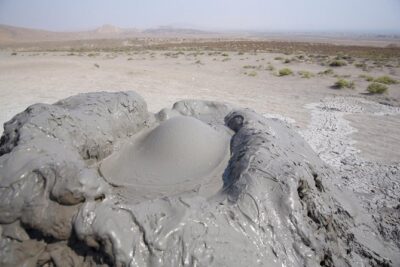
BEST Gobustan, Volcanoes & Absheron Fire Tour (Group or Private)
Read our review →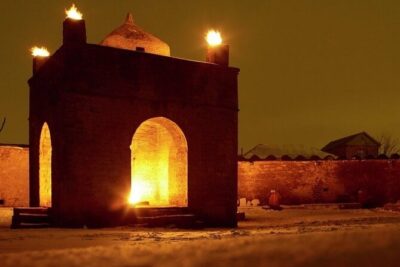
Gobustan, Volcanoes, Fire Temple and Yanardag Day Trip
Read our review →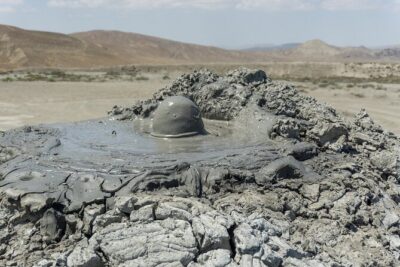
Gobustan & Mud, Fire Temple, Burning Mountain (Group & Private)
Read our review →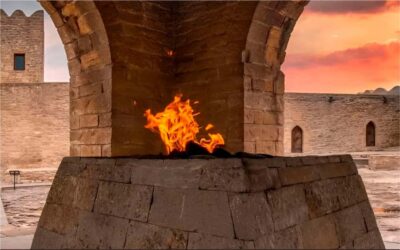
Mud Volcan-Fire Temple and Mountain Tour/Entrance inc
Read our review →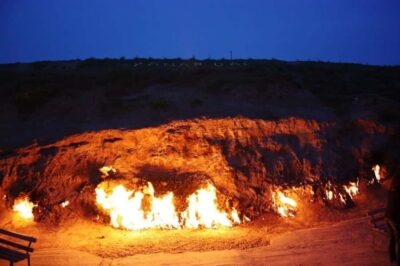
Gobustan Mud Volcanoes Temple & Entry tickets included
Read our review →Other Azerbaijan lists this tour is on