
REVIEW · GOBUSTAN AND ABSHERON TOURS
Gobustan, Mud volcanoes, Fire temple, Fire mountain PRIVATE TOUR
Ancient rock art meets living fire. This nine-hour private outing packs four very different sights outside Baku into one well-organized day, from Stone Age carvings at Gobustan to the gas flames of Yanar Dag. I like the private car and flexible pace, which let you spend more time at the places that interest you. I also like the guides, especially Rajab, Nigar, Mahmed, and Valah, who are praised for clear English, local insight, and a friendly manner.
The main drawback is cost control. The advertised price is $89 per person, but admission fees add another $23, and lunch is not included. The day also covers a lot of ground, so you should expect several drives rather than a slow, single-site visit.
In This Review
- Key points to know before booking
- Why this private day outside Baku works
- Gobustan: start with the museum before the rocks
- Mud volcanoes: Azerbaijan’s strangest hour
- Ateshgah Fire Temple and the old stories of flame
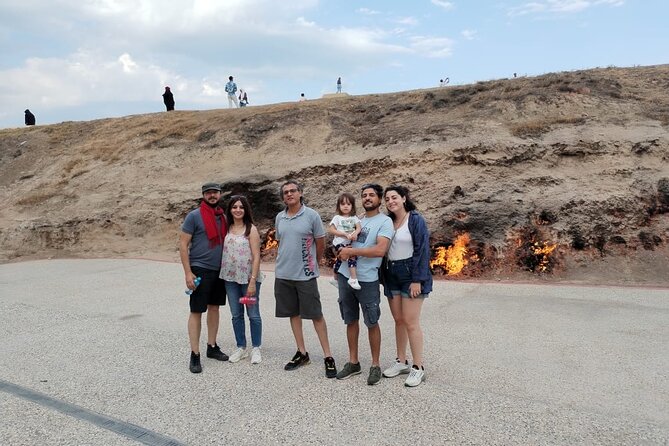
- Yanar Dag: the final look at Azerbaijan’s natural fire
- Guides, cars, and the value of going private
- Is $89 a good value?
- Who should book this tour?
- My recommendation
- FAQ
- How long does the tour last?
- What time does the tour start?
- Where does the tour end?
- Is transportation included?
- Are entrance tickets included in the price?
- Is lunch included?
- Can I cancel for a full refund?
Key points to know before booking
- Four major sights in one day: Gobustan, the mud volcanoes, Ateshgah Fire Temple, and Yanar Dag.
- Private transport keeps the day flexible: Only your own group takes part, with hotel pickup in Baku and drop-off at Fountain Square.
- Gobustan supplies the strongest history: The museum and open-air rock carvings explain human life in the area from roughly 5,000 to 20,000 years ago.
- The mud volcanoes are the quirky stop: The bubbling gray cones feel very different from the archaeological and religious sites.
- Fire traditions connect the final stops: Ateshgah explains worship around natural flames, while Yanar Dag shows an active gas fire on a hillside.
- Plan for extra costs: Tickets total about $23, and food is your responsibility.
Why this private day outside Baku works
Baku has enough architecture, museums, and cafés to fill several days, but the Absheron Peninsula gives you a different picture of Azerbaijan. Here, the ground bubbles, ancient people carved animals into stone, and gas flames burn from the earth.
That mix is the real strength of the day. You are not visiting four versions of the same attraction. Gobustan is about early human life and rock art. The mud volcanoes are geological oddities. Ateshgah deals with Zoroastrian and Hindu connections. Yanar Dag provides the natural fire that helped give Azerbaijan its traditional association with flames.
A private tour matters here because the sites are spread out. You do not need to work out several separate taxi rides or piece together public transport. Your guide and driver handle the movement between stops, while you can ask questions as the scenery changes outside the window.
The pickup time is 9:30 a.m., and the full outing lasts about nine hours. That makes it a substantial day, but not an exhausting overnight-style excursion. You finish at Fountain Square, a useful central location for an evening meal or a walk through central Baku.
The private format is also helpful if your group has mixed interests. Someone fascinated by archaeology can linger over the Gobustan museum. Someone else can spend less time with the displays and more time outdoors. The schedule gives you room to make those choices, although the four-stop plan still requires sensible time management.
More Gobustan and Absheron trips:
- Baku: Gobustan, Mud Volcano, Fire Mount, Temple Lunch Entry
★ 4.9 · 3,246 reviews - BEST Gobustan, Volcanoes & Absheron Fire Tour (Group or Private)
★ 5.0 · 1,254 reviews - Gobustan and Absheron tour (All inclusive)
★ 5.0 · 1,014 reviews
Gobustan: start with the museum before the rocks
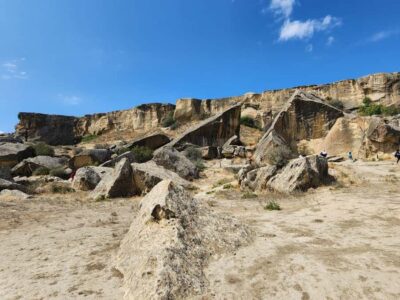
Gobustan is the intellectual center of the tour. Begin at the interactive museum, where touch screens, 3D panoramas, and archaeological displays set up the story before you reach the rocks.
The museum explains the area’s natural setting, early population, cultural development, and the archaeological work carried out here. Exhibits include items dated to roughly the fourth through second millennia BC, while the wider story reaches back much farther, to human activity from about 5,000 to 20,000 years ago.
This order is useful. Without some context, rock carvings can look like scattered lines and weathered shapes. After the museum, you have a better sense of what to look for and why the site matters.
Your guide can also explain how people lived in this region long before modern Baku existed. The emphasis is not just on the drawings themselves, but on the people who made them and the environment they occupied.
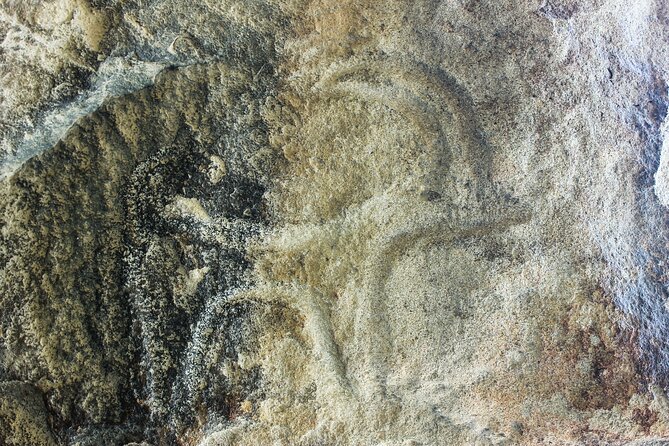
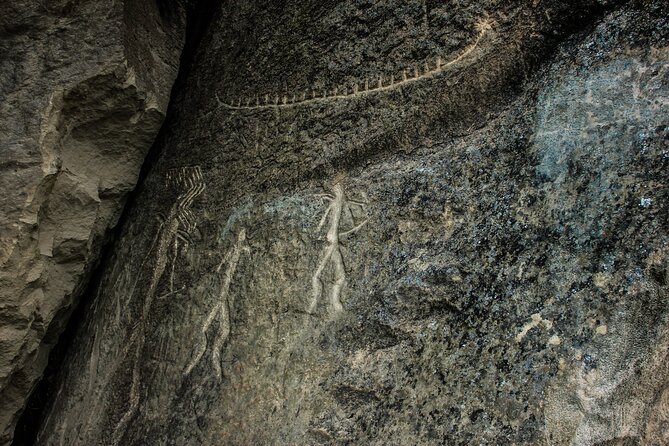
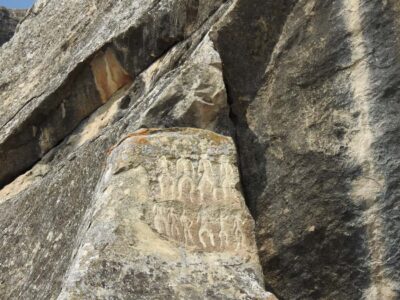
Then you move to the open-air museum among the Gobustan rocks. More than 6,000 rock drawings are associated with the site, showing animals, people, hunting scenes, boats, and symbols from different periods. The carvings are not presented as a single frozen moment. They reflect many generations of human activity.
Gobustan is also associated with UNESCO recognition, which gives the site international importance. Still, the experience is not polished in the way a major city museum is. You are looking at exposed stone, uneven natural surroundings, and carvings that require patience and a good explanation.
This is where guide quality has the biggest effect. Valah, for example, has been praised for connecting the petroglyphs with early human life and later religious ideas. A good guide helps you see the difference between a simple mark and a meaningful scene.
Allow about two hours for Gobustan. That includes the museum and the outdoor rock area. I would not rush this stop. It is the place most likely to reward careful attention, especially if archaeology and early history interest you.
Mud volcanoes: Azerbaijan’s strangest hour
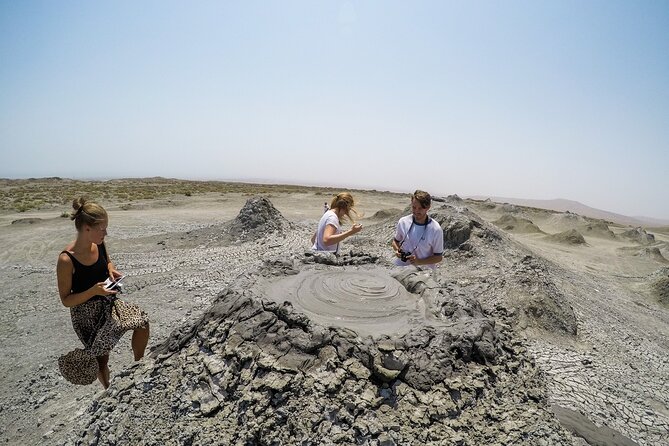
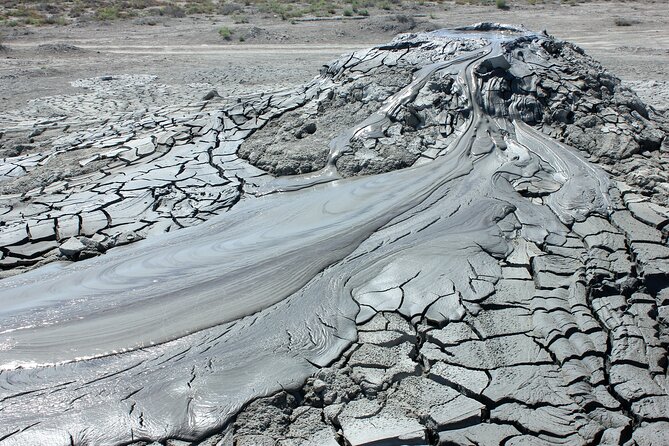
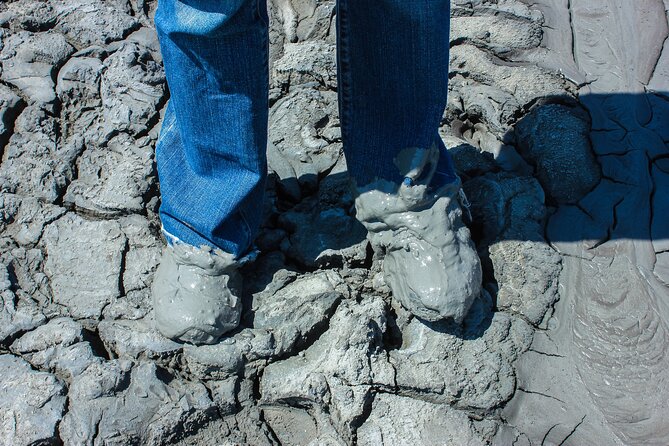
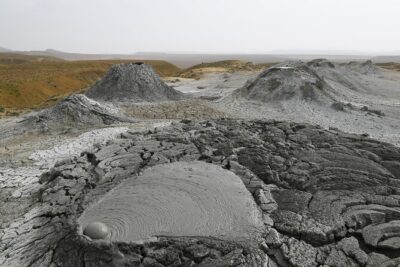
After Gobustan, the tour turns from human marks on stone to natural activity under the ground. Azerbaijan is famous for its mud volcanoes, and this stop gives you a close look at the small cones and pools of bubbling gray mud.
The sight is unusual rather than conventionally beautiful. You may see mud slowly pushing upward, leaving cracked surfaces and low mounds around the vents. The appeal lies in the oddness of the place. It feels raw, quiet, and slightly otherworldly without needing theatrical presentation.
The stop lasts about an hour. That is usually enough time to look at the formations, take photographs, and hear how the volcanoes fit into the region’s geology.
The ride out to the mud volcanoes can be part of the fun. One account describes reaching them in vintage Ladas, a memorable local touch. Because vehicle arrangements can vary, confirm this detail when booking if the old-car ride is important to you. The private vehicle itself is included, along with an air-conditioned car for the main tour.
This is the stop most likely to appeal to children. Mahmed has been praised for involving toddlers in the activities and keeping the visit friendly and easy to follow. Families should still keep a close eye on young children around bubbling mud and uneven ground.
The mud volcanoes are less historically layered than Gobustan, and some people may find the visit brief. I would treat them as a striking change of pace rather than the main reason to book the tour.
Ateshgah Fire Temple and the old stories of flame
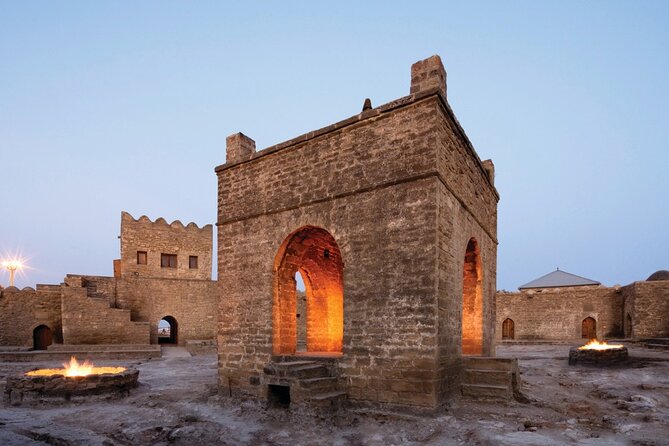
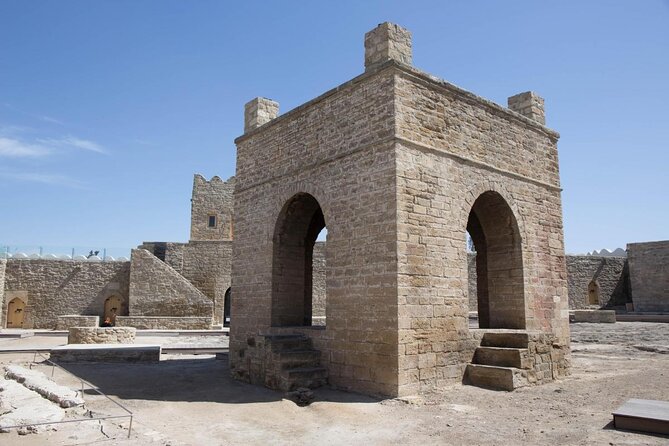
Ateshgah, also called the Fire Temple of Baku, brings the day back to religion and human use of natural fire. The complex is linked with both Hindu and Zoroastrian worship, based in part on Persian and Indian inscriptions found at the site.
The temple’s earliest recorded mention dates to the seventh century AD. Inside, you can see the cells used by fire worshippers, along with historical objects such as cookware, inscribed stone slabs, and clothing elements found during archaeological work.
The building is arranged around a central fire area, making the connection between architecture and belief easy to understand. Your guide can help explain how merchants, pilgrims, and religious visitors from different traditions became connected with the temple.
This is one of the places where the tour’s title makes sense. Azerbaijan’s natural gas fires were not just geological curiosities. They shaped stories, pilgrimage, and religious practice across the Absheron Peninsula.
Give yourself about an hour here. The complex is compact compared with Gobustan, but the details matter. Read the inscriptions, look at the small rooms around the courtyard, and ask your guide about the differences between Zoroastrian and Hindu use of the site.
Ateshgah can feel more reconstructed and museum-like than Gobustan. That is not necessarily a weakness, but it means you should come for the historical explanation rather than expect an untouched ancient ruin.
A completely different kind of day out:
- Baku: Guba, Shahdag, Laza & Lunch w/ Free City & Night Tour
★ 4.8 · 1,455 reviews - Shamakhi And Gabala Tour (All inclusive)
★ 5.0 · 815 reviews - From Baku: Gabala and Shamakhi Tour (Free Baku City Tour)
★ 4.8 · 695 reviews - Baku: Candy Cane, Guba, Khinaliq village with Homemade Lunch
★ 4.9 · 519 reviews
Yanar Dag: the final look at Azerbaijan’s natural fire
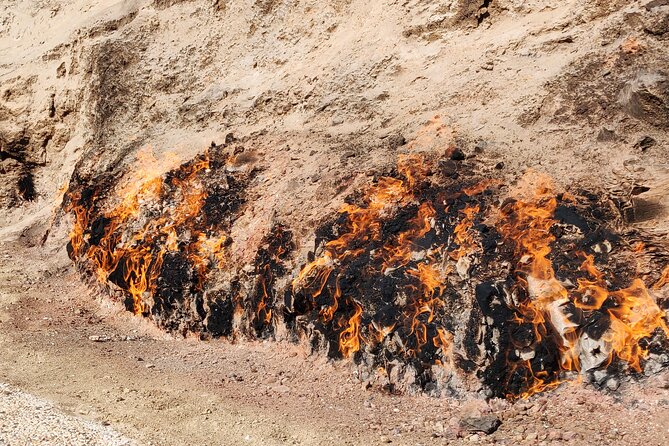
The last stop is Yanar Dag, or Burning Mountain. This is a natural gas flame burning on a hillside near Baku, and the fire has continued from ancient times.
The flame is not a huge volcanic eruption. It is a steady line of fire along the slope, fed by gas beneath the ground. Its scale makes the stop quick, with about 40 minutes allotted, but the sight is memorable because the fire appears to come directly from bare earth.
Yanar Dag also remains a place of pilgrimage for people from Iran and India. That connection gives the site more meaning than a simple photo stop. It links the natural conditions of the peninsula with the religious traditions explained at Ateshgah.
The two fire sites work best together. Ateshgah shows how people built a place of worship around sacred flame. Yanar Dag shows the natural phenomenon that helped inspire those beliefs in the first place.
Some people may find Yanar Dag less dramatic than expected, especially if they imagine a large mountain covered in fire. I would keep expectations sensible. It is a small but unusual natural display, and your guide’s explanation adds much of its value.
Guides, cars, and the value of going private
The tour includes an air-conditioned vehicle and an accredited guide. Since the day involves long transfers between four sites, the car is more than a convenience. It gives you a cool place to rest between stops and avoids the stress of arranging separate transport.
The private setup means only your group participates. That is especially useful for families, couples, and small groups who want to set their own rhythm. You can ask for more explanation at Gobustan, move faster through a smaller stop, or pause for photographs without waiting for a bus full of people.
The strongest praise has gone to the guides’ communication and attitude. Rajab is noted for excellent English, clear answers, help with photographs, and useful recommendations for Baku. Nigar is described as warm and genuinely enthusiastic about Azerbaijani culture. Mahmed has been particularly good with young children, while Valah has brought archaeological and religious subjects together in a clear way.
Pickup problems can happen in any city, especially when a hotel entrance or phone connection causes confusion. In one case, a phone call helped resolve the issue smoothly. I would still keep your phone available at the 9:30 a.m. meeting time and make sure the pickup location is exact.
The tour ends at Fountain Square instead of returning you to your hotel. That is convenient if you want to continue sightseeing or eat in central Baku. It is less convenient if you have luggage or need to return to a hotel in another part of the city, so plan that final transfer.
Is $89 a good value?
At $89 per person, the tour is not the cheapest way to leave Baku. Once you add the stated $23 in admission fees, the practical cost is about $112 per person before lunch.
Still, the price includes a full day of private transport and an accredited guide. For a couple or small group, that can compare well with hiring separate transport, finding each site, and paying for explanations on your own. The value is strongest when you care about context, not just transportation.
Lunch is not included. Since the day lasts about nine hours, plan for food and ask the provider how the schedule handles the meal break. The supplied details do not promise a specific restaurant or lunch stop.
The tour is also a good financial choice if you have only a few days in Baku. It covers the area’s main out-of-town sights in one booking, leaving your other days free for the capital itself.
Admission fees should be part of your original budget. The ticket cost is clearly listed at $23, but the tour price alone does not cover it.
Who should book this tour?
I would recommend it to first-time visitors who want a broad introduction to the Absheron Peninsula without organizing several outings. It suits couples, families, and small groups who value privacy and direct access to a guide.
It is especially good for you if you enjoy archaeology, unusual geology, religious history, or photography. Families with toddlers can also manage it, since the private format allows more flexibility and Mahmed’s child-friendly approach has been praised.
You may want a different plan if you dislike long road time or prefer to spend an entire day at one archaeological site. The four stops are varied, but none receives unlimited attention. You should also be comfortable with outdoor conditions at Gobustan and the mud volcanoes.
Free cancellation is available up to 24 hours before the 9:30 a.m. start. Poor weather can cause cancellation or a date change, and the tour also requires a minimum number of participants, despite being private for your own group.
My recommendation
Book this tour if you want the easiest way to connect Baku with Gobustan, the mud volcanoes, Ateshgah, and Yanar Dag. The private vehicle, flexible timing, and strong guide feedback make it a practical choice, especially for a short visit.
Before paying, budget another $23 for tickets, ask about the lunch arrangement, and confirm the pickup point. If you do that, this is a well-rounded day that shows why the area around Baku is so different from the city itself.
FAQ
How long does the tour last?
The tour lasts approximately nine hours.
What time does the tour start?
Pickup begins at 9:30 a.m. from your location within Baku.
Where does the tour end?
The tour ends at Fountain Square in Baku.
Is transportation included?
Yes. An air-conditioned vehicle and private transportation for your group are included.
Are entrance tickets included in the price?
No. Admission fees are not included. The stated ticket cost is $23.
Is lunch included?
No. Lunch is not included in the tour price.
Can I cancel for a full refund?
Yes, if you cancel at least 24 hours before the experience start time. Cancellations within 24 hours are not refunded. Poor weather or failure to meet the minimum number of participants can lead to a date change or full refund.
Just added in Baku
- Wine Tour Baku★ 5.0 · 4 reviews
- Wine Tour Qabala with Local Lunch★ 5.0 · 10 reviews
- Traditional Azerbaijani Cuisine Workshop★ 5.0 · 5 reviews
- Wine Crawl Baku★ 5.0 · 2 reviews
- Baku City Guided Wine Tour (snacks included)★ 5.0 · 15 reviews
- Full Day KHINALUG and the Candy Mountains Tour★ 5.0 · 15 reviews
- Tour to the North part of Azerbaijan Forests and Mountatin Quba★ 5.0 · 10 reviews
- The Magnificent Baku Night Tour★ 5.0 · 3 reviews
Gobustan and Absheron Tours, compared.
Gobustan, Mud Volcano, Fire Mount, Temple Lunch Entry
Read our review →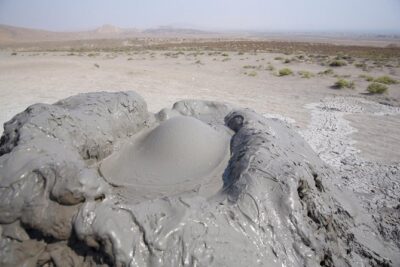
BEST Gobustan, Volcanoes & Absheron Fire Tour (Group or Private)
Read our review →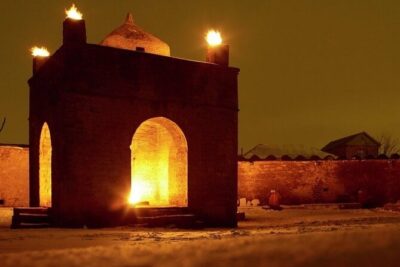
Gobustan, Volcanoes, Fire Temple and Yanardag Day Trip
Read our review →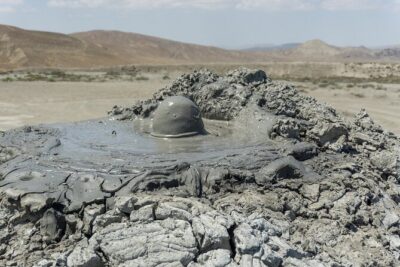
Gobustan & Mud, Fire Temple, Burning Mountain (Group & Private)
Read our review →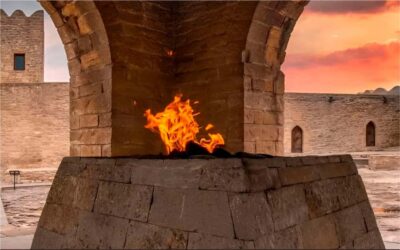
Mud Volcan-Fire Temple and Mountain Tour/Entrance inc
Read our review →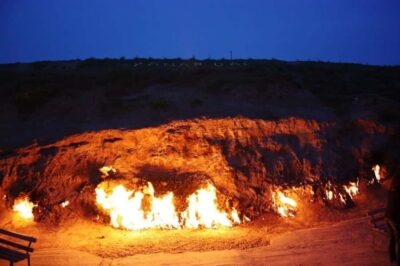
Gobustan Mud Volcanoes Temple & Entry tickets included
Read our review →Other Azerbaijan lists this tour is on