
REVIEW · GOBUSTAN AND ABSHERON TOURS
Gobustan and Absheron peninsula ( Group or Private ) TOUR ( All inclusive )
Fire, mud, rock art, and oil shape this day. From Baku, you’ll reach several of Azerbaijan’s most unusual sights without arranging separate taxis, tickets, or meals. I especially like the combination of ancient Gobustan rock art and the Ateshgah Fire Temple, two places that explain very different parts of Azerbaijan’s past. Hotel pickup and admission fees also make the $34 price appealing.
The day is long, at about nine hours, and the schedule packs in six stops. That is the main tradeoff. A shared minibus can feel cramped, and one poor experience involved a late pickup, weak air conditioning, and a guide who could not be heard from the back. If comfort matters most, choose the private option if available for your date.
The strongest guides make a large difference. Riad, Reza, Hafis, Riyad, Famil, and Samir are praised for their history, religious context, organization, and personal stories. The experience has a 4.8 rating from 130 reviews, with 97 percent recommending it, but the quality of the vehicle and guide can shape your day.
In This Review
- Key points to know before booking
- Why this route gives you a useful picture of Azerbaijan
- First Oil Well and Bibi-Heybat Mosque
- Gobustan’s museums and ancient rock carvings
- Mud volcanoes and the rougher side of the route
- Ateshgah Fire Temple and Azerbaijan’s sacred flame
- Yanar Dag, the mountain that burns
- Transport, group size, and the private choice
- Lunch and what the all-inclusive price really covers
- Guide quality can make or break the day
- Who should book this Baku day trip?
- My verdict on the $34 price
- Should you book it?
- FAQ
- How long does the Gobustan and Absheron tour last?
- What sites are included?
- Is hotel pickup included?
- Does the tour include lunch?
- Are admission tickets included?
- How large can the shared group be?
- Can I choose a private tour?
- What happens if the weather is poor?
- Can I cancel for a full refund?
Key points to know before booking
- Six major stops in about nine hours: The route covers the First Oil Well, Bibi-Heybat Mosque, Gobustan, mud volcanoes, Ateshgah, and Yanar Dag.
- Gobustan combines two kinds of history: You see museum displays and prehistoric rock carvings made from the Late Stone Age through the Middle Ages.
- The mud volcanoes are genuinely unusual: The area contains about 350 of the world’s roughly 800 mud volcanoes.
- Fire is the theme of the Absheron stops: Ateshgah explains sacred fire traditions, while Yanar Dag presents a naturally burning mountain.
- The $34 cost covers the basics: Transport, lunch, guide service, admission tickets, and local taxes are included.
- Private may be worth the upgrade: Shared groups can reach 18 people, and the minibus may be less comfortable in hot weather.
Why this route gives you a useful picture of Azerbaijan
Baku can feel polished, modern, and oil-funded. This excursion takes you beyond the city center and shows the forces that helped shape the country: petroleum, religion, geology, and early human culture.
The route also has a pleasing variety. You are not spending nine hours looking at one kind of monument. One stop is a mosque, another is an archaeological site, another is a muddy volcanic field, and the final two focus on fire. That variety keeps the day moving, even when the schedule begins to feel full.
I see this as an efficient first look at the Baku region. It does not offer a slow, scholarly visit to each site. Instead, it gives you enough time to understand why each place matters and lets the guide connect the pieces.
More Gobustan and Absheron trips:
- Baku: Gobustan, Mud Volcano, Fire Mount, Temple Lunch Entry
★ 4.9 · 3,246 reviews - BEST Gobustan, Volcanoes & Absheron Fire Tour (Group or Private)
★ 5.0 · 1,254 reviews - Gobustan and Absheron tour (All inclusive)
★ 5.0 · 1,014 reviews
First Oil Well and Bibi-Heybat Mosque
The first stop takes about 15 minutes and has no admission fee. Azerbaijani historians found documents in Russian archives indicating that an oil well was drilled at the Bibi-Eybat field near Baku in 1846. That date places it 13 years before commercial oil production began in the United States.
You should treat this as a short historical pause rather than a major museum visit. It helps explain Baku’s long connection with petroleum and gives the rest of the day a useful starting point. The oil story is not just modern business history here. It is part of the reason Baku became so important.
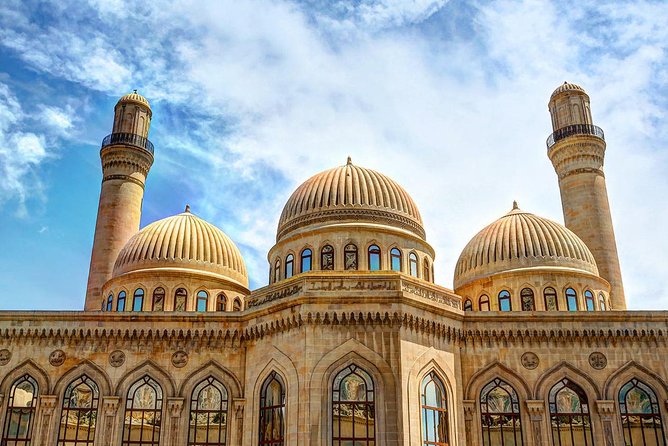
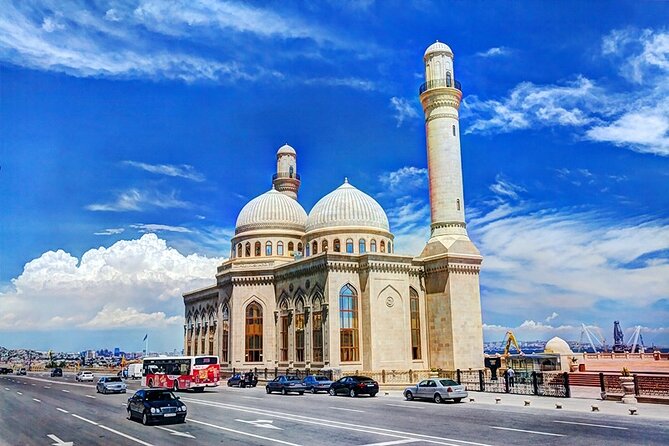
The nearby Bibi-Heybat Mosque receives about 20 minutes. Your guide explains Islam in Azerbaijan and the mosque’s place in the country’s religious story. The building is described as one of Azerbaijan’s oldest and most beautiful, though the short visit means you should expect an introduction rather than an extended architectural study.
This is one point where a good guide matters. Reza was praised for explaining history and religion in both English and Russian, while other guides were appreciated for giving clear background before letting the group explore. If your guide is less engaged, the mosque visit may feel brief.
Gobustan’s museums and ancient rock carvings
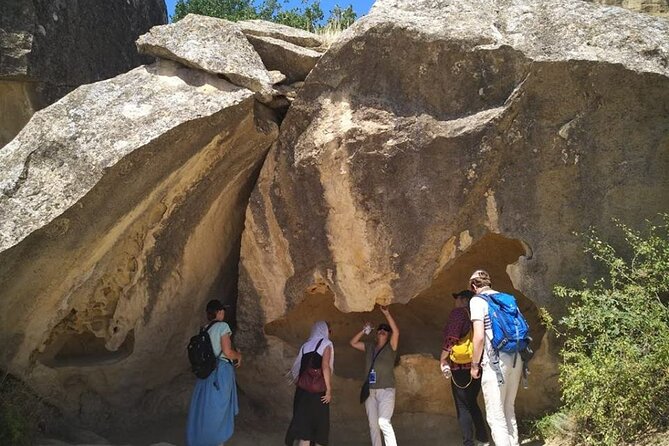
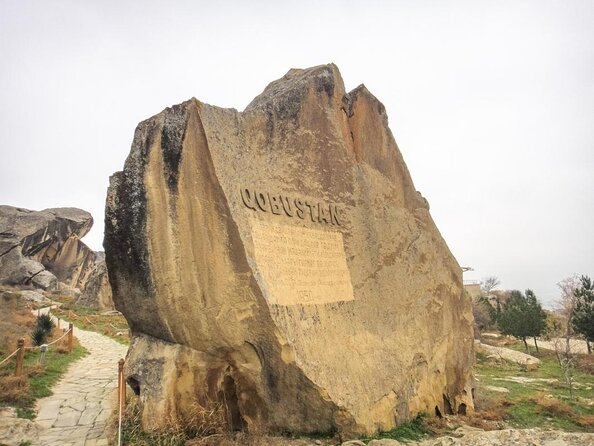
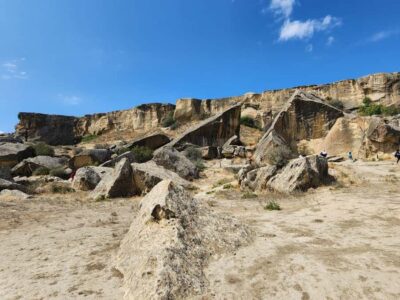
Gobustan gets about an hour and 15 minutes, making it the main cultural stop. You visit two museums before seeing the rock carvings, with explanations about ancient tribes and daily life from the Late Stone Age through the Middle Ages.
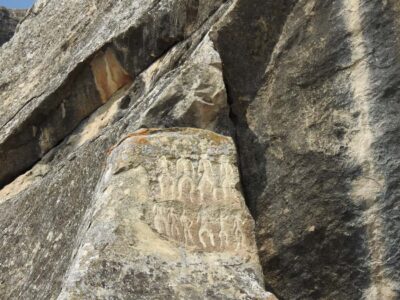
The carvings are the heart of the visit. They record people, animals, hunting, music, and other parts of early life in the region. One account specifically appreciated the prehistoric carvings and musical details, which shows why the stop works best when your guide adds interpretation rather than simply pointing at the rocks.
I like that the tour includes both museums and the outdoor carvings. The museums give you context first, so the images outside are easier to understand. Without that background, ancient markings can blur together. With it, you can start asking what the figures reveal about work, belief, movement, and social life.
Wear practical shoes and bring sun protection. The provided information does not promise shade or detailed walking conditions, so you should be ready for an outdoor visit. The time is generous compared with several other stops, but it is still a group tour, not an unhurried archaeological field day.
Mud volcanoes and the rougher side of the route
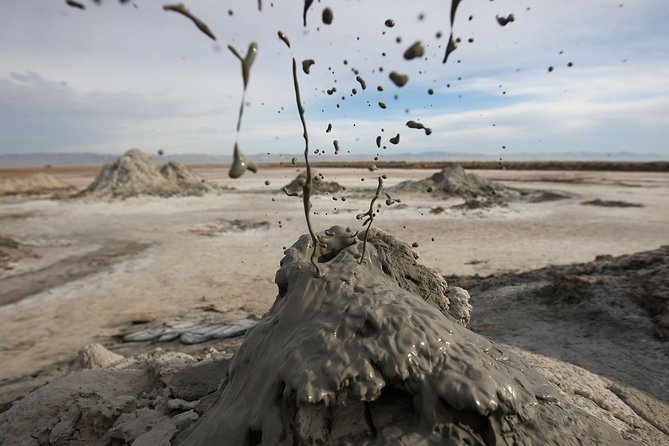
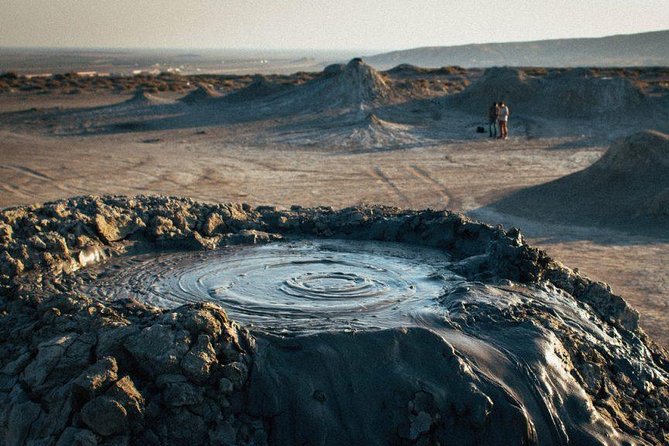
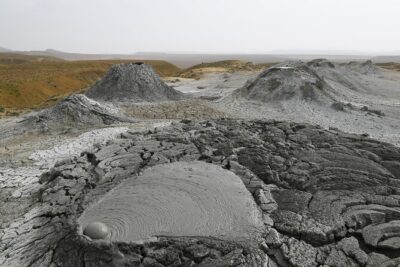
The mud volcano stop lasts about 40 minutes. Gobustan is described as one of the world’s richest areas for these formations, with about 350 of the roughly 800 mud volcanoes found worldwide.
This is a geological stop rather than a polished attraction. You may see cones and pools of bubbling mud, and you may even collect some mud for a skin-care mask. That small hands-on detail gives the stop a playful quality, but you should avoid treating the mud as a guaranteed beauty treatment. The tour only says you may collect it for that purpose.
This part of the day can also be the least comfortable. The wider area may feel exposed, and the tour does not provide a detailed list of facilities. Keep your expectations simple: you are coming to see an unusual natural feature, not a developed park with extensive services.
The road and vehicle matter here. The shared option can carry up to 18 people, and a minibus may be less pleasant if it is full. One particularly negative experience involved a nearly one-hour pickup delay, cramped legroom, and air conditioning that failed during hot weather. That is not the dominant picture, but it is a fair warning to consider the private format if you dislike uncertain comfort.
More all-inclusive packages in Baku:
- Shamakhi And Gabala Tour (All inclusive)
★ 5.0 · 815 reviews - Gabala-Sheki Tour 2 Days, 1 Night (All Inclusive)
★ 5.0 · 88 reviews - Khinalug tour and more… ( All inclusive )
★ 4.5 · 77 reviews - Sheki is a harmony of nature and architecture ( All inclusive )
★ 4.5 · 40 reviews
Ateshgah Fire Temple and Azerbaijan’s sacred flame
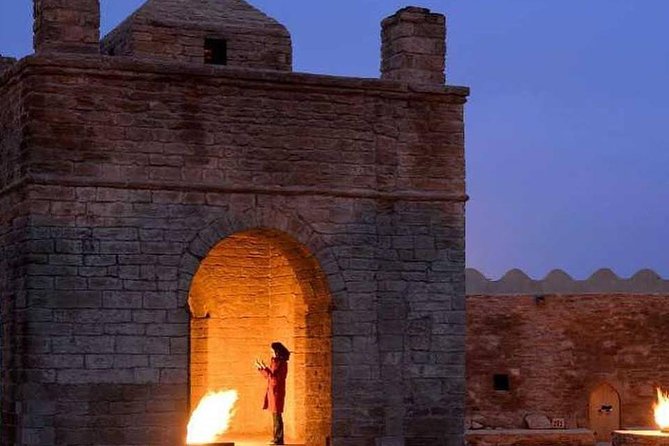
Ateshgah is scheduled for about an hour and is one of the day’s most memorable cultural stops. The temple introduces the sacred role of fire in Azerbaijan and is associated with an enduring flame.
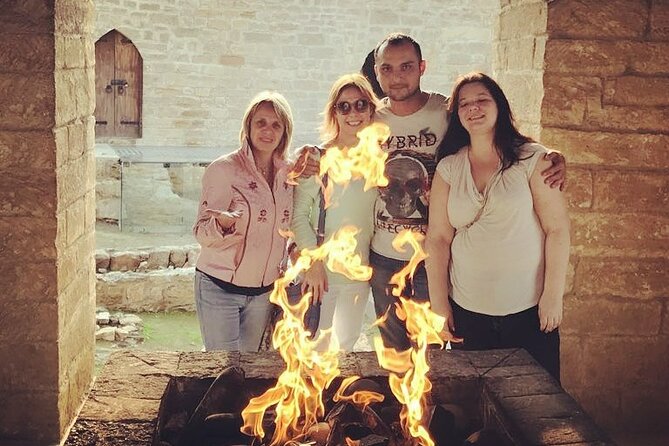
The building also reflects the wider religious connections of the region. The visit can help you understand the old fire-worship traditions of Azerbaijan, as well as the fact that the site was used by Hindus and Sikhs in the past. That mix makes Ateshgah more interesting than a simple monument labeled a fire temple.
Several guides received special praise for this part of the route. Reza’s explanations of religion were singled out, and another guide helped the group understand how faith and local history meet at the site. If you are interested in religious history, this may be the stop that justifies the whole excursion.
You get enough time to look around, but do not expect a private visit. The guide’s approach can range from a detailed explanation to a shorter introduction. Some people valued the chance to explore independently, while one less enthusiastic guide was criticized for offering too few historical and archaeological details.
Yanar Dag, the mountain that burns
The final listed attraction is Yanar Dag, visited for about 30 minutes. The site is described as a mountain that has burned for 5,000 years, with the guide explaining why the flame continues.
Yanar Dag is a simple but striking finish. You are not visiting a large complex. The attraction is the fire itself and the geological explanation behind it. After the temples, mosque, and rock art, this brings the day back to the natural forces beneath Azerbaijan.
The short stop is probably enough for most people. Energy can flag by this point, especially after a full day in the heat and a long ride. Samir was praised for encouraging people to keep going while still balancing explanations with time to explore. That kind of steady guidance matters at the end of a packed route.
Transport, group size, and the private choice
Hotel pickup and drop-off are offered at selected hotels. The tour uses an air-conditioned vehicle, though the exact vehicle and comfort level can vary. Shared groups can have up to 18 people, while the private option gives you more control over the day and avoids the largest-group drawbacks.
Pickup is an important practical detail. One person had difficulty finding the meeting point and another reported a long delay before collection. Confirm your pickup details carefully and keep your phone available. The experience includes pickup, but the information does not promise a precise pickup time for every hotel.
A shared group suits you if you want the lowest price and are comfortable with a fixed schedule. At $34 per person, having a guide, lunch, tickets, and transport bundled together is strong value. You would spend time and money arranging the same route independently, especially with sites spread around the Baku area.
Private is the safer choice for couples, families, or anyone who values comfort. The supplied details do not give a separate private price, so compare the actual difference before booking. The key benefit is not just privacy. It is the chance to reduce the risk of a crowded minibus, a hard-to-hear guide, or a schedule that feels too rigid.
Lunch and what the all-inclusive price really covers
Lunch is included, along with entry tickets, local taxes, a professional guide, and transport. That makes the price easy to understand. You pay once for the core parts of the day instead of stopping to handle separate admissions and meal arrangements.
The meal should be treated as practical fuel, not a central culinary event. One person found the included meal disappointing, despite enjoying the rest of the tour. Another description refers to a free dinner, though the tour details identify lunch as included, so check the timing and meal wording when you book.
Personal payments are not included. The information does not list specific extras, so carry some money for anything outside the stated package. Do not assume every food, drink, or personal purchase is covered simply because the tour is called all-inclusive.
Guide quality can make or break the day
The best part of this experience is often the human one. Riad was praised for his passion and for sharing broad knowledge of Azerbaijan. Riyad was appreciated for coordinating with the driver, organizing each stop, and allowing enough time to explore. Hafis was described as especially effective at explaining both the sites and everyday life in Azerbaijan.
Samir received credit for balancing information, personal stories, and independent time. Famil was described as clear and pleasant, while Reza was praised for his command of history and religion in English and Russian.
That is a strong list of positive guide experiences, but the service is not perfectly uniform. One person found the guide sweet but bored and wanted more historical and archaeological detail. This is worth keeping in mind if you are booking mainly for expert interpretation. The attractions are fixed, but the depth of explanation depends on the guide assigned that day.
Who should book this Baku day trip?
I would recommend this tour to you if you have one free day in Baku and want the main sights outside the city without managing transport. It is especially useful for first-time visitors, history fans, people curious about religion, and anyone who has never seen a mud volcano or a naturally burning hillside.
It also works well for visitors who like variety. You get archaeology, Islam, oil history, geology, fire worship, and natural gas in one route. That is a lot of subject matter for one day, but it gives you a broad sense of the region.
You may want a different plan if you prefer slow travel. The schedule is full, the day lasts about nine hours, and some visits are short. It may also disappoint you if lunch quality, vehicle comfort, or highly detailed guiding is more important than seeing many places.
The tour is suitable for most people, according to the provided participation details. Still, the mud volcano area and outdoor Gobustan visit call for sensible footwear and preparation for changing weather. The tour requires good weather, and poor conditions can lead to a new date or a full refund.
My verdict on the $34 price
At $34, this is one of the easier day trips to recommend on value. The price includes the vehicle, hotel pickup from selected hotels, lunch, a guide, admission tickets, taxes, and drop-off. The route itself would be awkward to assemble with separate transport.
The strongest value comes from the variety, not from the length of any single visit. You see six different places in about nine hours, including several attractions that are difficult to combine efficiently on your own.
The main question is the vehicle. If the shared minibus is comfortable and the guide is engaged, the tour can feel like an excellent bargain. If the vehicle is crowded, the air conditioning fails, or the guide cannot be heard, the long day becomes tiring. For that reason, I would choose shared travel for a strict budget and private travel for comfort or a special occasion.
Should you book it?
Yes, if you want a practical introduction to Gobustan and the Absheron Peninsula at a low price. The rock carvings, mud volcanoes, Ateshgah, and Yanar Dag give you experiences that Baku’s city center cannot provide.
Book it with realistic expectations. This is a packed sightseeing day, not a relaxed countryside outing. Confirm pickup details, ask about the private price if comfort matters, and be prepared for lunch to be functional rather than memorable. With a strong guide such as Riad, Hafis, Reza, Riyad, or Samir, the day can become one of the most useful history and geology trips from Baku.
FAQ
How long does the Gobustan and Absheron tour last?
The tour lasts approximately nine hours.
What sites are included?
The route includes the World’s First Oil Well, Bibi-Heybat Mosque, Gobustan Rock Art, the mud volcanoes, Ateshgah Fire Temple, and Yanar Dag.
Is hotel pickup included?
Hotel pickup and drop-off are included for selected hotels.
Does the tour include lunch?
Yes. Lunch is included in the tour price.
Are admission tickets included?
Yes. Entry tickets for the included attractions are covered.
How large can the shared group be?
The tour can have a maximum of 18 travelers.
Can I choose a private tour?
Yes. The experience offers a choice between a private group and a shared group tour. The supplied details do not state the separate private price.
What happens if the weather is poor?
The experience requires good weather. If it is canceled because of poor weather, you will be offered another date or a full refund.
Can I cancel for a full refund?
Yes. You must cancel at least 24 hours before the experience start time. Cancellations made less than 24 hours in advance are not refundable.
Just added in Baku
- Wine Tour Baku★ 5.0 · 4 reviews
- Wine Tour Qabala with Local Lunch★ 5.0 · 10 reviews
- Traditional Azerbaijani Cuisine Workshop★ 5.0 · 5 reviews
- Wine Crawl Baku★ 5.0 · 2 reviews
- Baku City Guided Wine Tour (snacks included)★ 5.0 · 15 reviews
- Full Day KHINALUG and the Candy Mountains Tour★ 5.0 · 15 reviews
- Tour to the North part of Azerbaijan Forests and Mountatin Quba★ 5.0 · 10 reviews
- The Magnificent Baku Night Tour★ 5.0 · 3 reviews
Gobustan and Absheron Tours, compared.
Gobustan, Mud Volcano, Fire Mount, Temple Lunch Entry
Read our review →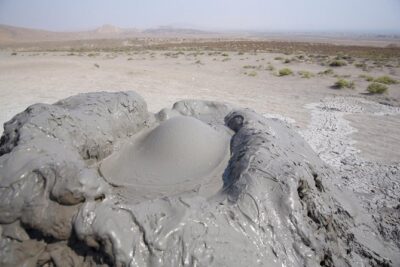
BEST Gobustan, Volcanoes & Absheron Fire Tour (Group or Private)
Read our review →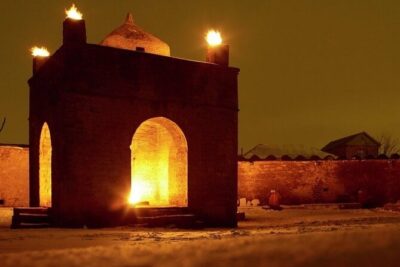
Gobustan, Volcanoes, Fire Temple and Yanardag Day Trip
Read our review →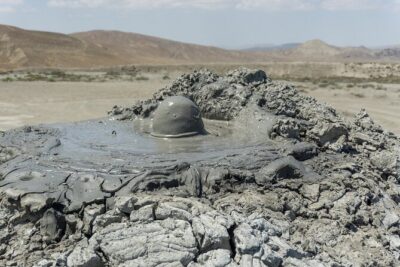
Gobustan & Mud, Fire Temple, Burning Mountain (Group & Private)
Read our review →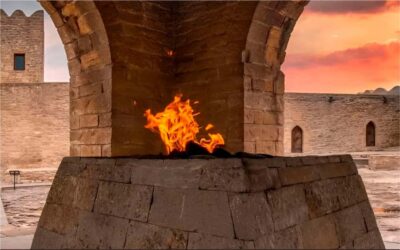
Mud Volcan-Fire Temple and Mountain Tour/Entrance inc
Read our review →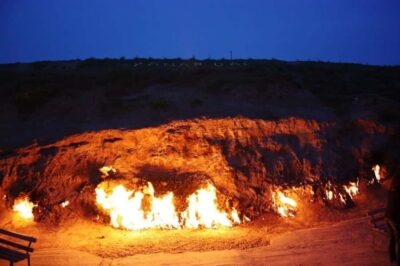
Gobustan Mud Volcanoes Temple & Entry tickets included
Read our review →Other Azerbaijan lists this tour is on