
REVIEW · OLD CITY WALKS
Baku old city tour
Baku’s story is written in stone. This three-hour walk through Icheri Sheher, Baku’s walled Old City, links medieval gates, caravanserais, mosques, the Maiden Tower, and the Palace of the Shirvanshahs in one compact route. I like the small private format, since your group can focus on questions and move at a sensible pace. I also like the guide’s emphasis on how Baku developed from an old fortified center into a modern capital.
The main consideration is cost beyond the $50 tour price. Admission to the Maiden Tower and Palace of the Shirvanshahs is not included, and the palace takes about an hour of the schedule. If you want a fuller visit inside both paid sites, three hours may feel tight. Still, this is a strong first look at Baku’s historic core, especially with a guide such as Valeh, whose clear explanations and flexible approach earned high praise.
In This Review
- Key points at a glance
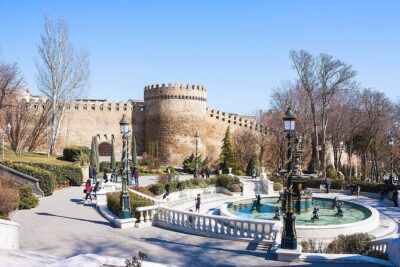
- Starting at Baku’s Double Gates
- House of the Baku Khans and a vanished court
- Bukhara Caravanserai and the old trade road
- Maiden Tower, the symbol of Baku
- Two mosques, two layers of Baku’s past
- A tiny museum with a big claim
- One hour at the Palace of the Shirvanshahs
- What the $50 price really covers
- The guide makes the difference
- Timing, comfort, and practical planning
- Who should book this walk?
- Should you book the Baku Old City tour?
- FAQ
- How long does the Baku Old City tour last?
- Where does the tour begin?
- Where does the tour end?
- Is the tour private?
- How much does the tour cost?
- Are admission fees included?
- Is lunch included?
- Which stops have free admission?
- Is the tour available with a mobile ticket?
- What happens if the weather is poor?
- Can I cancel the tour?
Key points at a glance
- Meet at the Double Gates: The walk begins at Qala Qapısı Restoranı by the Gosha Gala, or Double Gates, a practical entrance to Icheri Sheher.
- Eight historic stops: You see the city walls, Baku Khans’ former residence, Bukhara Caravanserai, Maiden Tower, two mosques, the Miniature Books Museum, and Shirvanshahs Palace.
- Private group experience: Only your party takes part, which makes it easier to ask questions or adjust the pace.
- Paid admissions are extra: The Maiden Tower and Palace of the Shirvanshahs require separate admission fees.
- A guide-led history lesson: The walk connects Baku’s medieval trading role, religious past, khanate period, and modern identity.
- Flexible cancellation: You can cancel for a full refund up to 24 hours before the start time, subject to the weather policy.
Starting at Baku’s Double Gates
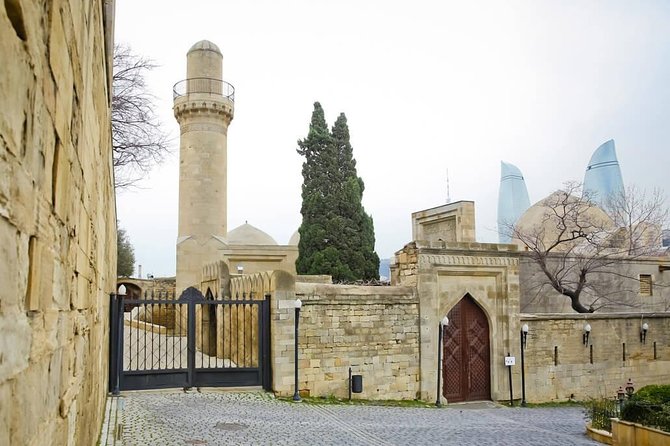
Your meeting point is Qala Qapısı Restoranı on Cavadxan Street, in front of the Gosha Gala, or Double Gates. This is a useful place to begin because the gates lead directly into the Old City. Your guide meets you here and accompanies you through the historic center rather than leaving you to find each sight on your own.
The opening stop lasts about 10 minutes and has no admission charge. Use it to get oriented. The Old City is not just a collection of isolated monuments. The walls, lanes, religious buildings, merchant inns, and palaces all tell parts of the same story. A good guide helps you see those links instead of treating each building as a separate photo stop.
The experience is advertised as an introduction to both old and modern Baku. The scheduled stops are concentrated in Icheri Sheher, so you should not expect a long visit to modern avenues or newer architectural attractions. The modern connection comes mainly through the guide’s explanation of how the capital grew beyond its old walls.
More walks around the Old City:
- Baku Oil Heritage & Old Town Walking Tour
★ 5.0 · 232 reviews - Guba Khinalug & Candy Cane Mountains tour (by Old City Tours)
★ 4.5 · 208 reviews - Gabala + Shamakhi tour (by Old City Tours)
★ 4.5 · 198 reviews
House of the Baku Khans and a vanished court
The House of Baku Khans is an important reminder that the Old City was once a place of power, not only a merchant quarter. The site once included the palace, bathhouse, and garden of Baku’s 18th-century khans.
You spend about 10 minutes here, with no separate admission fee. That short timing means the stop works best as a historical explanation rather than a long architectural visit. Ask your guide to explain how the khans lived and how their residence fit into the political life of Baku.
This stop adds useful variety to the route. After beginning with defensive walls and gates, you move toward the people who ruled the city. It gives the walk a human side and helps you picture the Old City as a lived-in center of government, trade, worship, and private life.
Bukhara Caravanserai and the old trade road
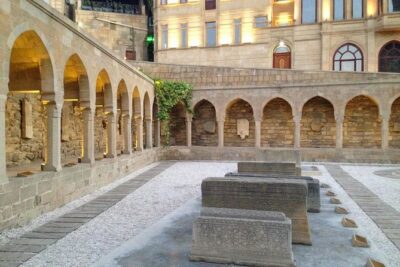
The Bukhara Caravanserai offers a glimpse of Baku’s role in long-distance commerce. Built in the late 15th century, it was an open-type caravanserai where merchants and other travelers from Central Asia could stay overnight.
You have about 10 minutes here, and admission is free. The value of the stop is not simply the building itself. It shows why Baku’s position mattered. Merchants needed safe places to rest, store goods, meet other traders, and continue their journeys. Caravanserais were practical buildings, but they also helped cities grow.
The word Bukhara points toward Central Asia, and the building helps connect Baku to a wider eastern trading world. I would listen closely to the guide here, since the explanation of how the inn functioned may be more rewarding than a quick look at its walls.
Maiden Tower, the symbol of Baku
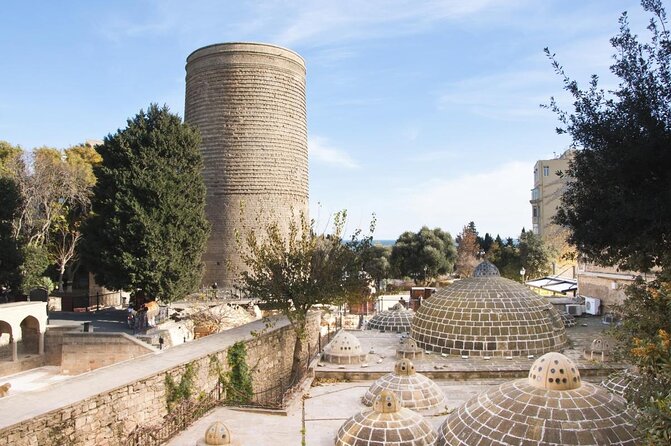
The Maiden Tower, known locally as Qız Qalası or Giz Galasi, is the best-known monument on this walk. It sits in the heart of Icheri Sheher and is widely treated as a symbol of Baku.
The visit is scheduled for about 10 minutes, and admission is not included in the tour price. That is an important practical point. You should budget separately if you want to go inside, and you may need to decide how much time you want to devote to the tower compared with the palace later in the route.
The tour gives you a chance to understand the tower’s place in the city, but 10 minutes is a short window for a full interior visit. If entering the Maiden Tower is a priority, ask the guide how the timing will work before paying for admission. You may prefer to see the exterior with the group and save more time for the Palace of the Shirvanshahs, which has a longer scheduled visit.
The tower’s appeal comes from its unusual form and central position. It is not just another old building on the route. It is the monument most closely tied to Baku’s public image, so this is one stop where a clear explanation makes a real difference.
A completely different kind of day out:
- Baku: Gobustan, Mud Volcano, Fire Mount, Temple Lunch Entry
★ 4.9 · 3,246 reviews - Baku: Guba, Shahdag, Laza & Lunch w/ Free City & Night Tour
★ 4.8 · 1,455 reviews - BEST Gobustan, Volcanoes & Absheron Fire Tour (Group or Private)
★ 5.0 · 1,254 reviews - Gobustan and Absheron tour (All inclusive)
★ 5.0 · 1,014 reviews
Two mosques, two layers of Baku’s past
The next part of the walk visits Muhammad Mosque and Juma Mosque. Both are free to visit, and each is scheduled for about 10 minutes.
Muhammad Mosque is also called the Siniggala, or damaged tower, mosque. It was badly damaged in the 18th century when Russian ships shelled Baku. The name preserves that event in the building itself. This is a useful example of how monuments can carry political and military history in their names.
Juma Mosque was built above the remains of a Zoroastrian temple. That detail gives the site a longer religious timeline than the mosque alone suggests. It points to earlier forms of worship in the area before the building became one of the capital’s principal mosques.
These short visits work well together. You see a mosque marked by wartime damage, then another built above the remains of an earlier sacred site. I would treat them as stops for context and atmosphere, not long museum visits. Modest clothing and respectful behavior are sensible at religious sites, although no special dress instructions are provided for this tour.
A tiny museum with a big claim
The Baku Museum of Miniature Books is one of the route’s more unexpected stops. Its books are small enough to fit in the palm of your hand, and the collection entered the Guinness Book of Records as the world’s largest collection of miniature books.
Admission is free, and the visit lasts about 10 minutes. That makes it an easy addition to the walk. You do not need to choose between this museum and a major paid attraction, and its compact displays provide a change of pace after walls, mosques, and medieval stonework.
The museum is also a reminder that an Old City tour does not need to be solemn from beginning to end. Baku’s historic center includes unusual, highly specific places alongside major monuments. If you like small museums and odd collections, this may be one of the most memorable stops.
One hour at the Palace of the Shirvanshahs
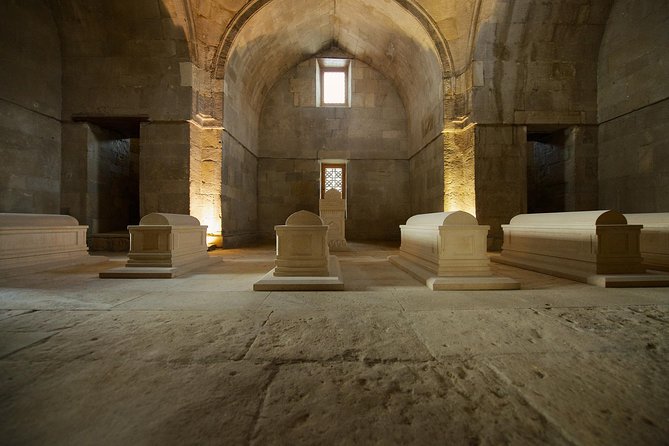
The final major stop is the Palace of the Shirvanshahs, scheduled for about one hour. This is the longest visit on the route, and rightly so. The palace is described as a major work of Azerbaijani architecture and is part of a UNESCO World Heritage site.
The complex includes exhibits connected with the Shirvanshahs and their era, including jewelry made for women and horses, along with possessions associated with the ruling family and other notable people. Admission is not included, so plan for an additional fee.
I would make the palace the priority paid attraction if your time or budget allows only one. The longer schedule gives the guide room to explain the complex and gives you time to see the exhibits without reducing the visit to a quick exterior look. The palace also brings together many themes introduced earlier: ruling power, faith, craftsmanship, and Baku’s place in the region.
The one-hour timing has another benefit. You are not rushed from one landmark to the next all afternoon. Most of the other stops last 10 minutes, so the palace provides the route’s main period of sustained exploration. If you care about interiors and museum displays, check with the guide at the beginning about how much of the hour will be guided explanation and how much will be free viewing.
What the $50 price really covers
At $50 per person, the price pays for a three-hour private walking tour with a guide. It does not cover lunch or admission fees. Since only your group participates, the value depends heavily on your group size and your interest in personal explanations.
For one person or a couple, $50 is more expensive than joining a large shared walk. You are paying for a private format, not transportation or a meal. For a family or small group, the price may make more sense, particularly if group discounts apply to your booking.
The tour includes several free stops, but the two headline attractions, the Maiden Tower and Palace of the Shirvanshahs, cost extra. Add those fees to your budget before booking. The tour is best value for someone who wants a guide to organize the historic center and explain what they are seeing, rather than someone who only wants a quick list of buildings.
The route ends back at the meeting point. That is convenient if you want to continue exploring the Old City afterward or return to the same area without arranging another pickup.
The guide makes the difference
The strongest praise has focused on the guiding. Valeh has been singled out for explaining the sights clearly and handling the schedule with flexibility. That matters on a walking tour with several short stops and two optional paid admissions.
A private activity also gives you room to ask for clarification. If the history of the khans interests you more than the miniature books, you can tell the guide. If you want more time at the palace, raise that early. The supplied information does not promise a custom route, but the guide’s flexible approach suggests that reasonable requests may be considered.
Do not expect a luxury service with meals, transfers, or entrance fees built in. This is a focused history walk. Its strength is the human explanation that ties the monuments together.
Timing, comfort, and practical planning
The advertised duration is approximately three hours. Most early stops take 10 minutes, while the Palace of the Shirvanshahs takes about one hour. That leaves the remaining time for walking between sites and for the guide’s explanations.
You should wear comfortable shoes. The experience is on foot and takes place in the Old City, where the main value comes from moving between historic buildings rather than riding from one to another. The tour requires good weather, so poor conditions can lead to a new date or a full refund.
The meeting point is near public transportation, and confirmation is provided at booking. Service animals are allowed, and the activity information says most people can participate. Since no detailed accessibility description is provided, contact Bag Baku Tour if you need specific information about surfaces, steps, or access inside the monuments.
Free cancellation is available up to 24 hours before the start time. A cancellation inside that window is not refundable, and late changes are not accepted. The cut-off follows local Baku time.
Who should book this walk?
I would recommend this tour to a first-time visitor who wants a clear introduction to Baku’s Old City without spending a full day on a guided program. It suits history fans, couples, families, and small groups who value a private guide and a compact route.
It is also a good choice if you want to see the headline sights but do not yet know which details matter. The guide places the Maiden Tower, caravanserai, mosques, palace, and city walls into one connected story.
I would hesitate if you want a broad tour of modern Baku, a food experience, or included entry to every attraction. The route is firmly centered on Icheri Sheher, and lunch and admission fees are separate. You should also choose another option if you prefer to explore entirely at your own pace.
Should you book the Baku Old City tour?
Book it if you want a private, guide-led introduction to Baku’s historic center and are comfortable paying extra for the Maiden Tower and Shirvanshahs Palace. The best reasons are the sensible three-hour length, the private format, and the guide’s praised ability to explain the city and adapt to your needs.
Before booking, decide which paid site matters most. If you want both interiors, tell the guide at the start so the short Maiden Tower stop and longer palace visit are handled well. For a first morning or afternoon in Baku, this walk offers a practical foundation and leaves you free to keep exploring after it ends.
FAQ
How long does the Baku Old City tour last?
The tour lasts approximately three hours.
Where does the tour begin?
It begins at Qala Qapısı Restoranı on Cavadxan Street in Baku, in front of the Gosha Gala, also called the Double Gates.
Where does the tour end?
The activity ends back at the meeting point.
Is the tour private?
Yes. Only your group participates in this activity.
How much does the tour cost?
The listed price is $50 per person. Group discounts are available.
Are admission fees included?
No. Admission fees are not included. The Maiden Tower and Palace of the Shirvanshahs are specifically listed as requiring separate admission.
Is lunch included?
No. Lunch is not included.
Which stops have free admission?
The Gosha Gala, House of the Baku Khans, Bukhara Caravanserai, Muhammad Mosque, Juma Mosque, and Baku Museum of Miniature Books are listed with free admission.
Is the tour available with a mobile ticket?
Yes. Mobile tickets are available.
What happens if the weather is poor?
The experience requires good weather. If it is canceled because of poor weather, you will be offered a different date or a full refund.
Can I cancel the tour?
You can cancel up to 24 hours before the start time for a full refund. Cancellations made less than 24 hours before the start time are not refunded.
Just added in Baku
- Wine Tour Baku★ 5.0 · 4 reviews
- Wine Tour Qabala with Local Lunch★ 5.0 · 10 reviews
- Traditional Azerbaijani Cuisine Workshop★ 5.0 · 5 reviews
- Wine Crawl Baku★ 5.0 · 2 reviews
- Baku City Guided Wine Tour (snacks included)★ 5.0 · 15 reviews
- Full Day KHINALUG and the Candy Mountains Tour★ 5.0 · 15 reviews
- Tour to the North part of Azerbaijan Forests and Mountatin Quba★ 5.0 · 10 reviews
- The Magnificent Baku Night Tour★ 5.0 · 3 reviews
Old City Walks, compared.

Guba Khinalug & Candy Cane Mountains tour (by Old City Tours)
Read our review →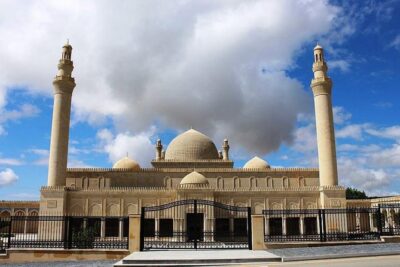
Baku Old City Tour (officially by Old City Tours)
Read our review →
Baku Old City Wonders: A Walking Tour Through Time
Read our review →
Other Azerbaijan lists this tour is on