
REVIEW · GOBUSTAN AND ABSHERON TOURS
Baku: Gobustan, Mud Volcanoes, Ateshgah, and Yanardag Tour
Fire, mud, and ancient carvings make this a memorable day. This nine-hour private tour links four very different sights around Baku, from prehistoric rock art and active mud volcanoes to a Zoroastrian temple and a hillside flame.
I love the way the tour connects Azerbaijan’s past with its unusual geology. I also like having private transportation and an English-speaking guide, especially since the sites are spread across the Absheron region. The main drawback is cost: at $99 per person, you still pay about $24 in entry fees, plus lunch and personal expenses.
The day is packed, but it gives you a broad look at the country beyond central Baku. A guide can make a major difference here. Mushfiq, named in recent booking feedback, was praised for his strong English, enthusiasm, and help after the tour, including showing visitors good dinner areas in Baku’s Old Town.
In This Review
- Key points to know before booking
- A long day with four very different faces
- Gobustan Museum: begin with the human story
- Gobustan rocks: thousands of carvings in an open setting
- Mud volcanoes: a close look at Azerbaijan’s strangest terrain
- Lunch in Baku: a useful pause, but bring extra money
- Ateshgah Fire Temple: where fire shaped faith
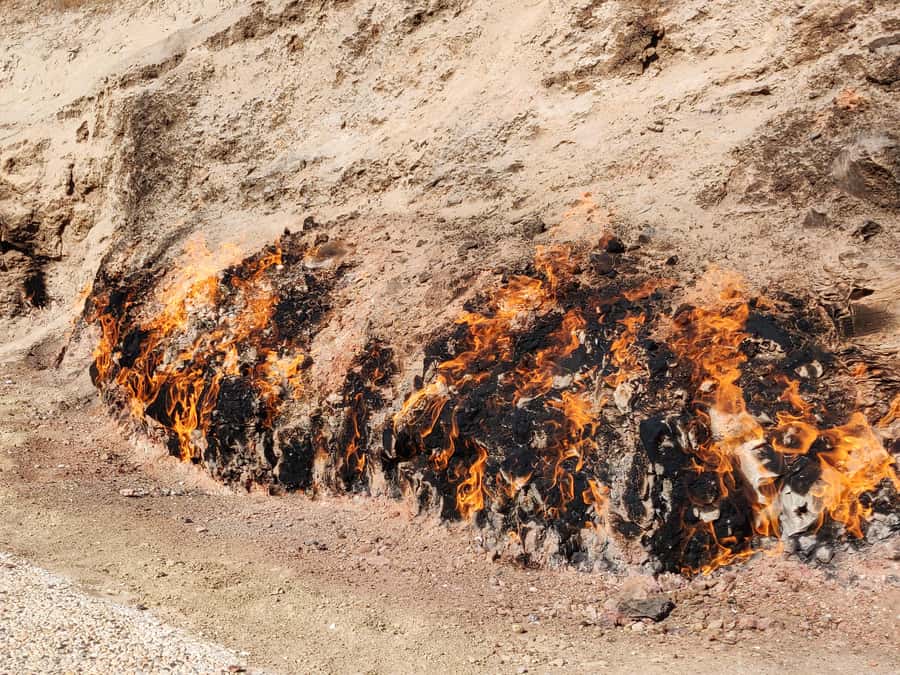
- Yanardag: a hillside flame with an old name
- The guide can make or break the day
- Is $99 per person a fair price?
- Who should book this experience?
- Should you book it?
- FAQ
- How long does the Baku tour last?
- Where does pickup take place?
- Where does the tour finish?
- Is the tour private?
- Is an English-speaking guide included?
- Are entrance tickets included in the price?
- Is lunch included?
- What should you bring?
- Can wheelchair users join the tour?
Key points to know before booking
- Gobustan combines a modern museum with ancient carvings: You get context first, then see the petroglyphs and caves in person.
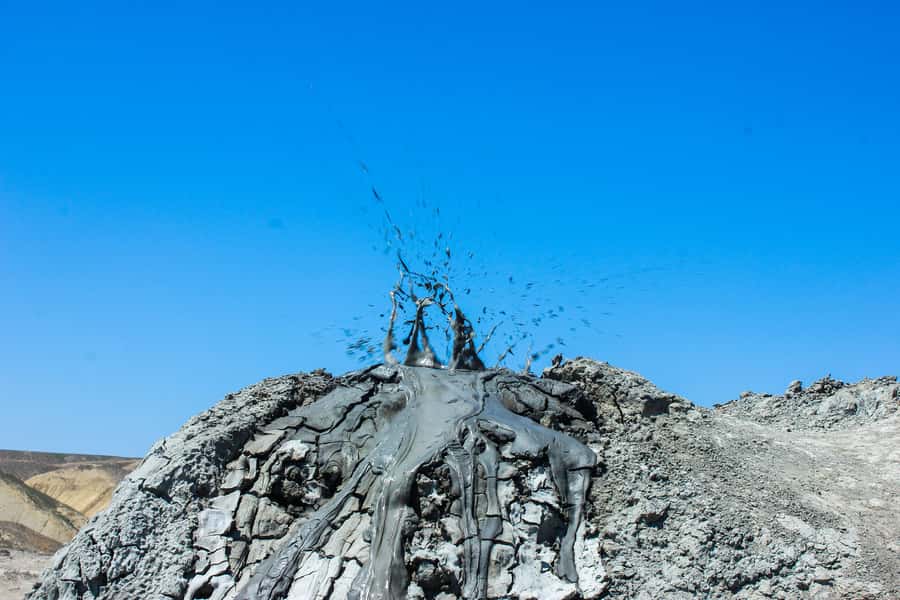
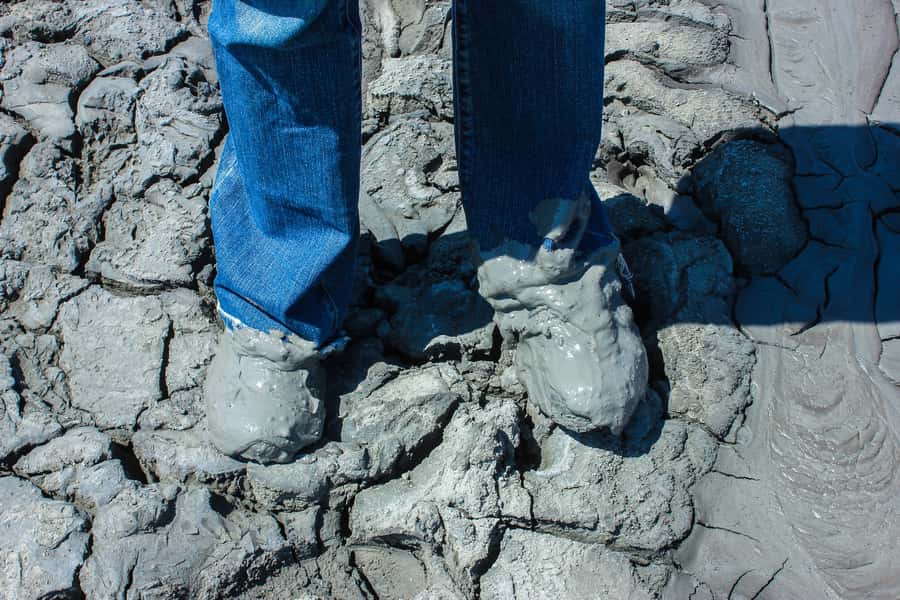
- The mud volcanoes are a rough, open-air stop: You can climb close to active craters, but expect basic conditions and possible mud or dust.
- Ateshgah explains Azerbaijan’s fire worship traditions: The temple reflects both Zoroastrian and Hindu connections.
- Yanardag is a natural gas flame, not a man-made fire: The hillside has burned since ancient times and remains a sacred place for pilgrims.
- The private format gives you flexibility: Hotel pickup and drop-off in Baku are included, with a private vehicle and guide.
- Budget beyond the advertised price: Tickets, lunch, and personal costs are not included.
A long day with four very different faces
This tour begins and ends in Baku, with pickup from your hotel or another location in the city. The route covers Gobustan, the mud volcanoes, Ateshgah, and Yanardag, so you spend much of the day on the road as well as at the sites.
That travel time is part of the trade-off. You see far more than you could easily manage by public transport in one day, but this is not a slow, relaxed outing. You will want comfortable shoes, water, sunscreen, and a camera.
The private group format is a real advantage. You are not tied to a large coach group, and you have a better chance to ask questions about archaeology, religion, geology, or daily life in Azerbaijan. The exact balance of time depends on traffic and the guide, but the scheduled visits allow about two hours at Gobustan, 40 minutes at the mud volcanoes, one hour at Ateshgah, and 40 minutes at Yanardag.
More Gobustan and Absheron trips:
- Baku: Gobustan, Mud Volcano, Fire Mount, Temple Lunch Entry
★ 4.9 · 3,246 reviews - BEST Gobustan, Volcanoes & Absheron Fire Tour (Group or Private)
★ 5.0 · 1,254 reviews - Gobustan and Absheron tour (All inclusive)
★ 5.0 · 1,014 reviews
Gobustan Museum: begin with the human story
The first major stop is the Gobustan Museum, an interactive introduction to the area. This is a smart place to begin because the outdoor rock art makes more sense once you understand who created it and how the region changed over time.
Touch screens and 3D panoramas show how people lived between roughly 5,000 and 20,000 years ago. The displays cover the natural setting, population, cultural development, and archaeological work carried out in Gobustan. You will also see historical objects dating from around the fourth to second millennia BC.
I like this museum because it gives you a framework instead of leaving you to stare at weathered markings without context. Ancient carvings can be difficult to read with the naked eye. The museum helps you recognize the subjects, periods, and daily activities represented at the outdoor site.
Do not expect a huge museum. Its value comes from the technology and explanation, not from spending half a day among display cases. The scheduled two hours at Gobustan includes both the museum and the rock-art area, so your guide will need to keep the visit moving.
Gobustan rocks: thousands of carvings in an open setting
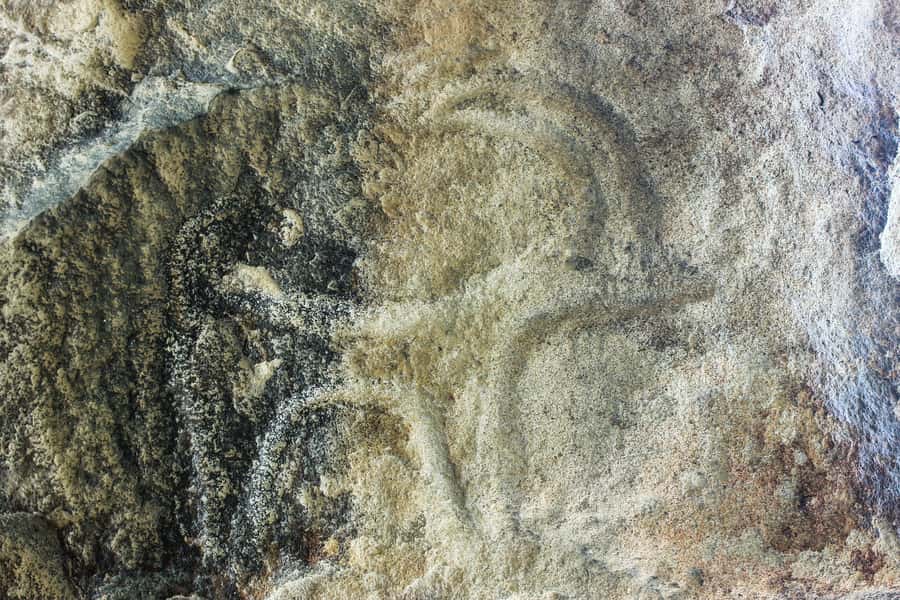
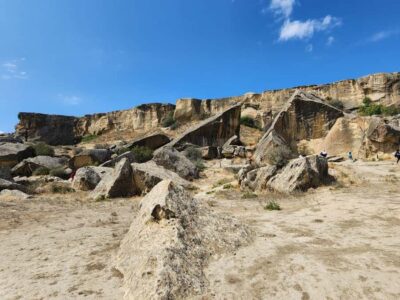
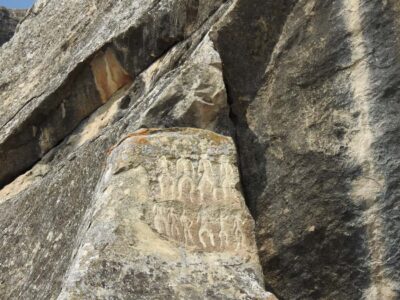
After the museum, you continue to the Gobustan rocks, where more than 6,000 drawings and caves have been identified. Scientists began studying the petroglyphs in the 1930s, and the markings come from several periods.
The carvings offer clues about early people’s customs, beliefs, work, and view of the world. You may see images connected with hunting, animals, people, and communal life, although the most useful interpretation will come from your guide. Some drawings are more distinct than others, and light, distance, and weathering affect what you can make out.
This is not an indoor museum experience. You walk across uneven ground and among exposed rock, so good shoes matter. The site is also open to the elements. In bright weather, sunscreen and water are not optional extras.
The attraction here is scale and setting. You are not looking at one famous carving in isolation. You are seeing a large record of human activity spread across caves and rock surfaces. That makes a guide particularly useful. The stories and comparisons help turn scattered markings into evidence of long-ago life.
The entry ticket to Gobustan is not included and is listed as $6. That is a modest extra cost, but you should add it to your planning because several paid admissions follow.
Mud volcanoes: a close look at Azerbaijan’s strangest terrain
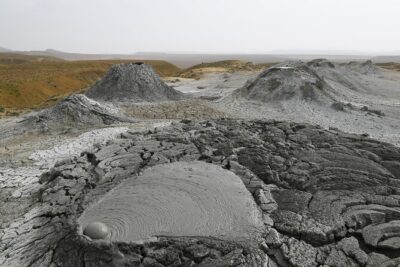
Azerbaijan is known for having a remarkable number of mud volcanoes. The information provided for this tour gives a figure of 350 in Azerbaijan out of about 800 worldwide, and says these formations began appearing in the area around 25 million years ago.
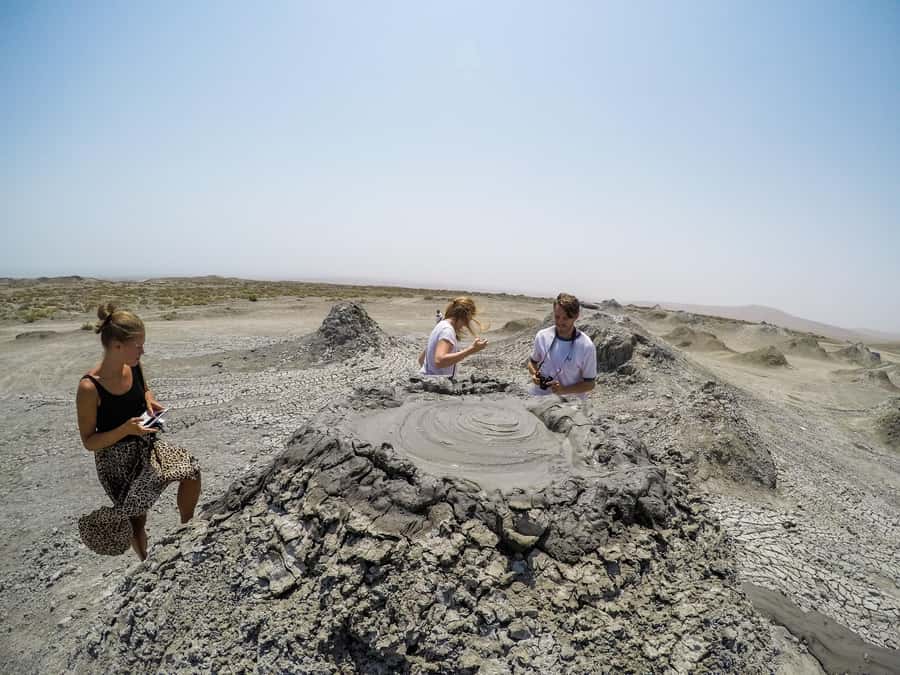
At the site, you can climb the active mud volcanoes and look into the craters. This is a very different experience from Gobustan. Instead of studying marks left by ancient people, you are watching a geological process that is still happening.
The scheduled visit lasts about 40 minutes. That is enough for a close look and a guide’s explanation, but not a long geological field trip. Conditions may feel basic. You should wear shoes that can handle dust or mud, and you should not expect paved paths or the polished facilities of a city attraction.
The tour explains that mud from these volcanoes has been used in chemical and construction work, as well as pharmacology. Volcanic clay and mud are also associated with treatment for skin conditions, rheumatism, and nervous-system ailments. Treat those claims as part of the region’s traditional and commercial use of the material, not as medical advice.
The mud volcano entry ticket is listed as $9 and is separate from the tour price. This is one of the less predictable stops because the appearance and activity of the craters can vary. Still, it is one of the most unusual parts of the day, and it gives the tour a strong sense of place.
A completely different kind of day out:
- Baku: Guba, Shahdag, Laza & Lunch w/ Free City & Night Tour
★ 4.8 · 1,455 reviews - Shamakhi And Gabala Tour (All inclusive)
★ 5.0 · 815 reviews - From Baku: Gabala and Shamakhi Tour (Free Baku City Tour)
★ 4.8 · 695 reviews - Baku: Candy Cane, Guba, Khinaliq village with Homemade Lunch
★ 4.9 · 519 reviews
Lunch in Baku: a useful pause, but bring extra money
After Gobustan and the mud volcanoes, the schedule includes a break for lunch in the city center. Lunch is not included, so you pay for your own meal.
This pause matters. The first half of the tour involves outdoor walking and driving, and the afternoon continues with two religious and natural-fire sites. A city-center lunch gives you a chance to rest before the next stretch.
Because no restaurant or menu is specified, you should confirm the plan with your guide. You may have some choice depending on timing, but the supplied details do not promise a particular restaurant or meal. Keep enough money available for food and drinks in addition to the attraction tickets.
Ateshgah Fire Temple: where fire shaped faith
Ateshgah, often called the Fire Temple of Baku, brings the tour into Azerbaijan’s religious past. The site was used as a place of worship by both Hindu and Zoroastrian communities, and its earliest recorded mention dates to the seventh century AD.
The temple complex includes cells where fire worshippers stayed, along with historical objects found during archaeological excavations. The layout helps you picture the site as more than a single shrine. It was also a place of residence, ritual, and pilgrimage.
Your guide can explain why fire became so important in this part of the Absheron Peninsula. Natural gas rising from underground once made flames possible in the region, shaping local beliefs and attracting worshippers from far away.
Ateshgah is a good example of why this tour works as a package. Gobustan shows early human expression, while Ateshgah shows how later communities gave spiritual meaning to the natural world. The connection is not that the sites belong to one period, but that both reveal how people responded to their surroundings.
You have about one hour here. That gives you time to inspect the cells and exhibits without rushing too badly. The combined entry fee for Ateshgah and Yanardag is listed as $9, separate from the $99 tour cost.
Yanardag: a hillside flame with an old name
The final main stop is Yanardag, which means Burning Mountain. Here, a natural gas flame burns on a hillside near Baku on the Absheron Peninsula.
The fire has burned since ancient times, and pilgrims from Iran and India still come to the site because of its sacred meaning. That religious connection adds depth to what might otherwise be a quick look at a natural oddity.
Yanardag is a short visit, scheduled for about 40 minutes. You are unlikely to spend hours here, but the stop works well after Ateshgah. At the temple, you learn about worship centered on fire. At Yanardag, you see the natural phenomenon that helped give fire such power in the region.
The site is visually simple, so the guide’s explanation matters. Without context, it is just a flame coming from a hillside. With the history of pilgrimage and fire worship, it becomes part of a much larger story about Azerbaijan’s geology and culture.
The guide can make or break the day
This tour asks a guide to explain archaeology, ancient society, geology, Zoroastrianism, Hindu worship, and modern Azerbaijan. That is a lot for one day.
The strongest feedback for this experience focuses on the guide. Mushfiq was praised for speaking excellent English, showing strong knowledge of the country’s past, and bringing real enthusiasm to the sites. One visitor also appreciated his help after the formal tour, when he escorted them toward Baku’s Old Town and pointed out good places for dinner.
That kind of personal help is valuable, especially if you are new to Baku. Still, a named guide cannot be guaranteed unless the operator confirms it. The important point is to expect a live English-speaking guide in a private group, not an audio guide or a self-guided visit.
A private vehicle also helps. The four stops are spread out, and arranging them independently would take more planning. Pickup and drop-off at Baku hotels or other city locations are included, with the tour ending at Fountain Square.
Is $99 per person a fair price?
The advertised price is $99 per person. You then add the stated entrance costs:
- Gobustan: $6
- Mud volcanoes: $9
- Ateshgah and Yanardag: $9
That brings the known sightseeing total to about $123 per person before lunch and personal expenses.
For a private nine-hour day with transportation, hotel pickup and drop-off, and an accredited English-speaking guide, that can be fair value if you want convenience and a broad introduction to the region. You are paying for the vehicle, the guide’s time, and the ability to connect several distant sites in one outing.
It is less attractive if you are focused only on Gobustan or want a cheap day trip. The extra admissions and lunch make the final cost noticeably higher than $99. You should also consider that the experience is active and full, with outdoor walking and several hours of driving.
The private format is the key value. A large group tour may cost less, but you would likely have less control over questions, pacing, and time at each stop. If you care about interpretation and prefer not to arrange several transfers yourself, the price makes more sense.
Who should book this experience?
I would recommend this tour to first-time visitors who want a broad introduction to Baku’s surrounding region. It suits you if you enjoy ancient sites, unusual geology, religious history, and a full schedule.
It is especially useful for a short stay in Azerbaijan. In one day, you see prehistoric art, mud volcanoes, a fire temple, and a natural flame. Few individual attractions explain the whole country, but this combination gives you several important themes.
You should think twice if you use a wheelchair, since the experience is not suitable for wheelchair users. You should also reconsider it if you dislike uneven outdoor conditions, climbing near mud volcano craters, or a long day away from the city.
Bring comfortable shoes, sunscreen, water, and a camera. Keep cash or another payment method available for the tickets, lunch, and personal expenses. Free cancellation is available up to 24 hours in advance, and you can reserve now and pay later if you want to keep your plans flexible.
Should you book it?
Book this tour if you want the easiest way to connect Gobustan, the mud volcanoes, Ateshgah, and Yanardag in one private day. The best reasons are the range of sights, the included transport, and the chance to hear clear explanations in English.
Skip it if you want a slow museum day, a low-cost outing, or time to explore each site at length. For most first visits to Baku, though, this is a strong choice, provided you budget for the extra $24 in tickets and your own lunch.
FAQ
How long does the Baku tour last?
The tour lasts nine hours, including visits to Gobustan, the mud volcanoes, Ateshgah Fire Temple, and Yanardag.
Where does pickup take place?
Pickup is available from your hotel or another location in Baku.
Where does the tour finish?
The tour returns you to Baku and ends with drop-off at Fountain Square.
Is the tour private?
Yes. The experience is organized as a private group tour with private transportation.
Is an English-speaking guide included?
Yes. An accredited live guide who speaks English is included.
Are entrance tickets included in the price?
No. Gobustan is listed at $6, the mud volcanoes at $9, and Ateshgah and Yanardag together at $9.
Is lunch included?
No. The tour includes a lunch break in the city center, but you pay for your own meal.
What should you bring?
Bring comfortable shoes, a camera, sunscreen, and water.
Can wheelchair users join the tour?
No. The experience is listed as not suitable for wheelchair users.
Just added in Baku
- Wine Tour Baku★ 5.0 · 4 reviews
- Wine Tour Qabala with Local Lunch★ 5.0 · 10 reviews
- Traditional Azerbaijani Cuisine Workshop★ 5.0 · 5 reviews
- Wine Crawl Baku★ 5.0 · 2 reviews
- Baku City Guided Wine Tour (snacks included)★ 5.0 · 15 reviews
- Tour to the North part of Azerbaijan Forests and Mountatin Quba★ 5.0 · 10 reviews
- Full Day KHINALUG and the Candy Mountains Tour★ 5.0 · 15 reviews
- The Magnificent Baku Night Tour★ 5.0 · 3 reviews
Gobustan and Absheron Tours, compared.
Gobustan, Mud Volcano, Fire Mount, Temple Lunch Entry
Read our review →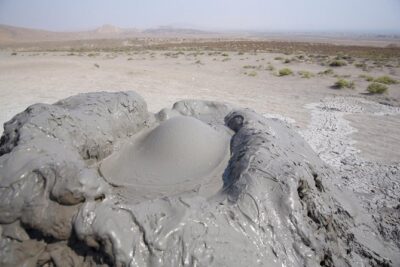
BEST Gobustan, Volcanoes & Absheron Fire Tour (Group or Private)
Read our review →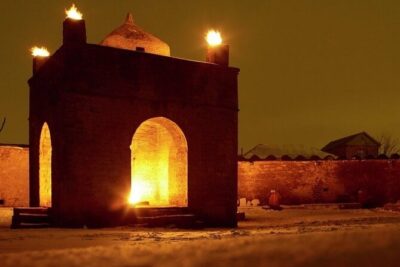
Gobustan, Volcanoes, Fire Temple and Yanardag Day Trip
Read our review →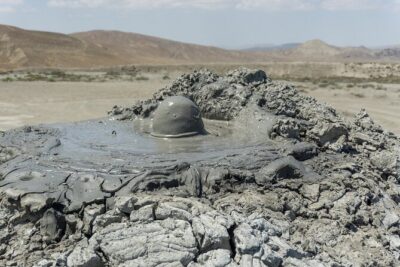
Gobustan & Mud, Fire Temple, Burning Mountain (Group & Private)
Read our review →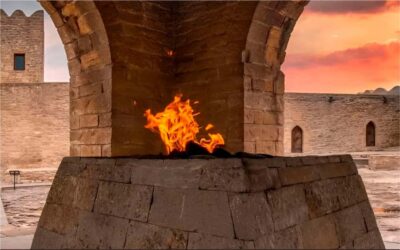
Mud Volcan-Fire Temple and Mountain Tour/Entrance inc
Read our review →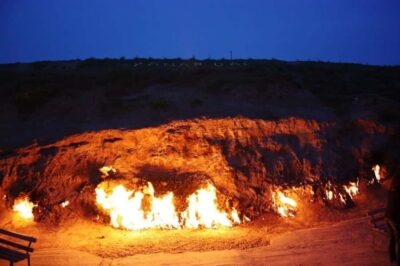
Gobustan Mud Volcanoes Temple & Entry tickets included
Read our review →Other Azerbaijan lists this tour is on