
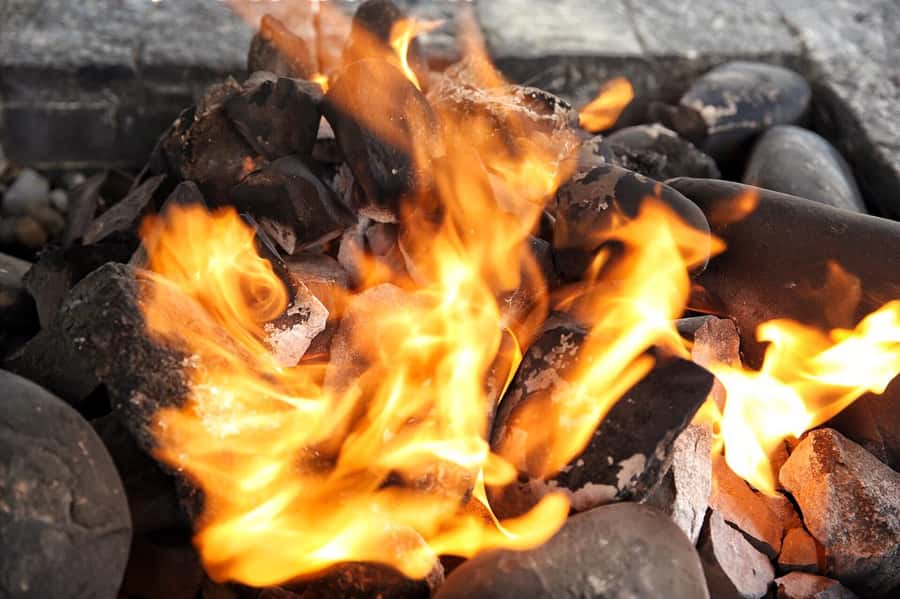
REVIEW · GOBUSTAN AND ABSHERON TOURS
Baku: Atashgah Fire Temple & Burning Mountain Half-Day Tour
Fire still burns beneath Baku.
This three-hour Absheron tour links two of Azerbaijan’s most unusual sights: the Atashgah Fire Temple, built around natural gas flames, and Yanar Dag, a hill where fire leaks from the earth. I like the mix of living geology and old religious tradition, and I like that transport, entry tickets, and an English or Russian-speaking guide are included for $23. The main concern is timing: several bookings have suffered long waits when the half-day outing was joined to a larger full-day group.
The attractions themselves are memorable, especially the temple’s stone courtyard and Yanar Dag’s open wall of flame. I would book this for a simple introduction to Absheron, but I would confirm the pickup time and group arrangements before setting aside only three hours.
In This Review
- Key points to know before booking
- Why these two fires belong on your Baku itinerary
- Entering Atashgah, the 18th-century Fire Temple
- Reading the stone cells and fire-worship traditions
- The 35 to 40-minute ride to Yanar Dag
- Watching the flames at Yanar Dag
- How good is the $23 value?
- The guide can make the short visit work
- Timing problems you should take seriously
- Who will enjoy this Absheron outing?
- What to bring and how to use your time
- Cancellation and booking flexibility
- Should you book the Atashgah and Yanar Dag tour?
- FAQ
- Where does the tour take place?
- How long is the tour?
- How far is Atashgah from Baku?
- What is included in the price?
- What languages are available?
- Is the tour wheelchair accessible?
- Is a private group available?
- Can I cancel the booking?
- Can I reserve now and pay later?
Key points to know before booking
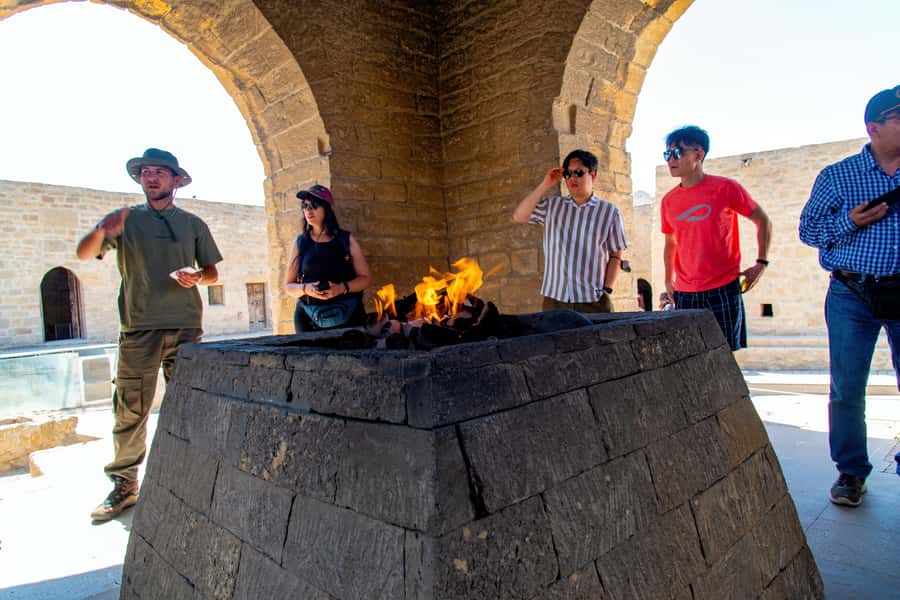
- Atashgah is 21 kilometers east of Baku, a compact stone complex built around natural gas vents and fire worship.
- Yanar Dag means burning mountain, where gas escapes from underground and keeps a wall of flames burning.
- The advertised duration is three hours, but group transfers and an unadvertised lunch stop have caused major delays.
- The $23 price includes transport, entry tickets, and a live guide, making it useful for a first visit to Absheron.
- English and Russian guiding is available, and a private group option can be selected.
- Free cancellation is offered up to 24 hours before departure, with reserve-now, pay-later booking available.
Why these two fires belong on your Baku itinerary
Baku is famous for its oil wealth, modern architecture, and Caspian Sea setting. Yet the Absheron Peninsula also has a much older connection to fire. Underground gas reaches the surface in several places, and for centuries those flames were treated as signs of something sacred.
This tour gives you two different ways to see that fire. Atashgah shows how people built religious practice around it. Yanar Dag shows the natural force itself, burning in the open air without a torch, stove, or visible fuel source.
That contrast is the real strength of the outing. You are not simply visiting two similar flame displays. At the temple, the focus is human belief and ritual. At Yanar Dag, the focus is geology and the strange sight of fire coming straight from the rock.
The tour lasts three hours on paper, so it fits well into a short Baku stay. You can see both sites without arranging a taxi, researching local transport, or buying separate admission. At $23 per person, that is fair value if the schedule runs properly.
More Gobustan and Absheron trips:
- Baku: Gobustan, Mud Volcano, Fire Mount, Temple Lunch Entry
★ 4.9 · 3,246 reviews - BEST Gobustan, Volcanoes & Absheron Fire Tour (Group or Private)
★ 5.0 · 1,254 reviews - Gobustan and Absheron tour (All inclusive)
★ 5.0 · 1,014 reviews
Entering Atashgah, the 18th-century Fire Temple
Your first major stop is Atashgah, also called the Fire Temple of Baku. It sits about 21 kilometers east of Baku and has the look of a small fortified courtyard, with thick stone walls and individual cells arranged around the central fire area.
The temple was built in the 18th century by Indian merchants who came to the region. Their religious tradition centered on fire worship, and the natural gas rising through the ground made this an especially powerful place for prayer and ritual.
The central fireplace is the visual heart of the complex. Natural gas was carried through vents, producing a large central flame and four smaller flames at the corners of the pavilion roof. The arrangement helps you understand why this site attracted pilgrims and ascetic believers.
The surrounding cells are just as important as the fire. These small chambers housed religious devotees and pilgrims, giving the courtyard a lived-in quality rather than making it simply a ceremonial monument. As you walk around the stone enclosure, you can picture the site as a place of devotion, lodging, and ritual activity.
A guide adds useful context here. Without explanation, Atashgah can look like a small stone fort with a fire in the middle. With a guide, the relationship between Indian merchants, fire worship, natural gas, and pilgrimage becomes easier to follow.
The site is not enormous, which works well on a half-day outing. You do not need several hours to cover every corner. The trade-off is that a short visit may feel rushed if you want time to inspect the cells, listen carefully to the history, and take photographs.
The description of medieval fire worship should be treated with some care. Atashgah is associated with old fire-worship traditions, but the present structure dates to the 18th century. That does not make it less interesting. It simply means you are seeing a later building connected to much older beliefs.
Reading the stone cells and fire-worship traditions
Atashgah rewards a slower look. The central flame naturally draws your eye, but the small rooms around the courtyard tell you how people used the site.
The cells once provided spaces for ascetic believers and pilgrims. Their plain design gives the place a severe, practical character. There is little decoration to distract you from the central idea: fire was the focus, and everything else was arranged around it.
I like this stop because it connects a natural feature to a religious system. In many historic sites, the story begins with a ruler or a war. Here, the starting point is a flame that emerges from the ground. That unusual setting helps explain why merchants and pilgrims traveled to the area.
Your guide may also help separate the temple’s cultural story from the geology beneath it. The flames were not supernatural in a scientific sense, but they were certainly extraordinary to people who did not know about underground gas. The site’s power comes from both facts being true at once: the fire has a natural cause, and it shaped centuries of human belief.
Allow time for the courtyard, the cells, the central fireplace, and the roof corners. You will get more from the visit if you look beyond the main flame. The structure is compact enough for a quick stop, but its details are easy to miss when the group moves on.
The 35 to 40-minute ride to Yanar Dag
The next stop is Yanar Dag State Historical, Cultural and Natural Reserve. The ride from Atashgah takes about 35 to 40 minutes, according to the tour details.
That transfer is not just dead time. It separates two sites that represent different sides of Absheron’s fire story. Atashgah is enclosed, built, and shaped by religious use. Yanar Dag is open and raw, with flames rising directly from a hill.
The vehicle is listed as a minivan or van, with transport included. That makes the trip easier than arranging separate rides to two places outside central Baku. It also means your comfort and timing depend on the group and the operator’s daily plan.
This is where the schedule needs attention. Some half-day departures have been combined with people on a longer full-day tour. In one reported case, the afternoon outing included about an hour for lunch, even though lunch was not advertised as part of the half-day plan. Other delays involved waiting at an office, moving to another location, and then joining the bus.
For a three-hour activity, an hour or two of waiting changes the value of the whole tour. Before departure, ask where you will meet the vehicle, what time the sightseeing actually begins, and if you are joining another group. Those questions are especially important if you have dinner plans, a flight, or another timed activity later.
A completely different kind of day out:
- Baku: Guba, Shahdag, Laza & Lunch w/ Free City & Night Tour
★ 4.8 · 1,455 reviews - Shamakhi And Gabala Tour (All inclusive)
★ 5.0 · 815 reviews - From Baku: Gabala and Shamakhi Tour (Free Baku City Tour)
★ 4.8 · 695 reviews - Baku: Candy Cane, Guba, Khinaliq village with Homemade Lunch
★ 4.9 · 519 reviews
Watching the flames at Yanar Dag
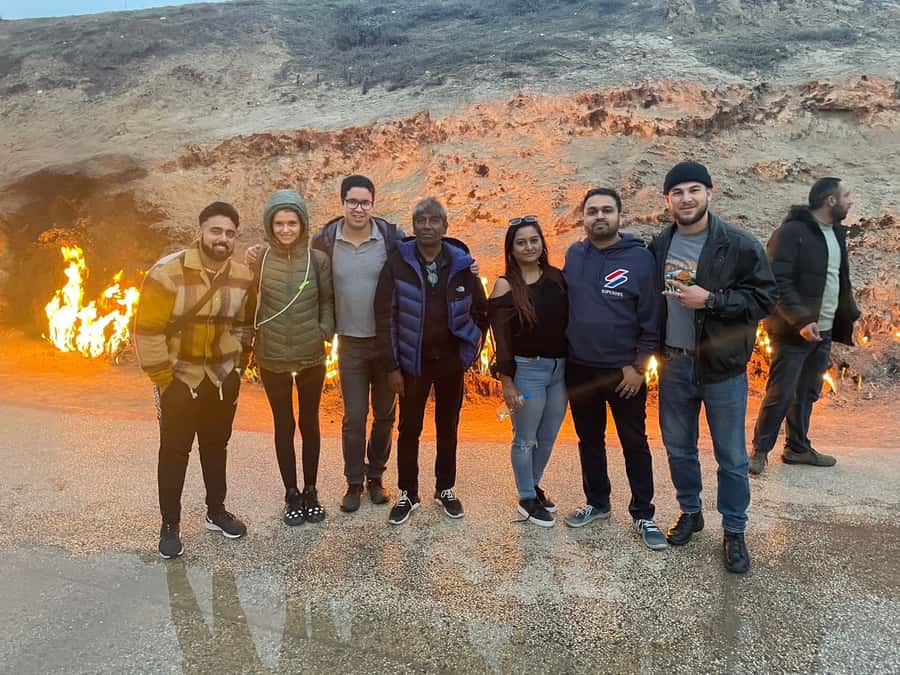
Yanar Dag translates as burning mountain. Its main attraction is a wall of flame that burns continuously along a hill.
The fire comes from natural gas escaping through cracks in the ground. Tectonic shifts and volcanic material beneath the surface help explain the gas deposits and the vents. At Yanar Dag, the result is an active natural phenomenon rather than a constructed fireplace.
This is a quick, striking sight. You stand near the burning slope and watch flames run across the exposed rock. The effect is strongest when you remember that no person is feeding the fire by hand. The fuel is coming from below.
The setting differs sharply from Atashgah. There is no stone courtyard directing your attention and no row of cells explaining how people lived around the flame. Yanar Dag gives you a more direct view of the earth’s gas escaping and igniting.
The fire has attracted attention for centuries. Marco Polo is said to have described flames in and around Baku during his travels. The precise age of the fire at Yanar Dag is uncertain, but the site’s long reputation shows that these burning places were a major part of the region’s identity.
You may find the stop shorter and less layered than Atashgah. Yanar Dag is about seeing and understanding the phenomenon, not exploring a large monument. That is not a weakness, but it does mean the guide’s explanation matters. A short stop can feel worthwhile when the geology and local history are clearly explained.
How good is the $23 value?
At $23, this is one of the easier ways to cover both major fire sites from Baku. The price includes transportation, entrance tickets, and a live guide. For a first visit, those inclusions remove several small costs and decisions.
The value is strongest when you want a guided overview rather than a long independent visit. You can leave the driving to someone else, learn the basic cultural context, and see two outlying attractions in one outing.
The price is less attractive if the tour loses a large part of its three hours to waiting. A two-and-a-half-hour delay is not a minor inconvenience on a half-day trip. It can turn a sensible budget excursion into a poor use of your day.
I would judge this tour by its organization as much as by its admission price. Ask for clear pickup details before the day of departure. If the answer is vague, the private group option may be worth considering if available at a price you accept, since it may give you a more direct schedule.
The tour has a 4 out of 5 rating from 35 bookings, which fits the overall picture: the sights and guides can be very good, while the logistics have produced serious complaints. The strongest praise focuses on friendly, informative guiding and the impressive fire temples. The sharpest criticism concerns delays and unclear arrangements.
The guide can make the short visit work
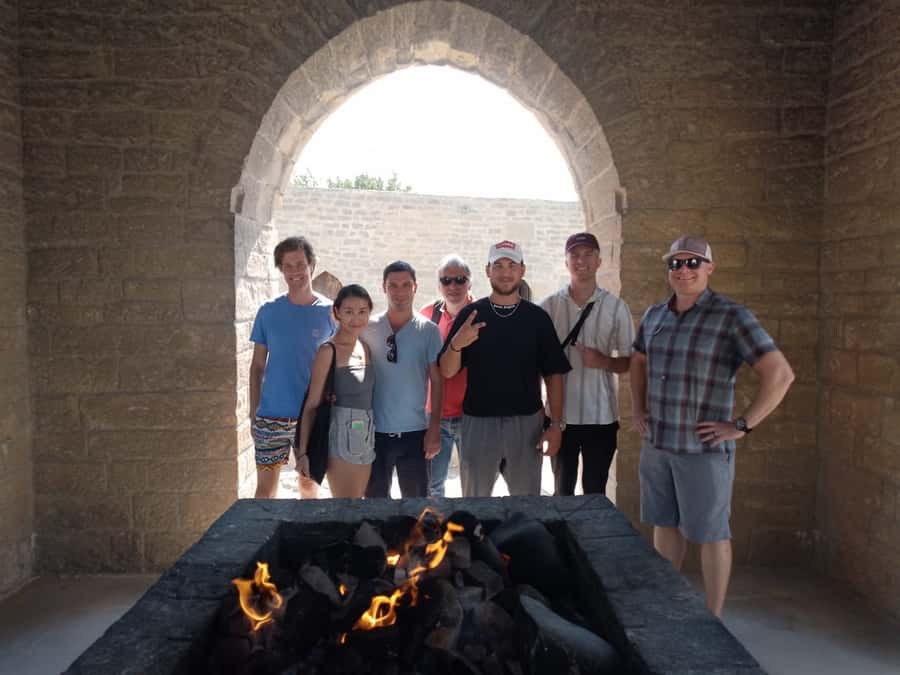
The guide is central to this experience. Atashgah needs interpretation because the building is compact and its importance is not obvious from its size. Yanar Dag needs explanation because the flames are visually simple but geologically unusual.
English and Russian guiding are available. One highly praised guide was described as both informative and friendly, which is exactly the combination you want on a short cultural outing. You need clear explanations, but you also want someone who can keep the pace comfortable and answer basic questions.
The tour does not promise a specialist historian or geologist. Think of the guide as someone who connects the sights to Baku’s wider story. You will likely get the most value by asking about the fire-worship traditions, the Indian merchants, the purpose of the cells, and how the natural gas reaches the surface.
If you prefer independence, this may feel too structured. The transport and ticket arrangements are helpful, but you follow the group’s pace. A private group is available for people who want more control over timing and discussion.
Timing problems you should take seriously
The central practical issue is not the attractions. It is the difference between the advertised three-hour format and the way some departures have operated.
A half-day afternoon tour has reportedly been treated as an extension of a full-day tour. That can mean waiting for people finishing a morning itinerary, sitting while a group eats lunch, or traveling to a second meeting point before the actual sightseeing begins.
One booking involved a planned 1 p.m. start but no clear pickup information until the last moment. The party first went to the operator’s office, returned later, and then waited again before a taxi transferred them to another location. The sightseeing eventually began much later than expected.
This kind of arrangement should be disclosed before booking. It matters because a three-hour tour is often chosen precisely because your schedule is tight. If the operator confirms that your departure joins a larger group, ask whether lunch is included, where the group gathers, and when you will return to Baku.
Do not assume the listed start time means you will immediately leave the city. It may, but the past scheduling problems make confirmation sensible. The tour provider is Baku City Tours, and contacting the operator ahead of time is the most practical way to reduce uncertainty.
Who will enjoy this Absheron outing?
I would recommend this tour to you if you have limited time in Baku and want to see the city’s fire-related sights without arranging transport yourself. It also suits anyone who prefers a guide to explain the difference between a historic religious site and a natural gas fire.
It is a good match for first-time visitors, couples, solo visitors, and small groups who want a straightforward half-day plan. The low price helps if you are building a sightseeing day around several paid attractions.
Solo visitors may especially like the organized transport, since it avoids handling an out-of-town route alone. The experience is also listed as wheelchair accessible, though you should still confirm the exact vehicle and site arrangements before booking if you require specific equipment or assistance.
I would be more cautious if you have a fixed appointment afterward. The reported delays make this a poor choice for a tight connection or a carefully timed evening. In that case, ask about a private group or choose a plan with more schedule flexibility.
Children may find the flames fascinating, but the tour is primarily cultural and historical. The appeal depends on interest in old religious customs, unusual natural features, and short guided visits rather than on entertainment or hands-on activities.
What to bring and how to use your time
The tour details do not list a packing requirement, so keep it simple. Wear comfortable clothing for walking around the temple courtyard and the reserve, and bring a phone or camera if you want photographs of the flames.
Your best questions are likely to concern the site’s history and the gas itself. Ask how the temple’s central fire was used, who stayed in the cells, and how Yanar Dag differs from the temple fire. These questions turn a quick sightseeing stop into a more useful cultural visit.
At Atashgah, look up as well as inward. The four smaller fires on the pavilion’s roof corners are easy to overlook when everyone is focused on the central fireplace. At Yanar Dag, watch the full length of the burning wall rather than only the largest flame.
Keep your expectations realistic. This is not a full archaeological day or a long nature excursion. It is a compact introduction to two unusual places on the Absheron Peninsula, with the main reward coming from the contrast between ritual and geology.
Cancellation and booking flexibility
You can cancel up to 24 hours before departure for a full refund. The reserve-now, pay-later option also helps if you are still arranging your Baku schedule.
Those policies are useful here because the tour’s main uncertainty is operational rather than cultural. You can protect your plans by confirming the pickup details before the cancellation deadline, then deciding if the timing works for you.
Should you book the Atashgah and Yanar Dag tour?
Book it if you want an inexpensive, guided visit to two of Absheron’s defining fire sites. Atashgah offers the stronger cultural experience, with its stone cells, Indian merchant connections, and central flame. Yanar Dag supplies the memorable natural spectacle, a burning hill fueled by gas from underground.
The $23 price is good when the three-hour schedule works as advertised. The English or Russian guide, van transport, and entry tickets make the outing easy for a short stay.
I would not book without confirming the logistics. Ask if the tour is running independently or joining a full-day group, whether lunch is included, and where the vehicle will collect you. If the operator gives a clear answer, this is a worthwhile and unusual addition to your Baku plans. If the timing remains vague, choose a private option or leave more of your day open.
FAQ
Where does the tour take place?
The tour visits Atashgah Fire Temple and Yanar Dag State Historical, Cultural and Natural Reserve on the Absheron Peninsula near Baku.
How long is the tour?
The advertised duration is three hours. The drive from Atashgah to Yanar Dag takes about 35 to 40 minutes.
How far is Atashgah from Baku?
Atashgah Fire Temple is about 21 kilometers east of Baku.
What is included in the price?
The $23 price includes an English-speaking guide, transportation by minivan or van, and entry tickets.
What languages are available?
Live guiding is available in English and Russian.
Is the tour wheelchair accessible?
Yes. The activity is listed as wheelchair accessible.
Is a private group available?
Yes. A private group option is available.
Can I cancel the booking?
You can cancel up to 24 hours in advance for a full refund.
Can I reserve now and pay later?
Yes. The reserve-now, pay-later option lets you hold a place without paying immediately.
Just added in Baku
- Wine Tour Baku★ 5.0 · 4 reviews
- Wine Tour Qabala with Local Lunch★ 5.0 · 10 reviews
- Baku City Guided Wine Tour (snacks included)★ 5.0 · 15 reviews
- Traditional Azerbaijani Cuisine Workshop★ 5.0 · 5 reviews
- Wine Crawl Baku★ 5.0 · 2 reviews
- Full Day KHINALUG and the Candy Mountains Tour★ 5.0 · 15 reviews
- Tour to the North part of Azerbaijan Forests and Mountatin Quba★ 5.0 · 10 reviews
- The Magnificent Baku Night Tour★ 5.0 · 3 reviews
Gobustan and Absheron Tours, compared.
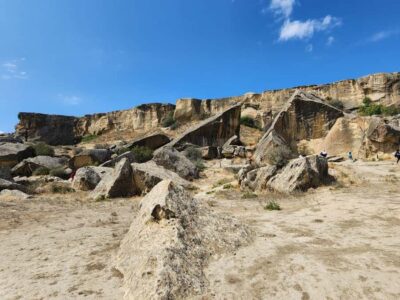
Gobustan, Mud Volcano, Fire Mount, Temple Lunch Entry
Read our review →
BEST Gobustan, Volcanoes & Absheron Fire Tour (Group or Private)
Read our review →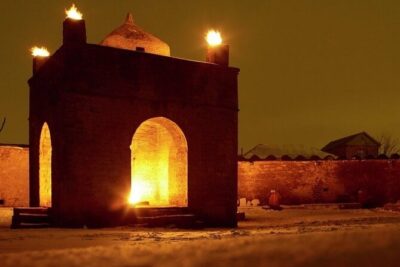
Gobustan, Volcanoes, Fire Temple and Yanardag Day Trip
Read our review →
Gobustan & Mud, Fire Temple, Burning Mountain (Group & Private)
Read our review →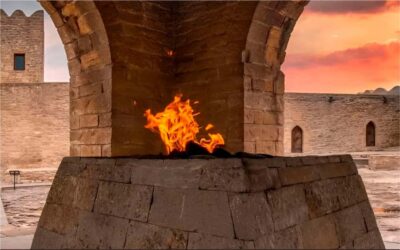
Mud Volcan-Fire Temple and Mountain Tour/Entrance inc
Read our review →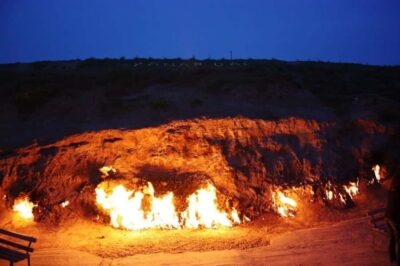
Gobustan Mud Volcanoes Temple & Entry tickets included
Read our review →Other Azerbaijan lists this tour is on