
REVIEW · GABALA AND SHAMAKHI DAY TRIPS
2 days 1 Night Shamakhi – Gabala – Lahij – Sheki Tour ( Northern Route)
Northern Azerbaijan in two days is a fast, rewarding ride. This route links mosques, mountain villages, lakes, silk-road towns, and Sheki’s famous palace without requiring you to plan several separate trips. I especially like the wide variety of scenery, from the dry hills near Baku to the forests and mountains around Gabala, and the fact that transport, a guide, hotel accommodation, breakfast, and many entrance fees are bundled together.
The main catch is the pace. Day one packs in nine stops before you settle into Sheki, so several visits are short orientation stops rather than deep visits. You should also budget for lunch, the Tufandag cable car, and the Diri Baba Mausoleum entrance, and confirm the pickup arrangement because the stated meeting point is Sabir’s Garden in central Baku.
In This Review
- Key points before you book
- Why this northern route works
- Diri Baba Mausoleum and Shamakhi’s sacred past
- Ismayilli and the road toward Lahij
- Lahij, copper work, and village streets
- Seven tombs and the Khanate period
- Nohur Lake and Gabala’s older identity
- Tufandag Mountain Resort and the cable car choice
- Reaching Sheki after a packed first day
- Sheki Fortress and the Palace of the Sheki Khans
- Sheki Karvansaray and the old trade road
- What the guide and group format mean
- Food, extra fees, and practical planning
- Who should choose this tour?
- Should you book the Northern Route?
- FAQ
- What is the price of the tour?
- How long does the tour last?
- Where does the tour begin?
- What is included in the price?
- Is the Tufandag cable car included?
- Are lunches included?
- How many people can join the group?
- Can I cancel for a full refund?
Key points before you book
- Nine stops on day one: Diri Baba, Shamakhi, Lahij, Nohur Lake, Gabala, Tufandag, and Sheki are all folded into one long sightseeing day.
- A strong mix of places: You get religious buildings, royal architecture, mountain scenery, a craft village, a lake, and a former caravan stop.
- Sheki is the payoff: The Palace of the Sheki Khans, fortress, and caravanserai give the second day a clear historical focus.
- Small-group format: The group can include up to 18 people, which keeps costs lower than a private tour but may affect timing.
- Five-star overnight stay: Accommodation and breakfast are included, a useful comfort after a full first day.
- Extra costs matter: Lunches, Tufandag’s cable car, and Diri Baba’s entrance fee are not included.
Why this northern route works
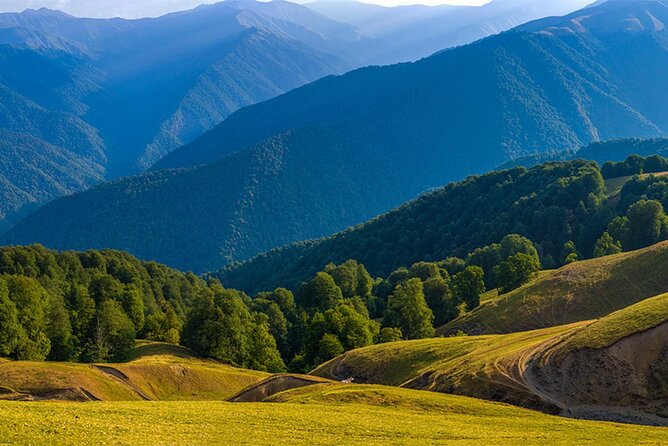
Azerbaijan is easy to underestimate from Baku. The capital has grand boulevards and modern architecture, but the country changes quickly once you head west. The road toward Shamakhi and Gabala moves through dry countryside, wooded hills, mountain valleys, and old settlements linked to trade routes.
This tour is built for someone who wants to see that change without arranging several taxis, hotels, and admission tickets. The air-conditioned vehicle is important here. You spend much of day one on the road, and a group vehicle makes the route far more practical than trying to connect these places by public transport.
The group size is capped at 18 people. That is not intimate in the way a private car is, but it is still more manageable than a large coach. It also helps explain the price of $215.76 per person. For that amount, you receive transport, guiding, one night in five-star accommodation, breakfast, and most of the listed admissions.
I would not call it a cheap tour in absolute terms. The price becomes easier to justify if you value convenience and want to visit Sheki in only two days. If you are comfortable arranging your own driver and hotel, you may find a locally booked trip costs less. One piece of customer feedback specifically raised concern about paying more than locally advertised options, so comparison shopping is sensible.
More Gabala and Shamakhi day trips:
- Shamakhi And Gabala Tour (All inclusive)
★ 5.0 · 815 reviews - From Baku: Gabala and Shamakhi Tour (Free Baku City Tour)
★ 4.8 · 695 reviews - Gabala + Shamakhi tour (by Old City Tours)
★ 4.5 · 198 reviews
Diri Baba Mausoleum and Shamakhi’s sacred past
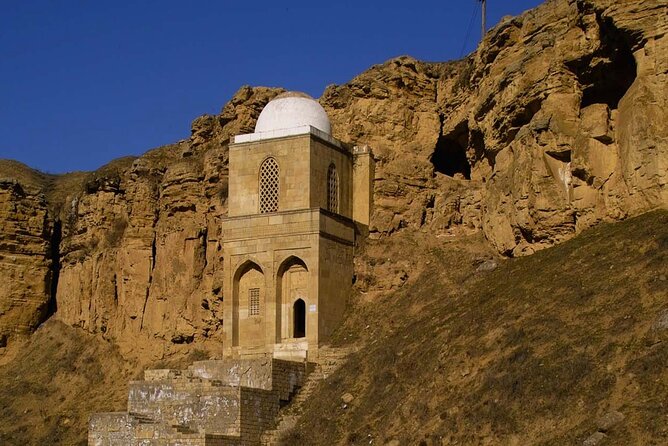
The first major stop is the Diri Baba Mausoleum in Gobustan settlement, on the road toward Shamakhi. Built in 1402, this small Sufi dervish mausoleum was used as a place for prayer away from the city. Its position and age make it a worthwhile introduction to the older religious traditions of the region.
You get about 30 minutes here. That is enough for a look and some photographs, but not a long study of the building. There is also a cost detail to watch: the tour information is inconsistent. Diri Baba is described as an included stop in one part of the schedule, but the exclusions clearly say its entrance fee is not included. Ask the guide or operator before departure so this small surprise does not become an irritating one.
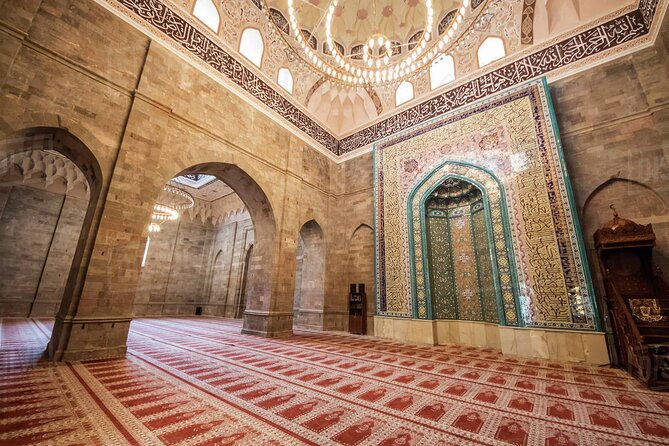
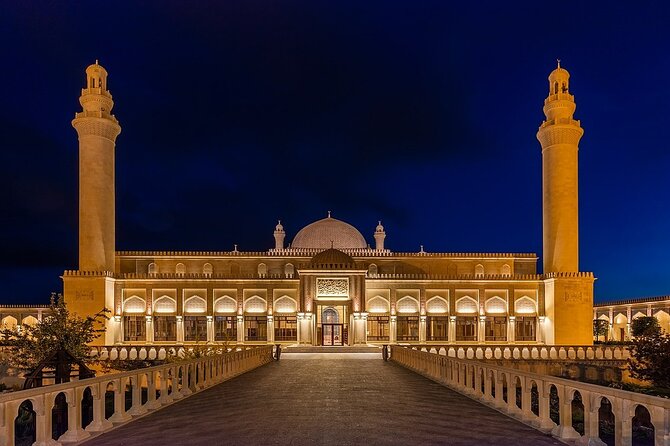
Next comes the Juma Mosque in Shamakhi, visited for about 30 minutes. The mosque dates to 743 and is known as the Friday Mosque, referring to the main communal prayer day in Islam. Its grounds cover about one hectare, and its minarets reach 36 meters.
The building has been damaged and rebuilt more than once. It was destroyed by the Mongols in 1222 and burned in 1905 before restoration work led by Joseph Plosko, a Polish architect associated with Baku. The short visit gives you a useful sense of Shamakhi as an old religious and political center, though the time is brief if you want to study every detail.
Ismayilli and the road toward Lahij
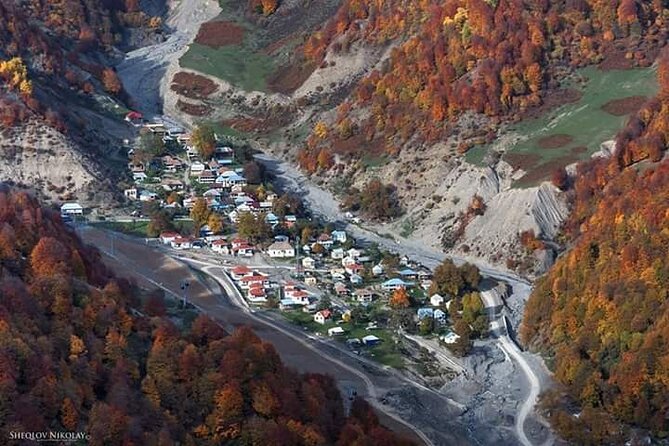
The stop in Ismayilli lasts about 30 minutes and is listed as free. This is less about one major monument and more about the setting. The district is known for mountains, forests, lakes, and rivers, and it once formed part of Caucasian Albania. It also lay along a route toward Georgia, linking it to the wider movement of people and goods across the Caucasus.
I see this stop as a breathing space between formal sights. You may find it less memorable than Lahij or Sheki, but it helps you understand why the northern route is about more than isolated monuments. The natural scenery changes as the vehicle leaves the drier country behind.
Lahij, copper work, and village streets
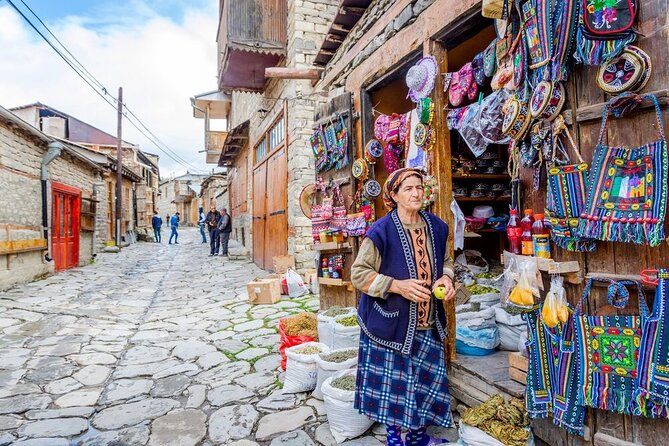
Lahij is one of the most distinctive stops on the trip. The village is known for copper work, jewelry, and other handcrafts, with traditions said to reach back more than 1,500 years. It was also used by some Shirvanshah rulers as a summer residence.
You have about 40 minutes here. That is enough to walk through part of the village and see the setting, but not enough for an unhurried afternoon of browsing workshops. If handmade copper items interest you, keep your eyes open and use the time well. The attraction is the working craft tradition and old village character, not a single grand building.
Road conditions can affect access to Lahij. This is worth remembering if weather has been poor. The tour requires good weather, and the Lahij entry is specifically dependent on road conditions. The stop is included in the tour details, but the practical ability to reach it can change.
More trips out to Sheki and Lahij:
- Sheki – Full Day Tour to Five Regions of Azerbaijan
★ 4.5 · 279 reviews - Gabala-Sheki Tour 2 Days, 1 Night (All Inclusive)
★ 5.0 · 88 reviews - Sheki is a harmony of nature and architecture ( All inclusive )
★ 4.5 · 40 reviews - Private Sheki Tour
★ 5.0 · 35 reviews
Seven tombs and the Khanate period
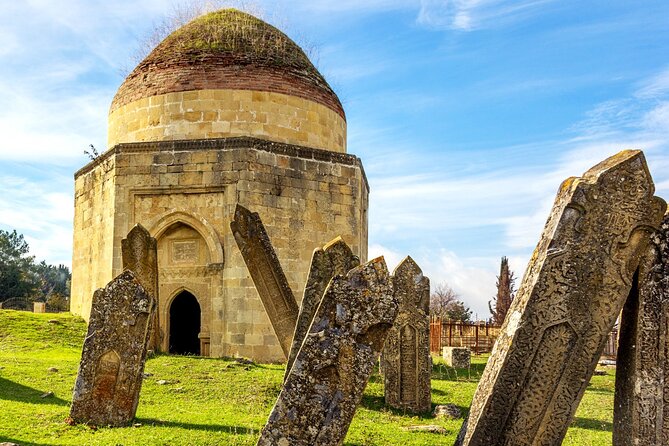
The Yeddi Gumbaz Mausoleum, or Seven Tombs, takes about 20 minutes. These tombs belong to the khans of Shamakhi and date from the 17th and 18th centuries, when the region was divided into smaller khanates.
This is a compact stop, best approached as a glimpse into the political structure of old Azerbaijan. You will not spend long wandering among monuments, but the site adds useful context after the mosque. The admission fee is included.
Nohur Lake and Gabala’s older identity
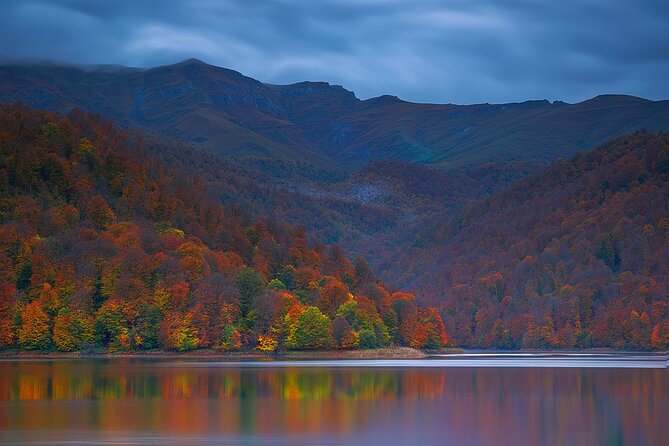
Nohur Lake is one of the more scenic pauses. The tour allows about 20 minutes for a walk along the shore in Gabala. The lake is associated with the city’s wooded mountain setting, and Gabala itself was once the capital of Caucasian Albania.
That history gives Gabala an unusual character. The area is not only a modern resort region. It also connects to an ancient state where Christianity was once the main religion, and some nearby villages still have Christian places of worship.
Twenty minutes is enough to stretch your legs and take in the water and surrounding scenery. It is not enough for a long lakeside walk. Bring your camera, but keep expectations realistic: this is a short stop on a very full day.
Tufandag Mountain Resort and the cable car choice
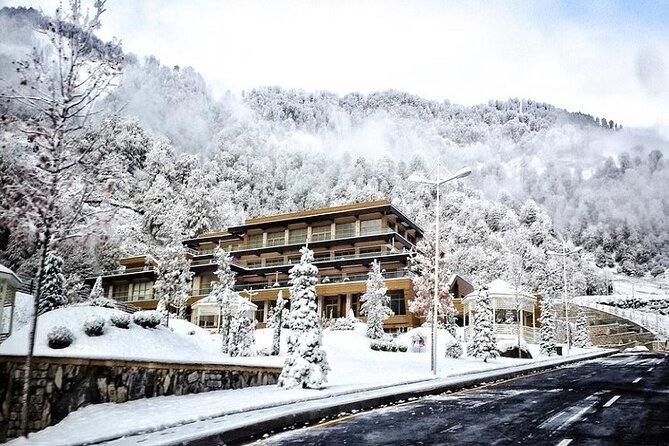
Tufandag is the tour’s main mountain resort stop. The complex operates in summer and winter and has two cable-car lines reaching about 1,900 meters. You have roughly 45 minutes here, but the cable car is not included in the tour price.
This creates one of the day’s clearest choices. If the weather is good and the cable car is running, the ride may be the highlight for anyone who wants broad mountain views. If you skip it, the stop may feel less substantial, since much of the appeal comes from going higher.
Because the extra fee is separate, ask about the current price before deciding. The schedule leaves limited time, so you should also find out whether the cable car queue fits the planned visit. A delay here could make the already tight route even tighter.
Reaching Sheki after a packed first day
The first day ends in Sheki, an old silk-producing city formerly known as Nukha. Sheki was the center of the Sheki Khanate in the 17th and 18th centuries and sat on a trade route toward Georgia.
The scheduled Sheki visit on day one is about 30 minutes, so it functions mainly as an introduction. The real sightseeing comes the next morning. You then spend the night in five-star accommodation, with breakfast included. That is a welcome feature because day one contains several short stops and a great deal of driving.
The hotel category sounds appealing, but the supplied details do not identify the property or its exact location. If the hotel standard is important to you, ask for the name before booking. The overnight stay is still valuable, since arranging a separate Sheki hotel would add both cost and planning work.
Sheki Fortress and the Palace of the Sheki Khans
Day two begins with the Sheki Fortress, a defensive complex built in the 17th century for the Sheki Khanate. Parts of the walls and other defenses remain. The visit lasts about 20 minutes, so you will get an overview rather than a long archaeological exploration.
The Palace of the Sheki Khans is the day’s essential stop. This was the main residence of the khan, and it is known for construction methods that used no nails. Its colored glass windows and wooden screens display shebeke, a delicate decorative art made from small pieces of glass and wood.
You receive about 30 minutes inside or around the palace. That is short for such a detailed building, especially if you want to look closely at the window patterns. Still, the palace gives Sheki a clear identity and is one of the strongest reasons to choose this route over a general countryside excursion.
The entrance fee is included. Take the guide’s explanation seriously here, since the building’s appeal is not just its appearance. The construction technique and shebeke work explain why the palace matters.
Sheki Karvansaray and the old trade road
The final listed stop is Sheki Karvansaray, specifically the Upper Caravanserai. This large former lodging house served merchants and traders moving along the Silk Road toward Georgia. It provided a place to spend the night before continuing the journey.
The visit takes about 20 minutes. The building is valuable because it makes trade history tangible. Instead of hearing only that Sheki was on a commercial route, you see the kind of lodging built for the people and animals moving through it.
The palace and caravanserai work well together. One shows royal life, the other shows commercial life. With the fortress added, the second day gives you three different views of Sheki: defense, government, and trade.
What the guide and group format mean
A good guide matters on this trip because the route contains many short visits. You need someone who can explain the key point quickly, keep the group moving, and help when plans change.
Named guides praised in the feedback include Rustam, Vahid, and Senan. Rustam received especially strong approval for acting as driver, guide, and local support, with attention to comfort and unexpected stops. Vahid was noted for patiently answering many questions and adding extra local context. These comments suggest that the guide can make a major difference, though service may vary by departure.
The group format keeps the price under control, but it also means you will not set every departure time. A 20-minute stop can feel adequate with a disciplined group and frustrating if people return late. Keep your own watch on the schedule and confirm where to meet after each visit.
Pickup is offered from Baku hotels or the airport according to the tour description, while the stated meeting point is Sabir’s Garden, 9R9M+GW7, Baku. Since those details do not perfectly match, confirm your exact pickup point and time. The published start time is 9:00 a.m., and the activity ends back at the meeting point.
Food, extra fees, and practical planning
Lunch is not included. With such a full first day, you should ask how meal stops are handled and carry water or a small snack. The tour details do not provide restaurant names, meal prices, or exact lunch timing, so do not assume that every stop allows a relaxed meal.
The Tufandag cable car is the other major optional expense. Diri Baba’s entrance fee is also excluded, despite the conflicting inclusion note. These are not huge additions compared with the total price, but they affect your real budget.
The tour provides an air-conditioned vehicle and a mobile ticket. Most people can participate, and the activity is near public transportation. No special accessibility details are provided, so anyone needing specific assistance should ask before booking rather than assume.
The cancellation terms are fairly forgiving: you can cancel at least 24 hours before the 9:00 a.m. start for a full refund. Changes made inside that 24-hour window are not accepted, and late cancellations are not refunded. Bad weather or failure to reach the minimum group size can lead to a new date, another experience, or a full refund.
Who should choose this tour?
I would choose this trip if you have only two days beyond Baku and want the widest possible sample of northern Azerbaijan. It suits people who prefer a ready-made plan, enjoy changing scenery, and do not mind a brisk schedule.
It is also a good fit if Sheki is high on your list but you do not want to arrange a separate overnight trip. The combination of hotel, breakfast, guide, and vehicle removes much of the work.
I would hesitate if you prefer slow travel. Lahij, Nohur Lake, the fortress, and the palace all receive short visits, and day one is demanding. A private driver or a longer stay would give you more time for village streets, workshops, photographs, and meals.
Should you book the Northern Route?
Book it if coverage and convenience matter more than leisurely pacing. For $215.76, the package includes a lot: transport from Baku, a guide, one night in five-star accommodation, breakfast, and most major admissions. The route also gives you a strong mix of Azerbaijan’s religious sites, craft traditions, mountain scenery, and Sheki architecture.
Before paying, confirm the hotel name, pickup arrangement, Diri Baba fee, Tufandag cable-car cost, and lunch plan. If you can accept those details and keep up with a full day on the road, Travelway Azerbaijan’s two-day northern route is a practical way to get well beyond Baku.
FAQ
What is the price of the tour?
The listed price is $215.76 per person.
How long does the tour last?
The experience lasts approximately two days and includes one overnight stay.
Where does the tour begin?
The stated meeting point is Sabir’s Garden in Baku, with a listed start time of 9:00 a.m. Pickup from a Baku hotel or the airport is also offered, so confirm your exact pickup arrangement.
What is included in the price?
The price includes an air-conditioned vehicle, a tour guide, hotel accommodation, breakfast, entrance to the Juma Mosque, entry to the Seven Tombs, entry to Lahij when road conditions allow, entry to Nohur Lake, the Sheki Khan’s Palace, and an Albanian Church.
Is the Tufandag cable car included?
No. The cable-car ride at Tufandag Mountain Resort is not included.
Are lunches included?
No. Lunches are not included in the tour price.
How many people can join the group?
The tour has a maximum group size of 18 people.
Can I cancel for a full refund?
Yes. You can cancel at least 24 hours before the start time for a full refund. Cancellations or changes made less than 24 hours before the start are not accepted for a refund.
Just added in Baku
- Wine Tour Qabala with Local Lunch★ 5.0 · 10 reviews
- Wine Tour Baku★ 5.0 · 4 reviews
- Traditional Azerbaijani Cuisine Workshop★ 5.0 · 5 reviews
- Wine Crawl Baku★ 5.0 · 2 reviews
- Baku City Guided Wine Tour (snacks included)★ 5.0 · 15 reviews
- Full Day KHINALUG and the Candy Mountains Tour★ 5.0 · 15 reviews
- Tour to the North part of Azerbaijan Forests and Mountatin Quba★ 5.0 · 10 reviews
- The Magnificent Baku Night Tour★ 5.0 · 3 reviews
Gabala and Shamakhi Day Trips, compared.
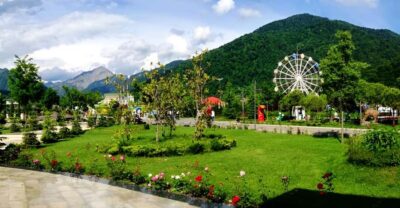
Guided Day Trip to Gabala with Hotel Pickup & Drop-off
Read our review →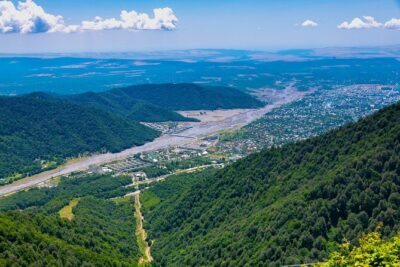
Gabala & Shamakhi Nature Tour (Group or Private)
Read our review →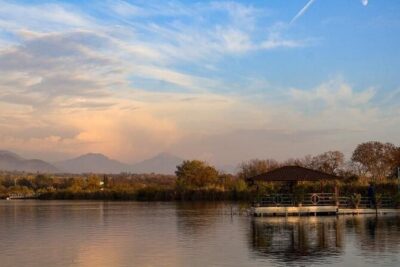
Gabala & Samakhi Tour/ All Entrance Fees Included Tour
Read our review →
Other Azerbaijan lists this tour is on